
Guide — pheasant rearing
Pheasant rearing: the method, the stages, and how to choose your breeder
From lay to release, what rearing a hunting pheasant really takes — and the practical criteria that set a genuine game farm apart from a production line. Written by a family game farm established in Isère, France, since 1951.
The GIBIS method
Our pheasant rearing method, since 1951
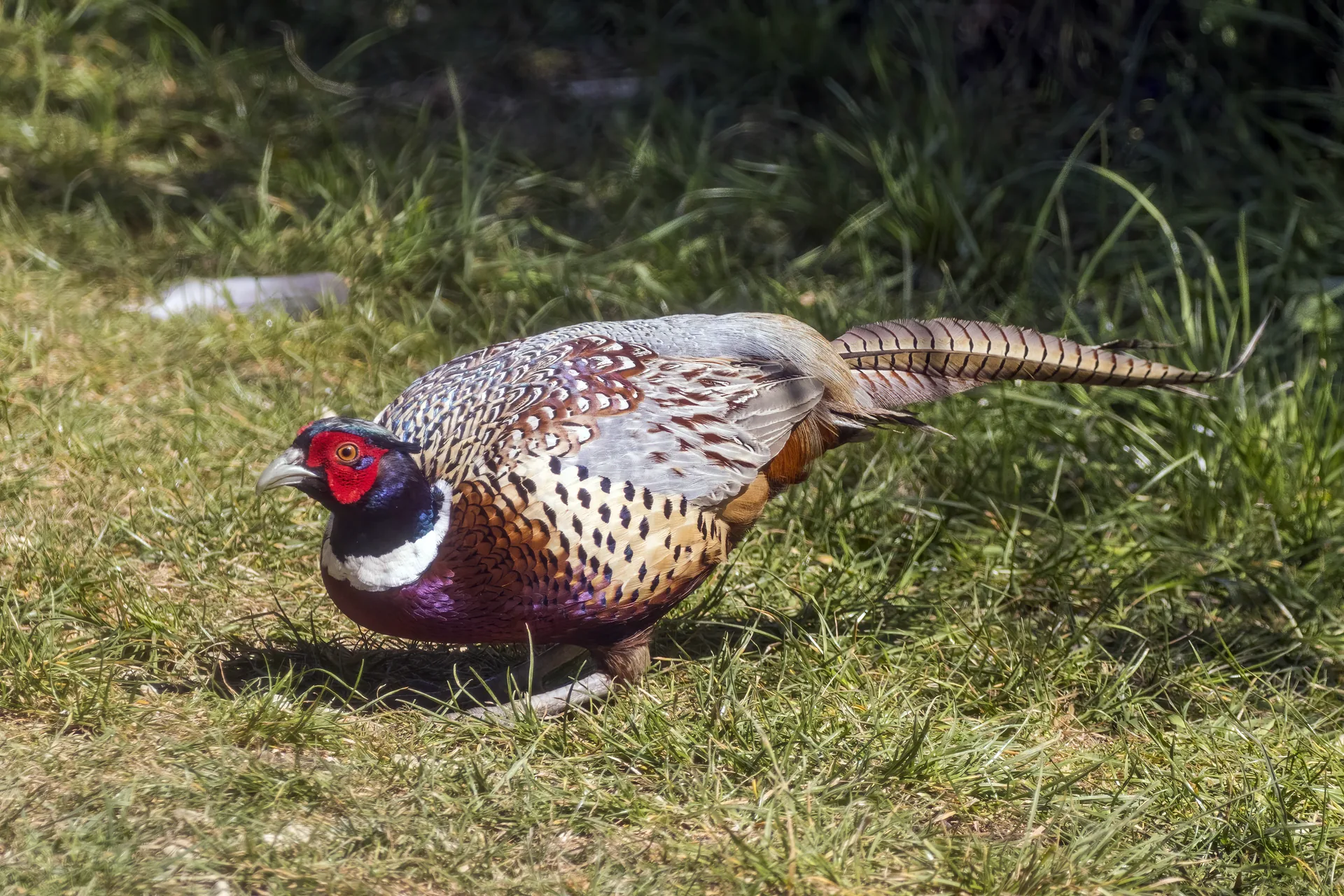
A hunting pheasant is not manufactured in a cage: it is built in the habitat it will meet again on release day. At Chatte, in Isère, GIBIS has been rearing pheasants since 1951 in large planted flight pens, at low density, where the bird flies, perches and goes to cover every day; the FAISAN PUR CHASSE® strain is bred there naturally, with no artificial insemination. This page walks through pheasant husbandry step by step, along with the criteria for choosing your supplier; the facilities, approvals and logistics are presented on our farm page.
- Planted flight pens of over a hectare
- Dense vegetation and crops sown inside the pens: the bird builds its flight muscles and covering reflexes from the very first weeks.
- Natural breeding in the pen
- For the PUR CHASSE® strain, natural mating and natural brooding: parental behaviour is passed on — and so is the bird's wildness.
- Flushing with pointing dogs
- Regular runs by trained pointing dogs through the pens: the flight instinct is in place before release, not after.
- Controlled density, full tail
- The tail is the best visible indicator of a proper stocking density: a bird with a long, intact tail was not reared in a crowd. It is our first grading criterion.
A pheasant's calendar
From egg to release bird: the stages of rearing
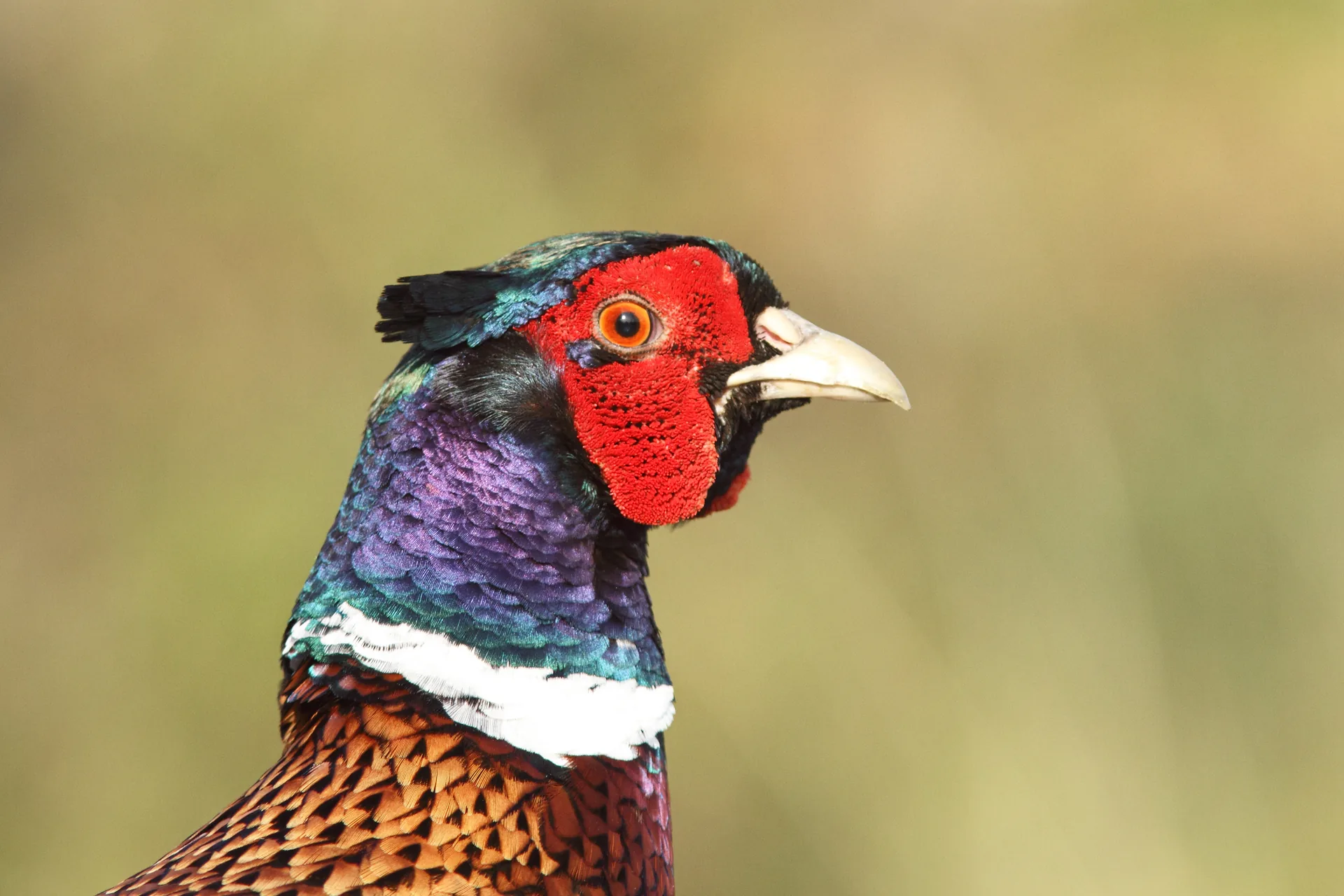
Rearing a pheasant fits into a tight annual cycle: lay as winter ends, 24 days' incubation, brooder house, then flight pen until release age. Each stage corresponds to a different product, and a different use on the ground — hatching eggs for those who want to incubate themselves, 12-to-16-week poults for summer restocking releases, adult pheasants of 20 weeks and over for the shooting season.
- 1. Lay and incubation — February to April
- The hen pheasant lays from February to April. Eggs are collected daily and incubated for 24 days (23 to 25 depending on the batch), at around 37.7 °C then 37.2 °C over the last three days, turned 4 to 6 times a day until day 21.
- 2. Chick — 0 to 6 weeks
- Heated brooder house, high-protein game starter feed, low density. This is the most sensitive period: temperature, cleanliness and calm determine everything that follows.
- 3. Poult — 6 to 16 weeks
- Move to the planted flight pen. Between 12 and 16 weeks the bird is fully feathered, flies properly and is still young enough to go wild: this is the window for summer restocking releases — prices on our poults page.
- 4. Adult — 20 weeks and over
- The shooting-season bird: full plumage, flight muscles fully developed. Common, melanistic, Chinese or PUR CHASSE® strain — prices on our hunting pheasants page.
Pen, feeding, breeding
Raising pheasants yourself: the technical benchmarks
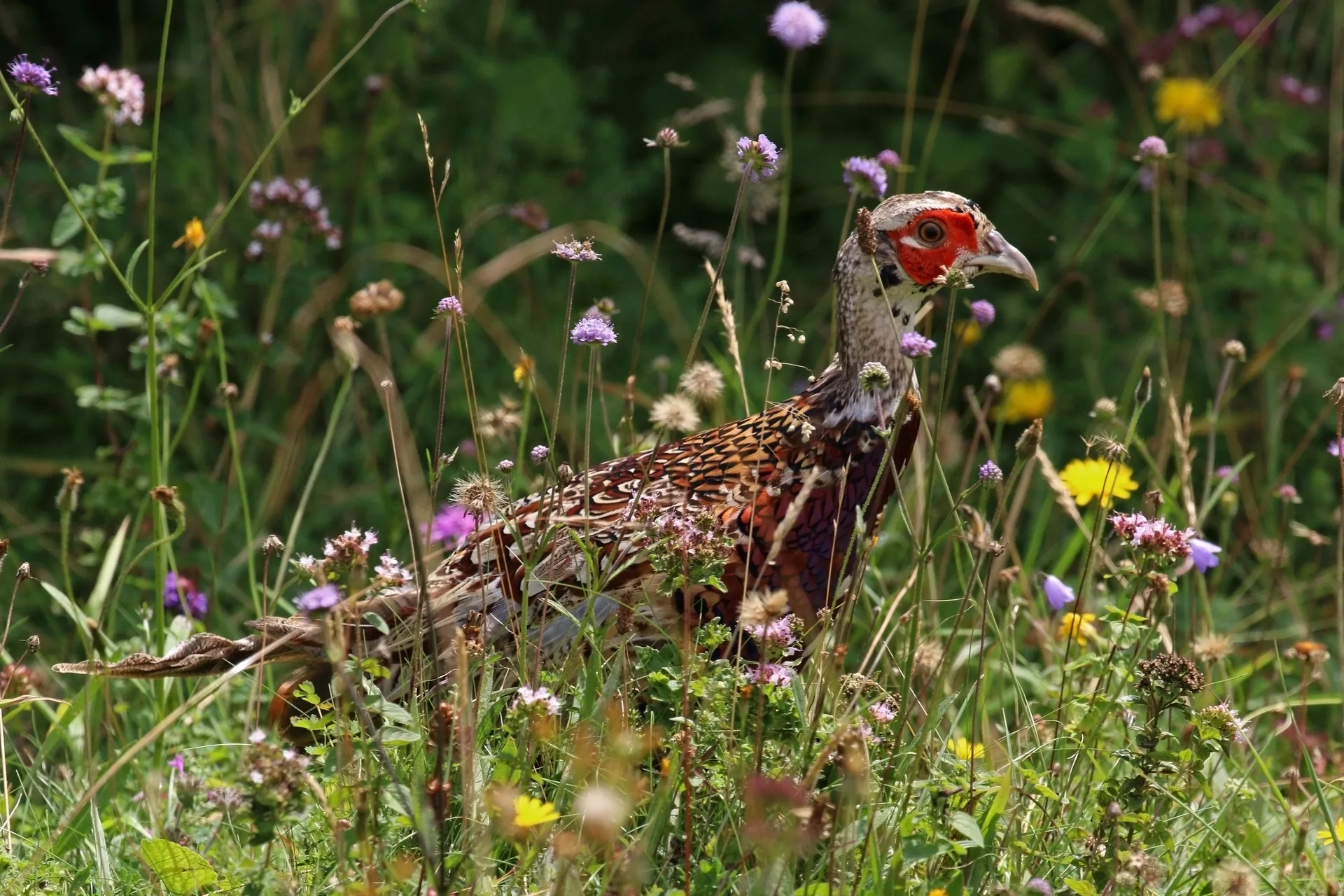
Keeping a few pheasants at home is within reach of a careful amateur, provided you understand three things: the pheasant is a wary bird that needs space and cover, its breeding is highly seasonal, and the hen pheasant is a poor sitter. Here are the benchmarks we give the people who call us before getting started.
Pen: 4 m² minimum per pair
4 m² per breeding pair is the commonly accepted minimum, and more is always better. Perches are essential, along with shelter from draughts and vegetation or brushwood so the birds can get out of sight.
Feeding: game feed by stage
High-protein starter feed for chicks, then grower, then maintenance or breeder ration. Grain as a supplement, greens and insects at will. On our farm, a large share of the grain is grown on site.
Breeding: 9 to 12 eggs, February to April
In natural conditions a hen pheasant lays 9 to 12 eggs from February to April. Daily collection keeps her laying and yields far higher numbers on a farm — but it requires an incubator.
Health and predation
Netting overhead, wire buried at the base, protection against rats and foxes, and a clean water point. Losses in a small setup almost always come from predators or poor hygiene, rarely from genetics.
Regulations: the 100-bird threshold
In France, up to 100 game birds kept on a non-commercial basis, keeping is unrestricted (ministerial order of 8 October 2018). Beyond that, or as soon as there are regular sales, a certificate of competence and a prefectoral operating licence are required. Registration as a bird keeper, though, applies with no threshold at all.
Before you order
How to choose a pheasant breeder: 6 criteria
All pheasants look alike on an invoice; they do not look alike on the wing. Here are the six questions we advise putting to any breeder — ourselves included — before placing an order. They are the ones federations and hunting clubs ask when they come to visit the farm.
- 1. The strain and its origin
- Ask the strain's name, how many generations it has been selected for, and on what criterion. A strain identified and worked over the long term does not behave like a batch bought elsewhere and resold.
- 2. The type and size of the pens
- Planted pen or bare park? What area, for how many birds? A pheasant reared without cover learns neither to go to cover nor to hide, and it shows from the first day of the season.
- 3. The ages the farm can deliver at
- A farm able to supply 12-to-16-week poults in summer as well as 20-week adults for opening day is in control of its production calendar. Be wary of a quoted age with no hatch dates for the batches.
- 4. The birds' behaviour, checked on site
- The simplest test: walk into a pen. An intensively reared bird walks and lets you approach; a hardy bird takes wing. A breeder who welcomes that demonstration has little to hide.
- 5. Approvals and traceability
- Farm registration number, certificate of competence, health certificate and an invoice stating provenance with every delivery: the documents that let a hunting club prove where its birds came from. GIBIS is registered under no. 38001.
- 6. Track record and open doors
- A farm you can visit, whose pens you can see and whose breeders you can meet, stakes its reputation on every delivery. GIBIS has been rearing game on the same site since 1951, across three family generations.
Where to look
Finding a pheasant breeder near you
There is no official, exhaustive directory of pheasant farms; the lists that exist are partial. The most reliable starting point remains your departmental hunters' federation (fédération départementale des chasseurs), which knows the suppliers working in its area and often oversees restocking operations. Two other avenues usefully complement it: word of mouth between neighbouring hunting clubs, and direct contact with farms that deliver beyond their own region. GIBIS is based at Chatte, in Isère, and delivers throughout mainland France as well as to Belgium, Switzerland and Luxembourg with its own vehicles.
Go through your departmental federation
The federation knows the farms working on its ground and the restocking arrangements set out in the departmental hunting management plan.
A distant breeder is still within reach
Transport in fitted vehicles makes it possible to deliver live birds several hundred kilometres. Proximity matters less than the strain and the rearing conditions.
Pool orders between clubs
Pheasants disperse beyond communal boundaries: coordinated releases between neighbouring grounds give better results, and a single delivery run cuts the cost for everyone.
Frequently Asked Questions
Can you keep pheasants at home?
How much pen space do pheasants need?
What does a farmed pheasant eat?
Do you need an incubator to raise pheasants?
When do hen pheasants lay, and how many eggs?
How do you recognise a serious pheasant farm?
Where can I find a list of pheasant farms in France?
See also
Come and see the farm before you order
Restocking poults or shooting-season pheasants: let's talk about your ground, your release dates and the right strain. Personalised quote on 04 76 38 31 01 or by email — visits to the farm at Chatte by appointment.