
Species profile — hunting pheasant
The common pheasant, the backbone strain of French shooting grounds
A cock of 1.5 to 1.7 kg, coppery plumage, hardiness and a habit of holding to the ground: the common pheasant — the French “faisan de France” — is the all-round strain of French shooting, the one that suits the greatest number of grounds. GIBIS breeds it at Chatte, in the Isère, and delivers it as an adult from 20 weeks.
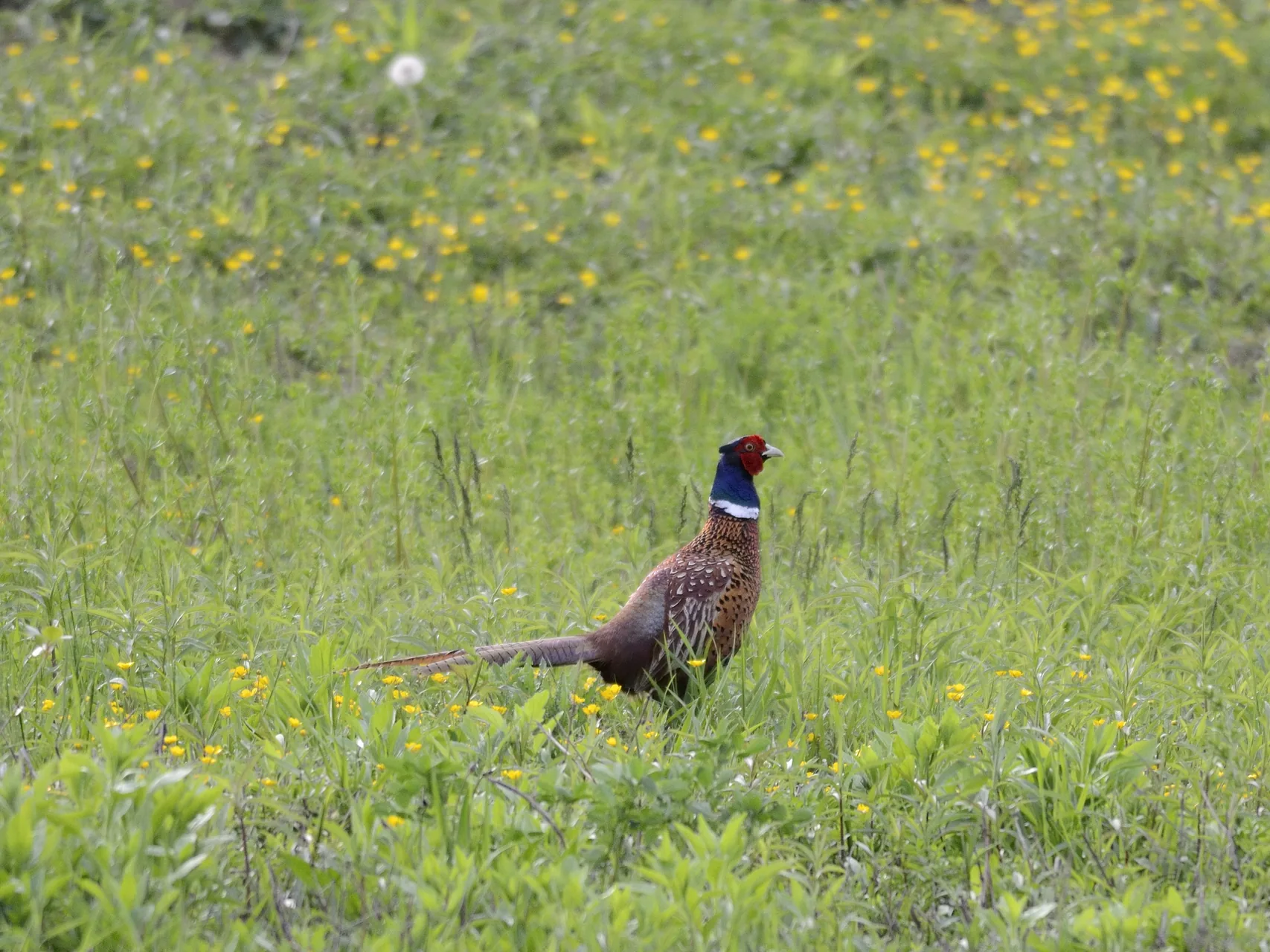
Phasianus colchicus
What is the common pheasant?
The common pheasant is the Caucasus pheasant, Phasianus colchicus (Linnaeus, 1758), the bird the ancient Greeks brought back from the banks of the river Phasis, in Colchis — today’s Georgia — and which the Romans then spread across Europe, Gaul included. Two thousand years later it is still the same bird: the most widely shot feathered game in France. What the trade calls the “common pheasant” or “faisan de France” refers to the heavy Mongolian-type strains bred for restocking: a well-built bird with coppery, golden plumage and a more or less marked white collar. For the pheasant reared in Europe today is not a pure subspecies: it comes from old crosses between the Caucasus pheasant, the Chinese ring-neck and the Japanese green pheasant — which is why the white collar shows up, more or less clearly, in most released populations.
- Origin
- Colchis (the Caucasus, today’s Georgia). Introduced to Europe as early as antiquity by the Greeks and then the Romans: the oldest farmed game bird on the continent.
- Other names
- Caucasus pheasant, hunting pheasant, and “faisan de France” for the heavy strains reared in France. In English: common pheasant.
- The cock’s plumage
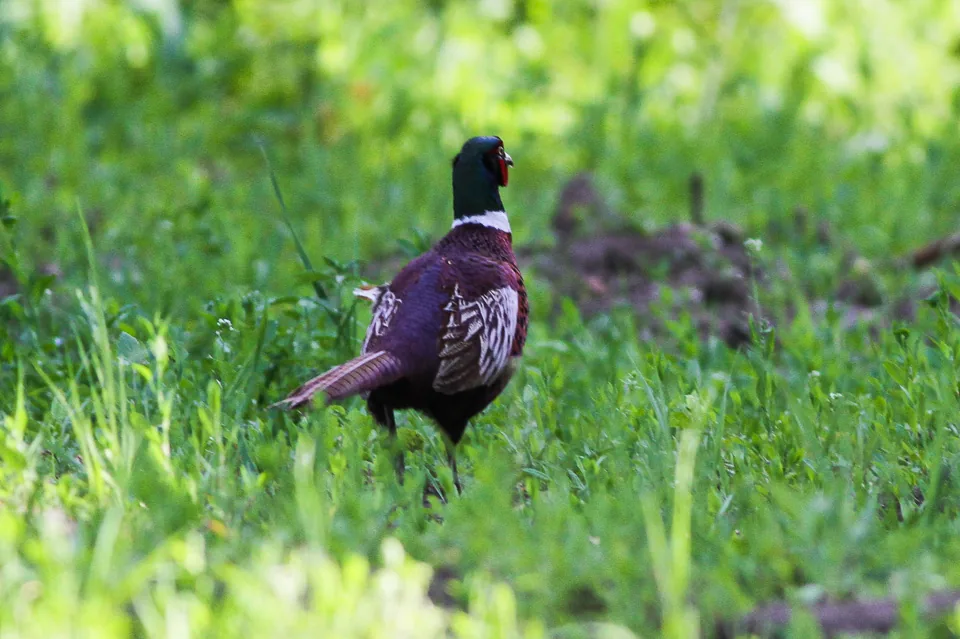
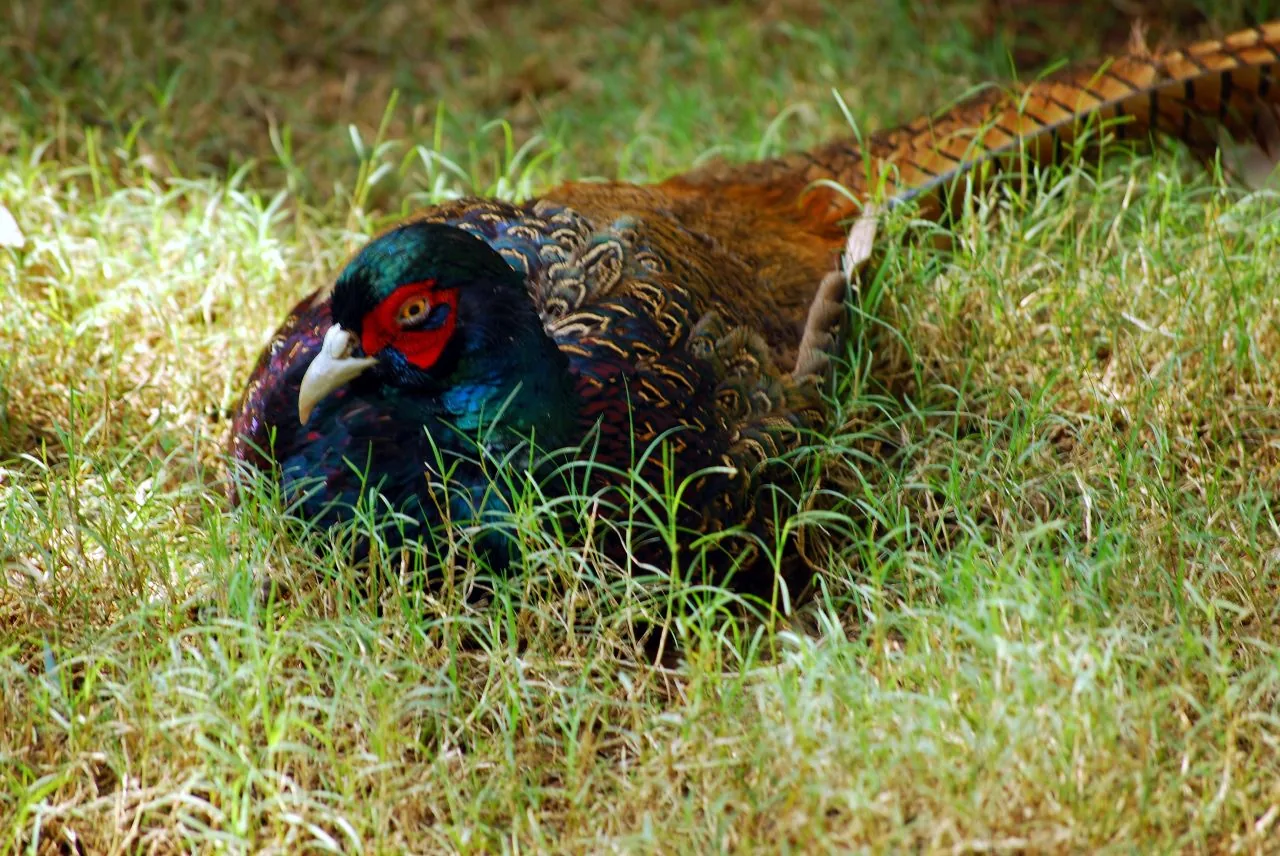
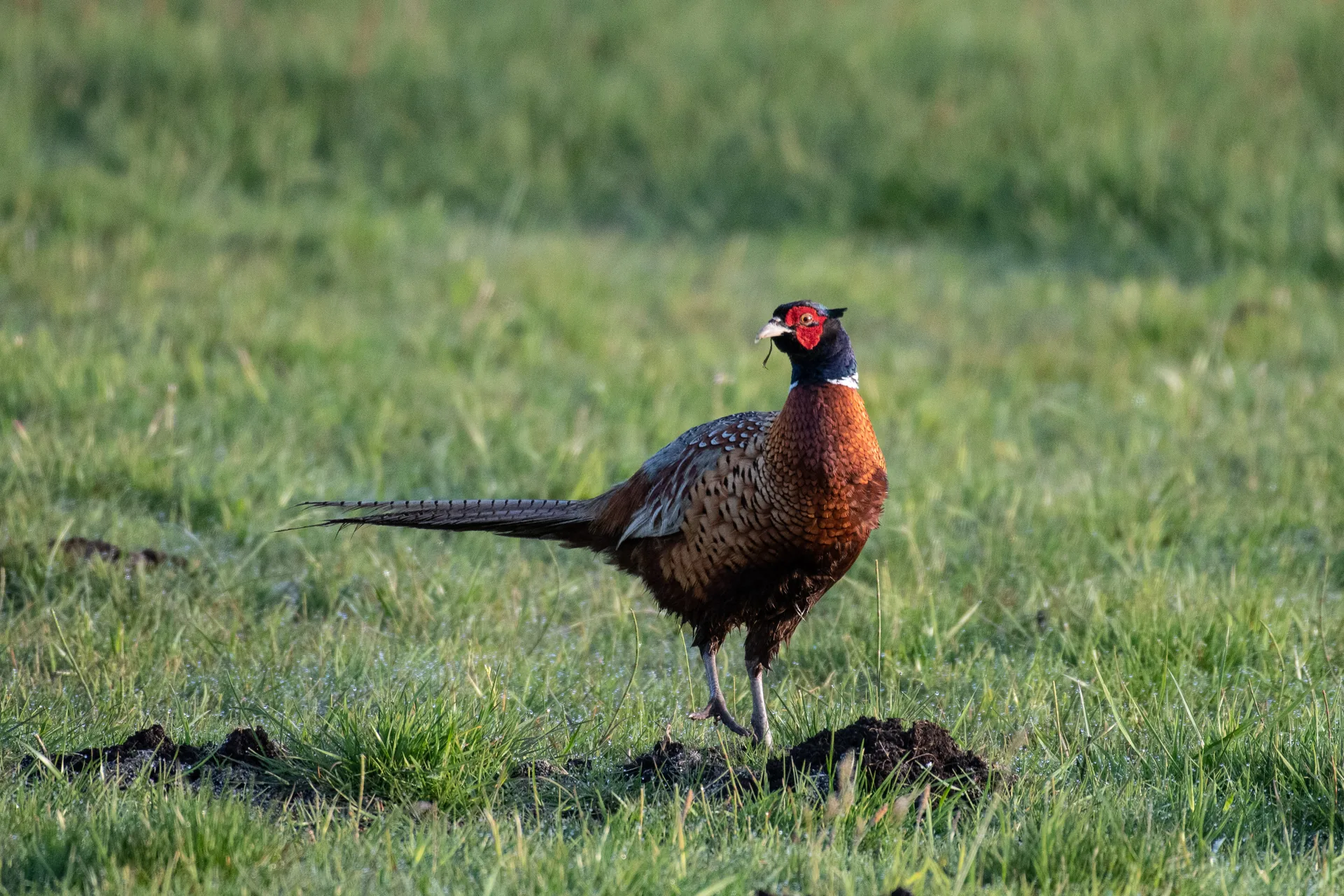
- Coppery breast and flanks with a golden sheen, bottle-green head with red wattles, variable white collar and a long barred tail.
- Size
- Cocks of 1.5 to 1.7 kg, hens of 1.1 to 1.4 kg: with the melanistic, the heaviest strain in the catalogue, well above the Chinese.
Sporting value
A hardy strain that holds to the ground
If the common pheasant remains the most widely released strain in France, it is not by default: it is because it answers the needs of the greatest number of shooting grounds. Its first quality is that it holds. Where the Chinese pheasant runs, makes long flights and strays away, the common settles in: it learns its holding cover, works the feeders and stays on the release sector — which shows directly in the recovery rate in the bag. Its second quality is hardiness: a heavy frame, good resistance to weather and temperature swings, and a decent defence against predators when the bird has been reared in a planted aviary. Its flight is honest and powerful without being as spectacular as the Chinese’s: a noisy flush, a flat trajectory, a bird that counts in the bag. It is the strain we recommend by default for plains, hedgerow country and medium-sized grounds — and the one the others should be compared against before ordering.
- Holds to the ground
- The bird settles on the release sector instead of moving to the neighbour’s: the best recovery rate of the pure strains.
- Hardiness
- A heavy strain, resistant to bad weather, which takes well to the pre-release pen and adapts to most French habitats.
- Plain and hedgerow country
- Its preferred ground: crops, hedges, rough ground and woodland edges. It works the feeders and the managed cover.
- Weight in the bag
- 1.5 to 1.7 kg for an adult cock (1.2 to 1.5 kg for a young bird of 14 weeks): a substantial quarry, and good on the table.
Choosing your strain
Common, Chinese, melanistic, PUR CHASSE®: the comparison table
The choice of a strain is made in the field, not in the catalogue. The table below sums up the orders of magnitude; for a reasoned choice based on your acreage, your cover and your style of shooting, see our guide to choosing your pheasant strain.
| Strain | Cock weight | Flight | Holds to the ground | Typical ground |
|---|---|---|---|---|
| Common pheasant | 1.5–1.7 kg | Honest and powerful | Very good | Plain, hedgerow country, medium-sized grounds |
| Chinese pheasant | 1.1–1.4 kg | Explosive, very long | Poor (strays away) | Large open grounds |
| Melanistic pheasant | 1.5–1.7 kg | Honest, strong defence in cover | Good | Woodland, edges, hills — selective shooting |
| FAISAN PUR CHASSE® | Wild type | Selected on flight | Good | Demanding flying shoots, quality restocking |
The common is also the backbone of the crosses: our US cross (Chinese-strain cock × common hen) combines its ability to hold with the flight of the Chinese — it is the strain of our most sought-after summer poults. The full catalogue is presented on the hunting pheasants page.
The all-rounder
Common pheasant: the default choice when the ground imposes nothing in particular — and the benchmark the other strains are measured against.
The athlete
Chinese pheasant: lighter, explosive take-off, but you need acreage to keep it. See the dedicated profile.
The woodland bird
Melanistic pheasant: the same size as the common, with black plumage that allows selective shooting, and a strong defence in the woods. See the dedicated profile.
The exclusive
FAISAN PUR CHASSE®: our registered strain, natural breeding in the aviary and flushing with pointing dogs.
GIBIS game farm, Chatte (Isère)
Our common pheasants: husbandry and availability
GIBIS has been breeding restocking game at Chatte, in the Isère, since 1951 — three generations on the same site. Our common pheasants are managed like the rest of the production: large planted aviaries at low density, with natural cover and perches, so that the birds develop their flight muscles and their holding reflexes before release. The tail is our first check before a bird leaves: complete, long and clean — a broken tail betrays overcrowding in the aviary. We deliver adults from 20 weeks, in mixed lots or as cocks only depending on your needs, and young birds from 14 weeks through our pheasant poults for summer releases. Delivery in our own fitted vehicles throughout mainland France, as well as Belgium, Switzerland and Luxembourg, with health documents supplied. Booking in the spring is advisable: August and September are the tightest months.
- Planted aviaries
- Natural cover and low density: complete plumage, an entire tail and developed flight muscles.
- Adults from 20 weeks
- The minimum delivery age for the shooting season; poults from 14 weeks for summer releases.
- Delivery in France and neighbouring countries
- Transport in our fitted vehicles, live arrival guarantee, health certificates. Belgium, Switzerland and Luxembourg delivered.
- Quotations and volume discounts
- Prices fall with quantity. Quotation by telephone on 04 76 38 31 01 or by e-mail.
Season 2026 Pricing
2026-2027 hunting season — prices current as of August 2026
Common pheasant
Frequently Asked Questions
How much does a common pheasant cost?
What does “faisan de France” mean?
Why are cocks on their own more expensive than the per-bird price?
Common or Chinese pheasant: which should I choose?
Does the common pheasant hold well after release?
What is the difference between the common pheasant and the melanistic pheasant?
At what age and at what time of year do you deliver common pheasants?
Do you deliver common pheasants everywhere in France?
See also
The strain that suits most shooting grounds, bred in Isère since 1951
Tell us about your ground, your quantities and your opening date: we will confirm that the common is the right strain — or point you towards another. Quotation on 04 76 38 31 01 or by e-mail.