
References — federations, ACCAs and hunting clubs
They trust us: federations and hunting grounds
Our best calling card is the grounds that release our birds. Summer 2026: 2,312 poults of the FAISAN PUR CHASSE® strain delivered across Isère as part of the departmental federation's poult release scheme. On this page, every figure and every quotation is traced back to its source.
The current campaign
Summer 2026: 2,312 PUR CHASSE® poults delivered to 59 hunting grounds in Isère
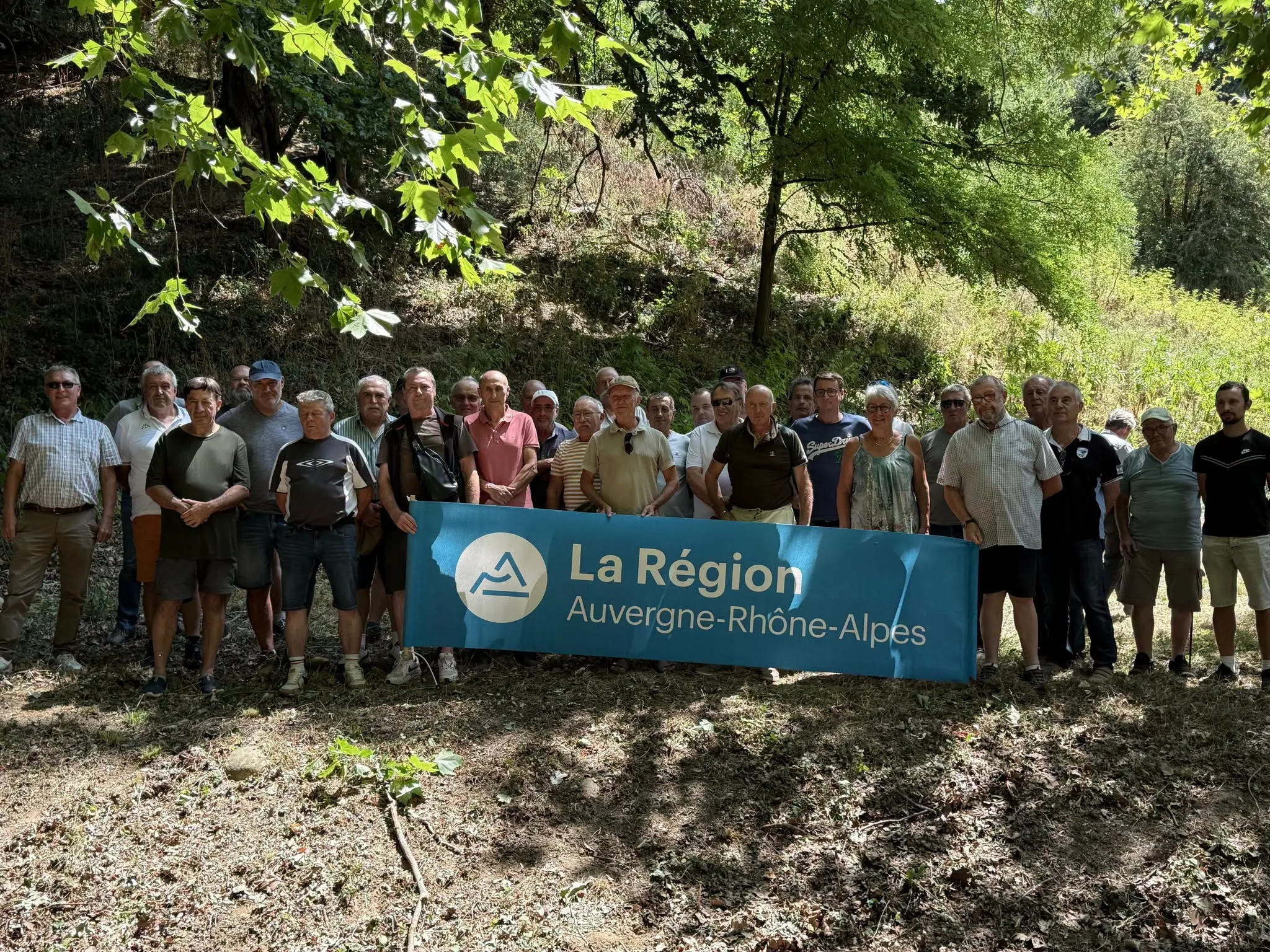
On 31 July 2026, the Fédération Départementale des Chasseurs de l'Isère — FDC Isère, the departmental hunters' federation — announced on its official page that 'the first poult releases have begun!'. The summer campaign covers 2,312 birds of 14 to 15 weeks, destined for 59 hunting-rights holders — 57 ACCAs (communal hunting associations) and 2 private shoots — and distributed from six delivery points across the department: Chatte, Beaucroissant, Viriville, Saint-Savin, Bellegarde-Poussieu and Le Gua. These birds, the federation states, are 'from Strauch strains available under the name Faisan PUR CHASSE®': they are ours, reared at Chatte. The post closes with a sentence we take as the finest recommendation there is: 'A big thank-you to the breeder Gibis for its support in this endeavour'. Source: post by the FDC Isère on its official Facebook page, 31 July 2026, consulted on 1 August 2026 — as the federation provides no public permalink for this post, we report it as seen, without reconstructing its address.
59 hunting-rights holders
57 ACCAs and 2 private shoots supplied over the summer 2026 campaign, according to the FDC Isère's announcement of 31 July 2026.
2,312 pheasant poults
Birds of 14 to 15 weeks at release, of the FAISAN PUR CHASSE® strain, reared in our pens at Chatte.
6 delivery points
Chatte, Beaucroissant, Viriville, Saint-Savin, Bellegarde-Poussieu and Le Gua: the department covered from north to south.
Ringed birds
As in previous campaigns, the released poults carry a specific ring, letting the federation track recoveries and dispersal.
They came to see our pens
July 2026: 24 ACCAs from Haute-Loire and hunters from the Drôme visit Chatte
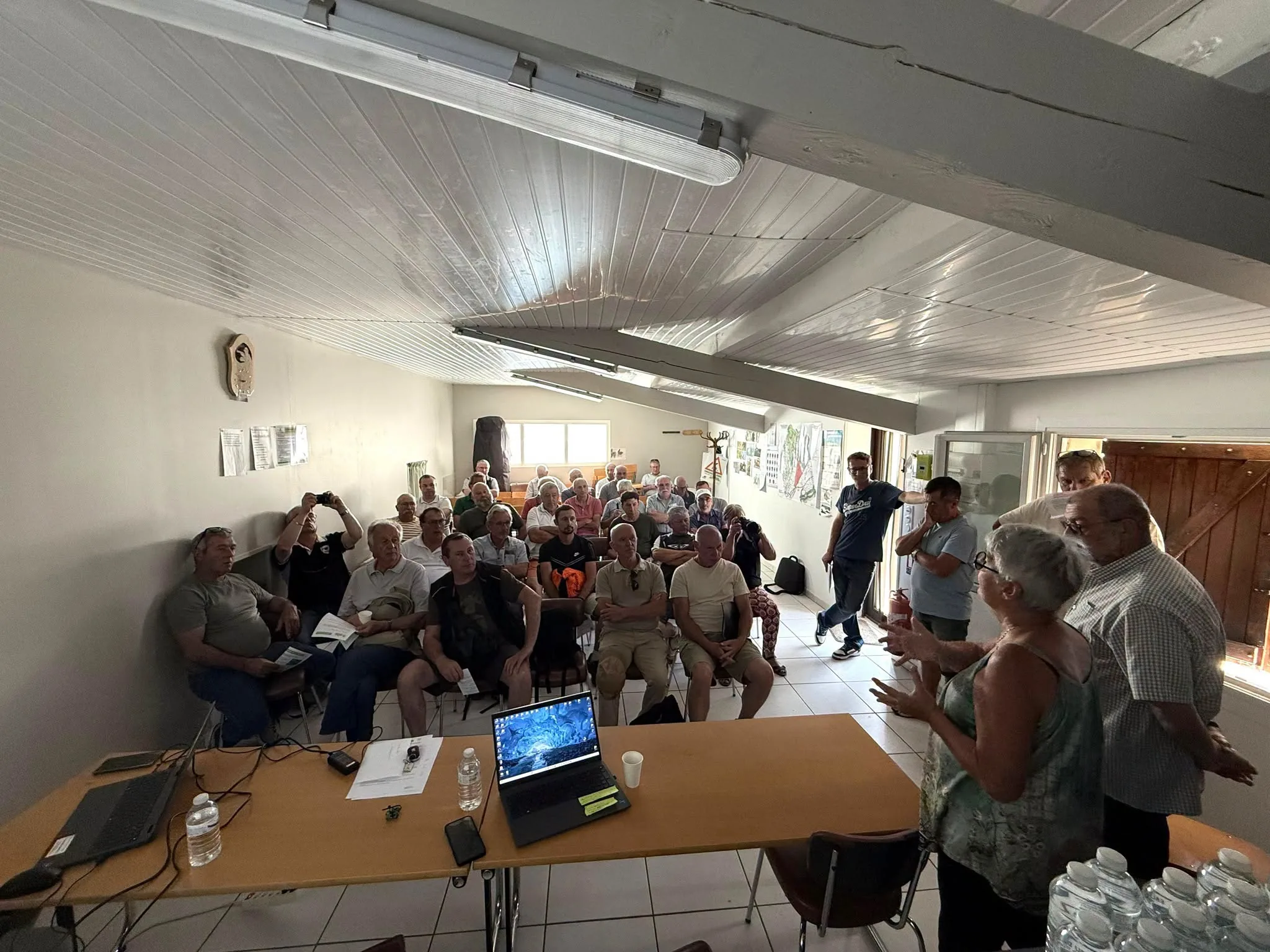
On Thursday 23 July 2026, the small-game hunters' association of Haute-Loire — 24 ACCAs represented, some forty participants — travelled to Isère, joined on site by hunters from the Drôme. The day, organised with the Fédération Départementale des Chasseurs de l'Isère and led by its technicians Sébastien Blanchard and Antony Valdivia, combined a presentation of the poult release scheme with a tour of our farm at Chatte. Discussions covered the origin of the strain, the birds' age at release, pre-release pens, feeding and predator control, with a demonstration comparing the behaviour of an intensively reared common pheasant with that of our birds from large flight pens. Source: report published by the FDC Isère on 24 July 2026. The full story of the day is told on our poults page.
- 24 hunting associations in Haute-Loire
- Some forty participants travelling as a delegation, accompanied by representatives of their departmental federation.
- Hunters from the Drôme
- The neighbouring department joined the visit: interest in summer poult releases reaches well beyond Isère.
- On-site demonstration
- Flushing behaviour compared between an intensively reared pheasant and our birds, reared in planted pens and flushed with pointing dogs.
What the official documents say
Our place in Isère's poult release scheme
The poult release scheme is a programme of the Isère federation, not a GIBIS programme: we are one of its suppliers, not its organiser. The departmental hunting management plan (SDGC) 2025-2031, approved by prefectoral order of 26 June 2025, sets among its aims to 'work with the various small-game breeders of Isère with a view to improving farmed strains'. The same document describes 'a concerted experiment between game breeders of Isère and volunteer hunting clubs on releasing birds in the summer period', running since 2023 and covering poults of 12 to 16 weeks. GIBIS is one of those Isère small-game breeders: the federation issues no breeder accreditation and does not name us in its regulatory documents — its only mention of our farm by name to date is in its posts of July 2026. The SDGC can also be consulted on the website of the French State services in Isère.
- 142 associations, 7,200 pheasant poults (2023-2025)
- Results of the experiment published in the FDC Isère's SDGC 2025-2031, all birds ringed: 'all birds being identifiable by a specific ring'.
- Dispersal of up to 26 km
- The SDGC notes that 'significant bird dispersal is observed (up to 26 km from the release point)': a strong argument for coordinated releases between neighbouring clubs.
- Younger birds, from wild strains
- The FDC Isère wrote in April 2026: 'Since 2023, clubs have been encouraged to release younger pheasants (14 to 16 weeks) from natural strains'.
- A ten-year track record
- As early as July 2015, '12 hunting associations of the Balmes and Marais du Dauphiné… released 700 ringed poults in July 2015', according to the FDC Isère.
What the federation asks for, what we produce
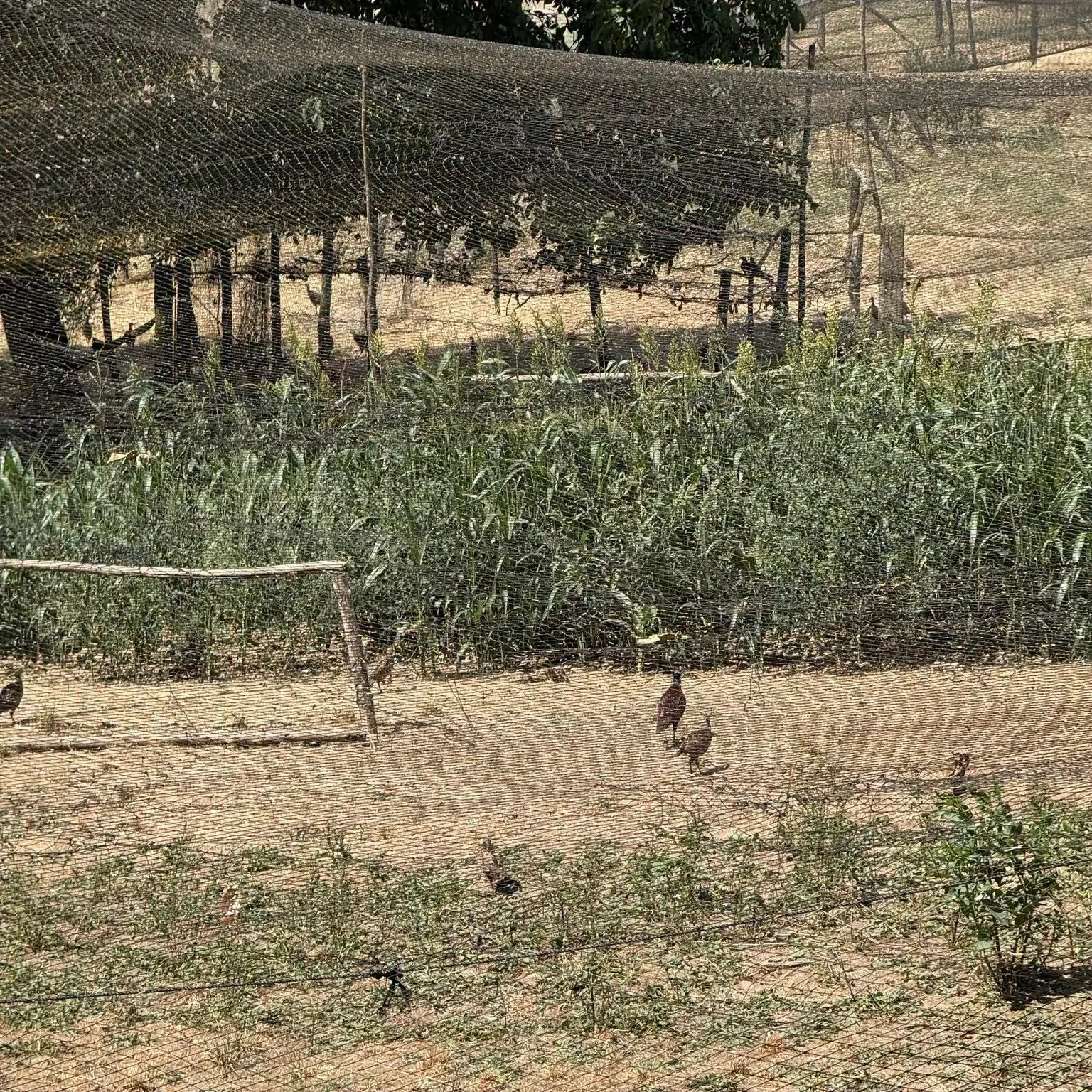
The FDC Isère's territorial development plan (PDT), published online on 1 September 2023, makes its pheasant restocking grants conditional on a clear rule: 'restock only with pheasants of an ONCFS strain or of the Chinese type'. The same document recommends 'releasing poults of around 10 weeks between 15 June and 15 August, with a sex ratio of one third cocks to two thirds hens', a density of 13 birds per 100 hectares of open ground and a maximum of 400 poults per hectare of pen. These recommendations are the federation's, not our rearing protocol: we restate them because they frame the orders we receive. Our role stops at what we control: producing young, hardy, flying birds, and delivering them alive at the right age, on the right date.
Release between 15 June and 15 August
The window recommended by the FDC Isère's PDT. Our summer deliveries are organised over this period, from June to August.
13 birds per 100 hectares
The restocking density adopted by the PDT for open ground: a useful benchmark for sizing an order.
400 pheasant poults/hectare maximum in the aviary
The maximum holding capacity given in the PDT's 'English pen' technical sheet. We rear at far lower densities, in planted pens.
ONCFS or "Chinese"-type strain
The federation's grant condition for pheasant restocking, as written in the FDC Isère's PDT.
A question of strain
From Phasianus colchicus strauchi to FAISAN PUR CHASSE®
In its announcement of 31 July 2026, the FDC Isère describes the released birds as 'from Strauch strains available under the name Faisan PUR CHASSE®'. One clarification matters, because the word circulates widely and often wrongly: Strauch is not a breeder. Alexander Strauch (1832-1893) was a Russian naturalist, director of the Zoological Museum of Saint Petersburg, honoured in the names of several taxa. The name here refers to Phasianus colchicus strauchi, a subspecies of the common pheasant described by the World Pheasant Association France as 'native to Kansu up to 3,000 m altitude' — the Gansu, in China. Its range covers north-western and north-central China. In other words, it is a Chinese-type pheasant — the very type the federation's PDT requires for restocking. The federation does not itself draw this connection in its technical documents: it is our reading, based on public sources. What we ourselves guarantee is the selection work: FAISAN PUR CHASSE® is our registered trademark, a strain bred 100% naturally in large planted flight pens and flushed with pointing dogs.
A subspecies, not a breeding label
Phasianus colchicus strauchi is a taxon described by ornithologists. No public source links the name 'Strauch' to any breeding farm.
The value of wild strains, documented
The ONCFS measured, on radio-tracked hen pheasants, breeding-season survival of 17% for the standard farmed strain, 44% for the improved strain and 75% for wild-origin birds.
Behaviour before plumage
Young birds from the ONCFS conservatory strains 'show greater wariness of humans and predators' than those from parents kept captive for many generations.
PUR CHASSE® PHEASANT, our brand
Natural breeding in a one-hectare pen, feed from our own grain, flushing with dogs: the strain we deliver to the poult release scheme.
How we cite our sources
We would rather publish a careful page than a flattering one. The public figures for the poult release scheme come from the documents of the Fédération Départementale des Chasseurs de l'Isère — the departmental hunting management plan, the territorial development plan, articles published on chasse38.com — and the biological data from ONCFS/OFB publications, notably Faune Sauvage no. 274 (2006). Two caveats, which we own rather than hide: the federation's regulatory documents name no breeder, and the post of 31 July 2026 that mentions us has no verifiable public permalink — we report it as seen and consulted on 1 August 2026. We do not present ourselves as an accredited breeder or as any federation's official breeder: no such qualifications exist.
Frequently Asked Questions
Who supplies the poults for Isère's poult release scheme?
Is GIBIS the official breeder of the Isère hunters' federation?
How many poults have been released in Isère since the scheme began?
What is the Strauch strain the federation mentions?
Can we visit the farm before ordering?
See also
Do as the 59 grounds supplied this summer did
Poults of the FAISAN PUR CHASSE® strain, delivered alive at the right age to your ground, or a visit to the farm at Chatte to judge for yourself. Quotes and appointments on 04 76 38 31 01 or by email.