
Guide — hunting pheasants
Choosing your pheasant strain: the guide, ground by ground
Common, FAISAN PUR CHASSE®, Chinese or melanistic: no strain is “the best” in the abstract — each answers a particular ground and a particular shooting objective. This guide, written by a game farm established at Chatte, in the Isère, since 1951, gives you the concrete criteria for deciding before you order.
The method
The choice is made in the field, not in the catalogue
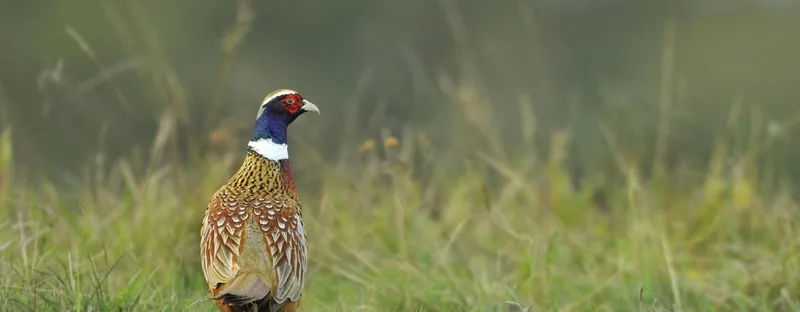
Before comparing strains, ask yourself three questions. One: what is your ground — open cereal plain, hedgerow country, woodland and edges, hills? That is the main criterion, because every strain has a habitat where it excels and one where it disappoints. Two: what is your objective — a shooting release for the season, summer restocking, or the qualitative management of a wild population that is becoming established? Three: how much acreage do you really have, and do your neighbours shoot? A strain that strays across 200 hectares will make the neighbouring ground very happy. The four strains in our pheasant catalogue cover all these situations: the table below sets them side by side, and the detailed profiles take over for each strain.
1. The ground
Plain, hedgerow country, woodland, hills: the habitat decides before you do. A light strain in small hedgerow country, or a woodland strain on a bare plain, is a wasted release.
2. The objective
A shooting release before the opening, summer restocking with poults, or selective shooting over a mixed population: each objective has its strain and its release age.
3. Acreage and neighbours
The further a strain flies, the more acreage you need to keep it. On a small ground, holding matters more than flying performance.
The four GIBIS strains compared
The decision table: which strain for which use?
The table below sums up decades of field feedback from our customers — shooting clubs, hunting associations and federations. The prices shown are our catalogue prices per bird for adults of 20 weeks minimum, falling with quantity; the 14-week poults for summer releases have their own separate price list.
| Use / ground | Recommended strain | Size | Flight | Holding to the ground | Indicative price |
|---|---|---|---|---|---|
| Plain and hedgerow country, managed ground, all-round restocking | Common pheasant (Mongolian type) | Heavy — cock 1.5 to 1.7 kg, hen 1.3 to 1.5 kg | Good, honest flush | Very good: settles readily on managed ground | Adult 14,90 € (cock only 16,50 €); poult 14 wks 11,60 € |
| Demanding flying shoots, presentation over pointing dogs, quality driven days | FAISAN PUR CHASSE® | Intermediate, athletic | Excellent: explosive flush, sustained flight, able to take cover again | Good: reared to take cover rather than fly off in a straight line | Adult 19,00 €; poult 14 wks 13,50 € |
| Large open grounds; as a US cross for medium-sized grounds | Chinese pheasant (and US cross) | Light — cock 1.1 to 1.4 kg, hen 0.6 to 1.2 kg | The fastest: explosive take-off, flights of several kilometres | Poor: runs and strays away — the US cross partly corrects this | Adult 14,90 € (cock only 16,50 €); US cross poult 11,60 € |
| Woodland, edges, hills; selective shooting on ground with a wild population | Melanistic pheasant | Heavy — cock 1.5 to 1.7 kg, hen 1.3 to 1.5 kg | Good, very strong defence in cover | Very good in woodland: it takes cover and makes you work for it | Adult 14,90 € |
Open and semi-open ground
Plain and hedgerow country: common for holding, PUR CHASSE® for flight
On a cereal plain or in managed hedgerow country — feeders, water points, strips of cover — the Mongolian-type common pheasant remains the safe bet: heavy and hardy, it settles well and gives an excellent recovery rate, including for summer restocking with poults of 14 weeks. If your priority is the quality of the shooting rather than the volume, the FAISAN PUR CHASSE®, our exclusive registered strain, has been selected for decades on flight alone: natural breeding in the aviary, rearing in large planted aviaries, and flushing with pointing dogs. The price difference — 19,00 € for an adult against 14,90 € — is entirely accounted for by that method of production, and it shows at the flush from the very first bird.
- The common: the all-rounder
- Hardy, heavy, with a good recovery rate: the default choice for plains, hedgerow country and restocking programmes.
- PUR CHASSE®: flight first
- Explosive flush and sustained flight, able to take cover again: the strain for teams who want birds that are hard to shoot.
- Habitat does half the work
- Feeding, cover maintained, a pre-release pen: the best strain in the world will not settle on bare ground.
Selective shooting
Woodland, hills and fine management: the case for the melanistic
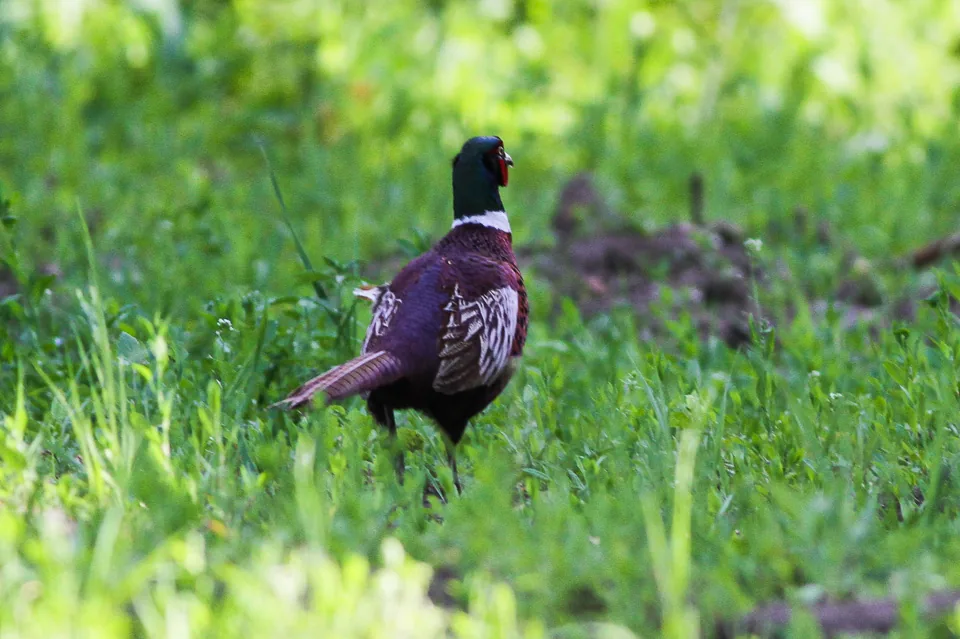
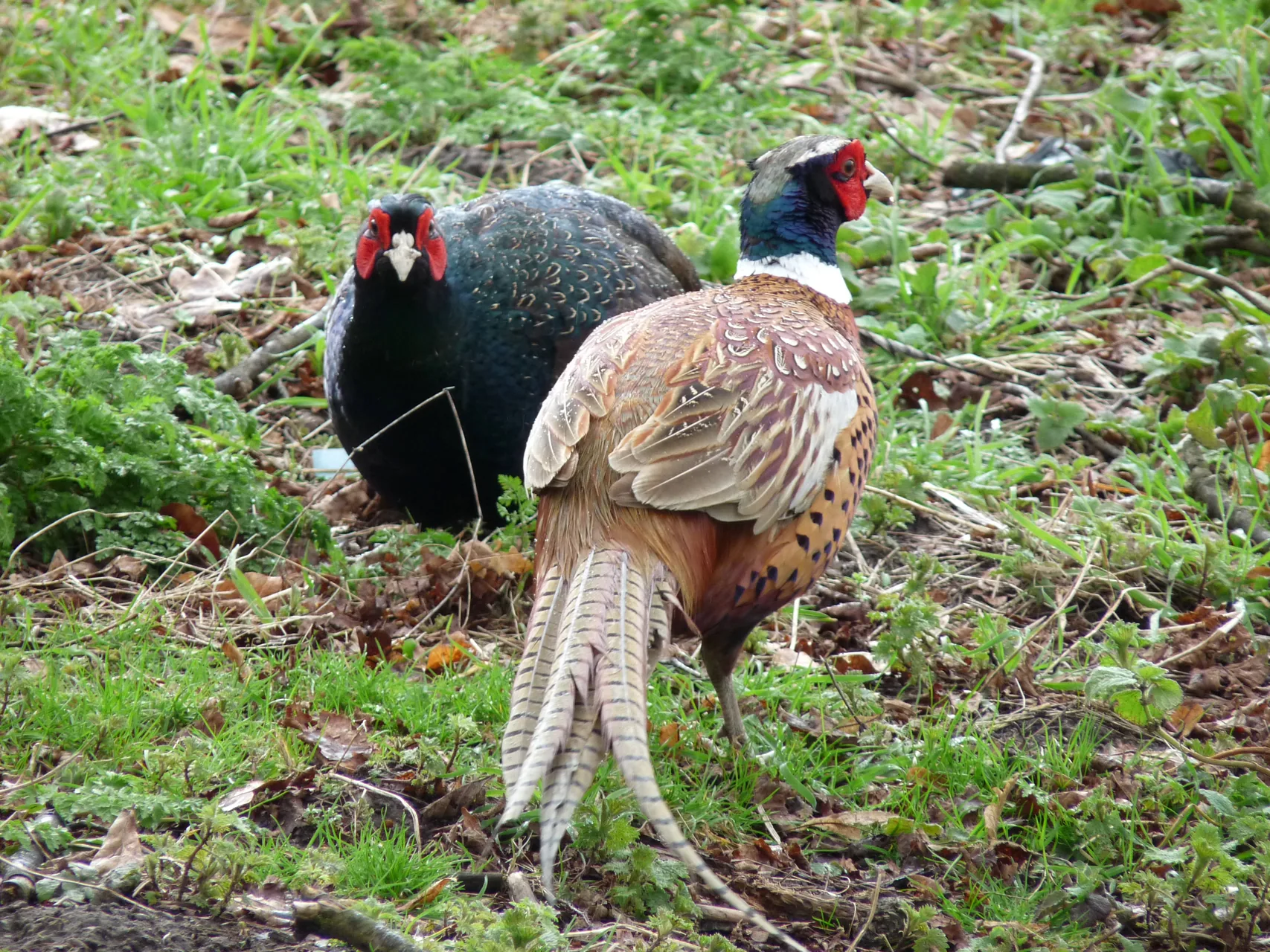
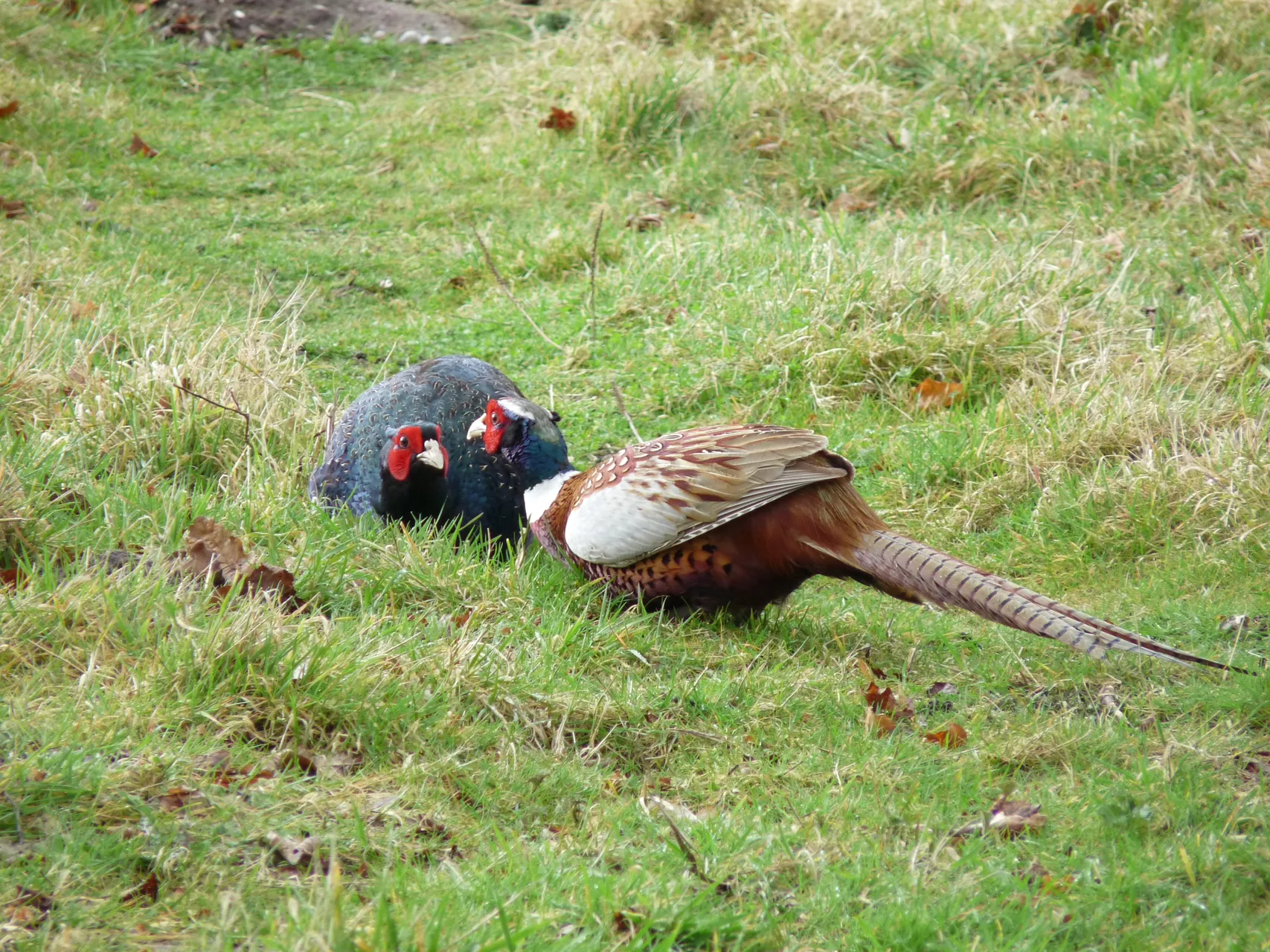
The melanistic pheasant is not a separate species: it is the melanistic variety of the common pheasant, with black plumage and a metallic sheen. It keeps the heavy frame and the holding of the common, with one quality of its own: an excellent defence in woodland, along edges and on broken ground, where its dark plumage acts as camouflage. Above all it has a use the French wildlife agency ONCFS cites explicitly in qualitative management (Faune Sauvage no. 274, 2006): on ground where a wild population of common pheasant is establishing itself, releasing melanistic birds makes it possible to shoot only the reared ones — the colour does the sorting at the flush, with no ringing required. It is the strain for wooded ground and for managers who want to shoot without compromising their restocking.
- The woodland strain
- Defence in cover and natural camouflage in brambles and undergrowth: it takes cover instead of fleeing across open ground.
- Selective shooting by plumage
- Black against coppery: at the flush, the released bird can be told from the wild pheasant, and the natural breeders are spared.
- The size of a common
- A cock of 1.5 to 1.7 kg: the same weight in the bag as the common, at the same adult price of 14,90 €.
The light strain
Large open ground and sporting shooting: pure Chinese or US cross?
The Chinese pheasant (Phasianus colchicus torquatus, also known as the US pheasant) is the sportiest strain in the catalogue: a cock of 1.1 to 1.4 kg, explosive take-off, immediate height, and flights that can cover several kilometres. Its limitation is the exact reverse of its quality: it runs and strays, and on a small ground some of the birds move to the neighbour’s within days of the release. We therefore keep it for large grounds, or for releases run with pre-release pens. For medium acreages, the US cross — a Chinese-strain cock over a common hen — is the compromise we recommend most often: it keeps the lively flight of the Chinese and recovers the hardiness and holding of the common. Our summer release poults are in fact offered as common or US cross, at the same price of 11,60 € at 14 weeks.
- Pure Chinese: the strongest flier
- For extensive grounds only: spectacular flushes, but the bird does not stay on a small acreage.
- US cross: the compromise
- Lively flight inherited from the Chinese, holding and hardiness inherited from the common: the right choice for a medium-sized ground.
- Our honest advice
- We would rather advise you against the pure Chinese before the order than watch you count the missing birds after the release.
Poults or adults
Age matters as much as strain
Once the strain is chosen, the age remains. For summer restocking, use poults of 12 to 16 weeks, released 6 to 12 weeks before the opening so that they go wild on site: 11,60 € for common or US cross, 13,50 € for PUR CHASSE® at 14 weeks, plus 0,55 € for each additional week of age. For the shooting season, use adults of 20 weeks minimum, in full plumage and with their flight muscles formed, to be released at least three to four weeks before the opening — or in staggered releases during the season for late shooting days, where size and freshness of flight come first: common or melanistic for holding, PUR CHASSE® for quality of presentation. All the strains are reared at Chatte, in the Isère, in large planted aviaries, and delivered in our fitted vehicles in France and neighbouring countries; an entire tail is our first check before a bird leaves. Book in the spring: August and September are the tightest months.
Summer restocking
Poults of 12 to 16 weeks, released early so that they go wild: the economical and lasting way to rebuild a population.
Shooting season
Adults of 20 weeks minimum, released 3 to 4 weeks before the opening so that they settle, or in staggered releases.
Delivery in France and neighbouring countries
Fitted vehicles, live arrival guarantee, health certificates. Belgium, Switzerland and Luxembourg also delivered.
Frequently Asked Questions
Which pheasant strain should I choose for a cereal plain?
Which pheasant strain for hedgerow country and woodland?
What is the difference between the melanistic pheasant and the Chinese pheasant?
Which strain for a late release or a shooting release?
Can several pheasant strains be mixed on the same ground?
Is the FAISAN PUR CHASSE® worth the price difference?
See also
Still unsure about the strain? Describe your ground to us.
Acreage, cover, shooting objective, release period: in a few minutes on the telephone we will tell you which strain — and which age — will give the best result on your ground. Quotation on 04 76 38 31 01 or by e-mail. Hunting, the natural way!