
Species profile — hunting pheasant
The Chinese pheasant, the light, hard-flying strain
A cock of 1.1 to 1.4 kg, a bold white collar, an explosive flush: the Chinese pheasant is the sportiest strain in our catalogue. We breed it at Chatte, in Isère, and deliver it as an adult from 20 weeks.
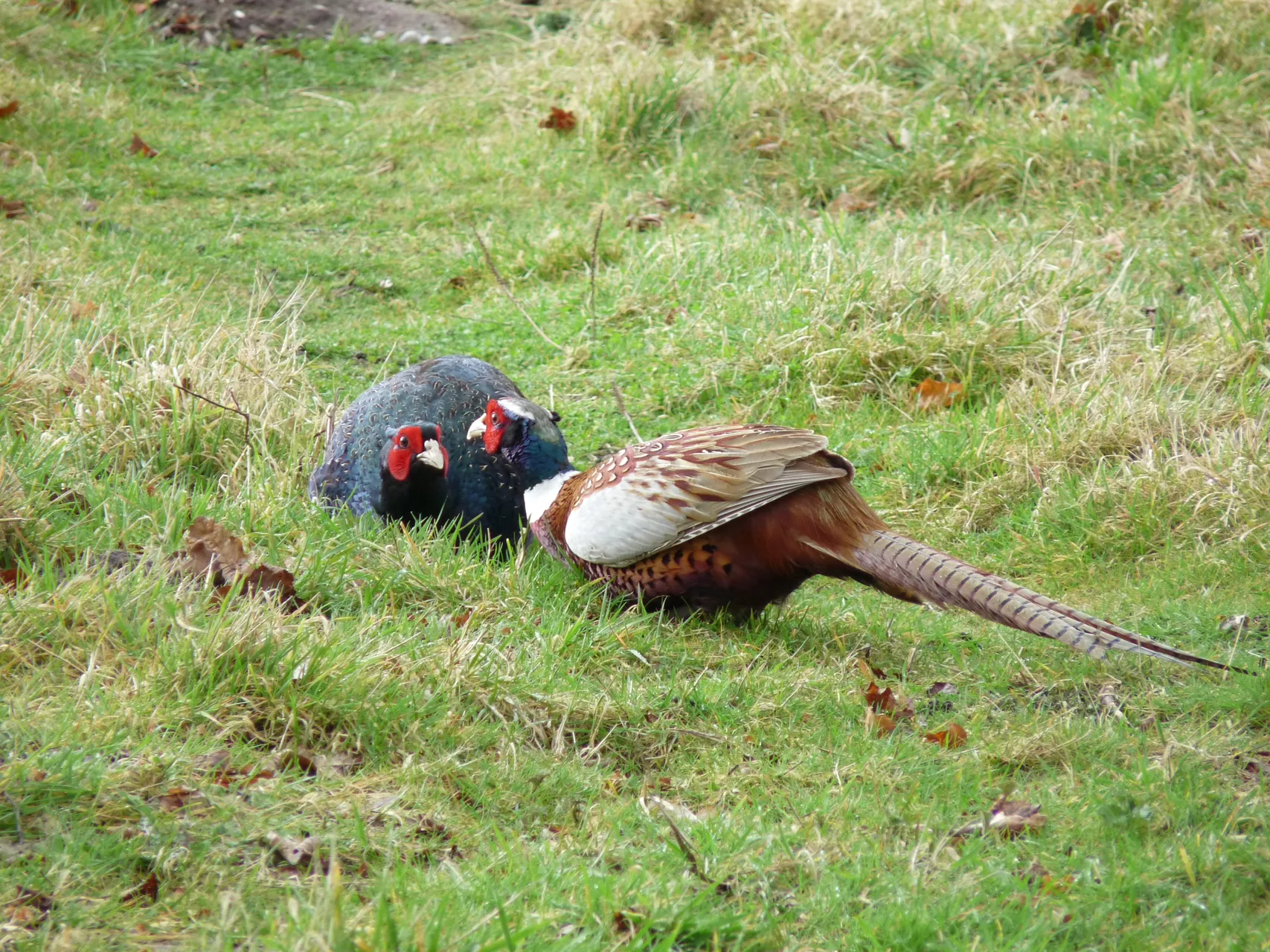
Phasianus colchicus torquatus
What is the Chinese pheasant?
The Chinese pheasant is the Chinese ring-necked pheasant, Phasianus colchicus torquatus (Gmelin, 1789): a subspecies of the common pheasant native to eastern China. In the French game-farming world it is also called the US or American pheasant, because all North American populations descend from birds shipped out of Shanghai in 1881-1882 by consul Owen N. Denny, whose second consignment took hold in the Willamette Valley, in Oregon. It is the most widely produced type of pheasant in the world for shooting, releases and gun-dog training. Beware of a common confusion: the Chinese hunting pheasant has nothing to do with the golden pheasant, sometimes sold as the 'Chinese pheasant', which is an ornamental bird.
- Origin
- Eastern China. The Chinese forms only reached Europe in the 18th century, more than a thousand years after the Caucasus pheasant.
- The white collar
- A broad white neck ring, often broken at the front: the diagnostic trait of the torquatus group, absent in the Caucasus pheasant.
- Other names
- Chinese ring-necked pheasant, US pheasant, American pheasant: three names for the same torquatus strain.
- Size
- Cocks of 1.1 to 1.4 kg, hens of 0.6 to 1.2 kg: a markedly lighter strain than the Mongolian-type common pheasant.
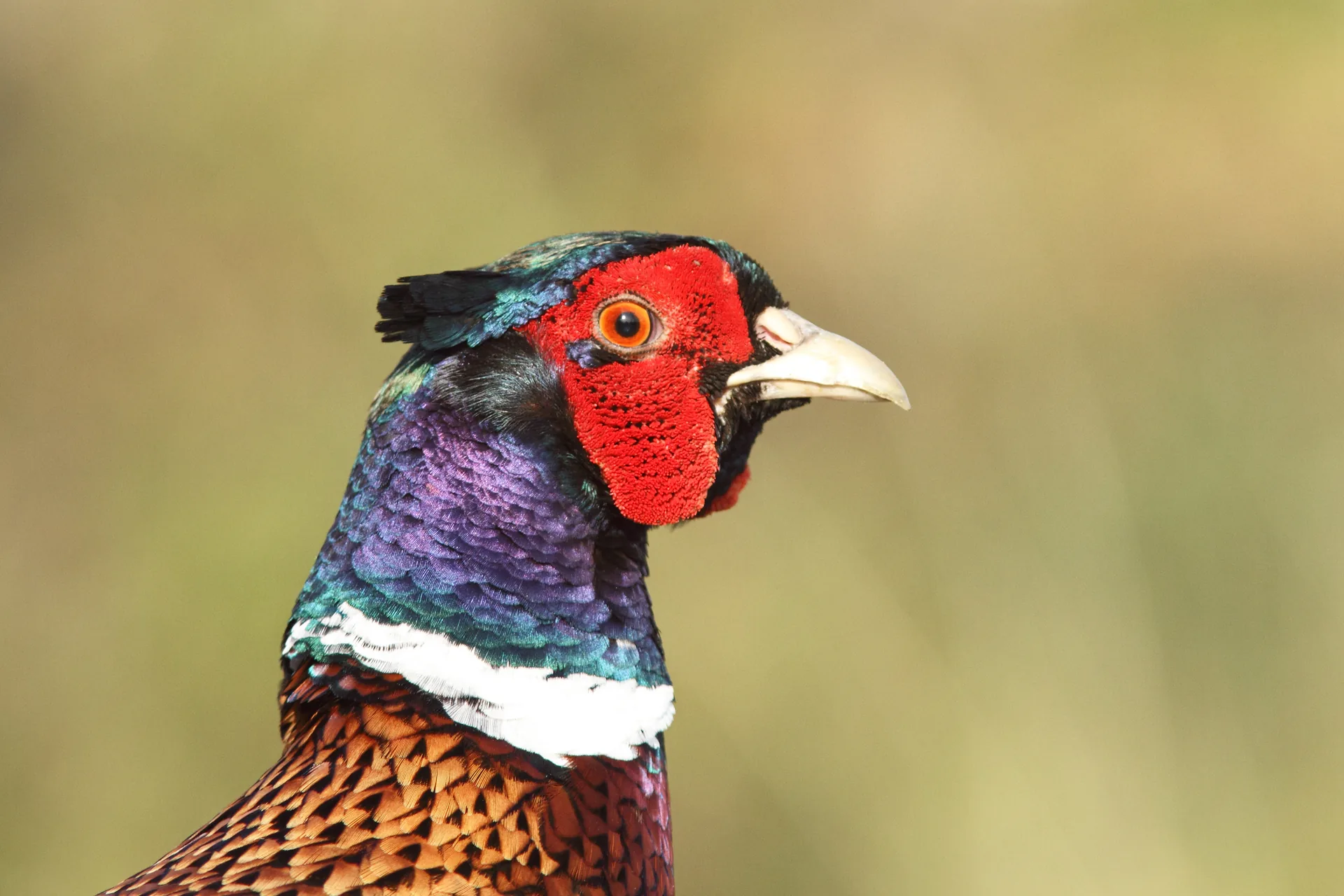
Chinese or common pheasant: what sets them apart
The so-called 'common' pheasant sold in France is a heavy Mongolian-type strain: a cock of 1.5 to 1.7 kg, coppery plumage, very hardy, perfectly at home on plains and in hedgerow country, and inclined to settle on the ground where it is released. The Chinese is its opposite: lighter and more rangy, it gets airborne faster, climbs higher and flies further. The cock carries a coppery-red breast, straw-to-yellow flanks, a blue-grey rump and a bold white collar; the hen is pale buff, slim and light. Genetically, the common pheasant reared in Europe today is itself the product of crosses between the Caucasus pheasant, the Chinese ring-neck and the Japanese green pheasant — which is why the white collar shows up, more or less marked, in most released populations.
- Cock weight
- 1.1 to 1.4 kg for the Chinese against 1.5 to 1.7 kg for the adult Mongolian-type common strain (young common birds released at 14 weeks weigh 1.2 to 1.5 kg).
- Flight
- Take-off speed well above average, with fast, sustained flight that can cover several kilometres.
- Holding to the ground
- The Chinese runs a lot and strays; the common stays more willingly on the release area.
- Preferred terrain
- Large open or varied grounds for the Chinese; plain and hedgerow country for the common strain.
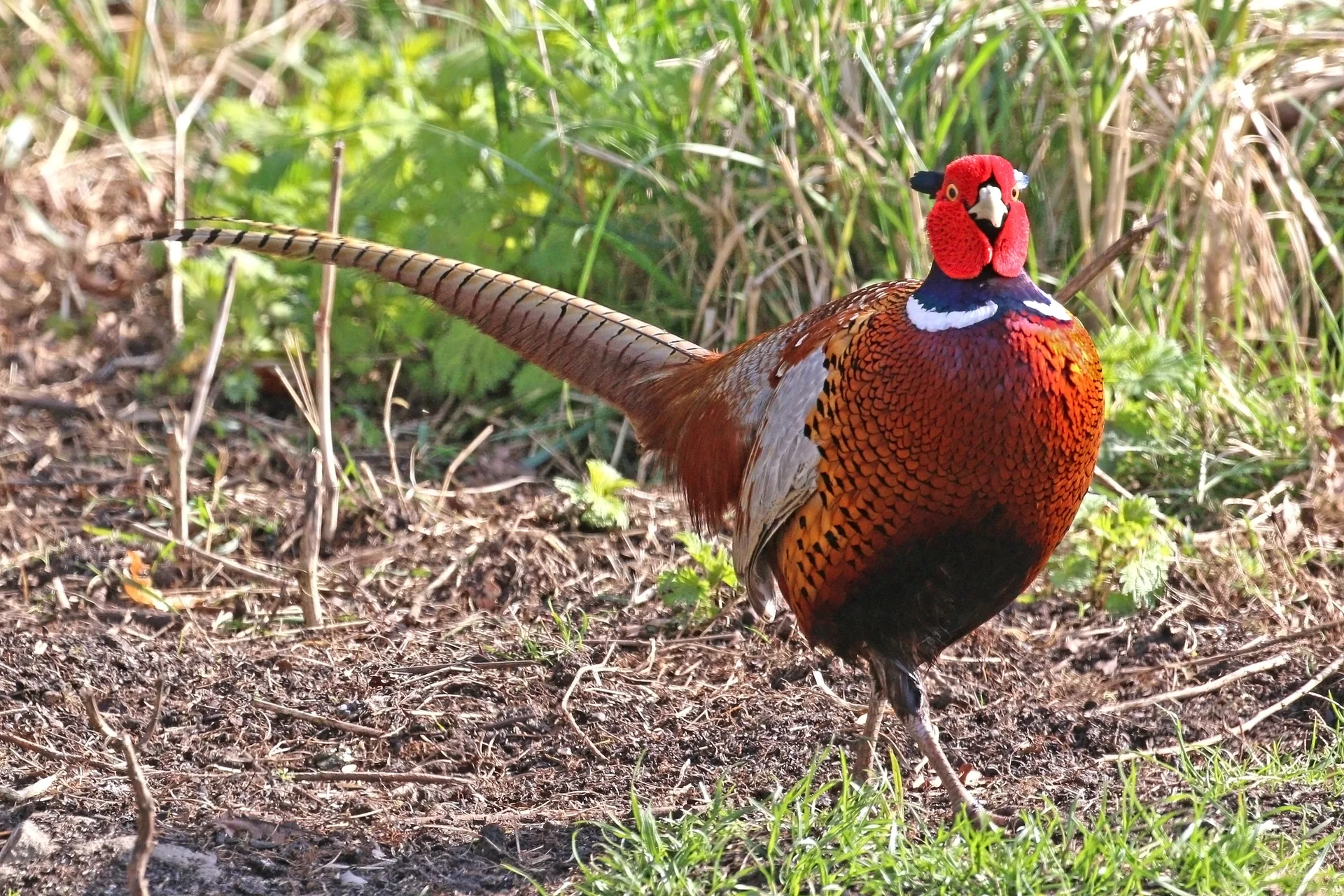
What to know before ordering
In the field: the sportiest strain — and its limit
The Chinese pheasant is sought after for one reason, and it is a good one: it flies. The flush is explosive, the climb immediate, and the bird does not pitch into the first cover it meets. Over pointing dogs as in walked-up shooting, it shows birds few strains can match. Its limit is the exact flip side of that quality: it runs a lot and strays. On a small ground, part of the released birds will be on your neighbour's land within days. We say it before the order rather than after: the Chinese needs a large shooting ground, or staggered releases with pre-release pens. On more modest acreage, a common strain or a cross will give a better recovery rate.
Explosive flush
A fast, vertical take-off: the bird climbs instead of skimming along the ground.
Sporting shooting
Fast, unpredictable flight and demanding shots: the favourite strain of teams looking for a challenge.
Large ground required
The bird strays: best kept for extensive grounds, or for releases managed with pre-release pens.
Honest about its limits
A light build: less interesting if hardiness and weight in the bag are what you are after.
The Chinese cross: the compromise between flight and holding
The Chinese cross pheasant comes from a Chinese-strain cock over a common-strain hen. The aim is simple: keep the Chinese bird's fast, lively flight while recovering the common strain's hardiness, its defence against predators and its ability to settle. It is the solution we most often recommend to hunting clubs and ACCAs with a medium-sized ground, who want birds that fly without watching them leave for the neighbour's. Our 14-week poults are offered in common strain or US cross, for summer restocking releases.
Origin of the cross
Chinese-strain cock × common-strain hen, run in a breeding pen.
What it keeps from the Chinese
Fast, lively flight, a clean flush, nerves at the rise.
What it gains from the common
Hardiness, better defence against predators, adaptation to varied ground.
Availability
US-cross poults from 14 weeks for summer releases, adults from 20 weeks.
A family farm since 1951
Our Chinese pheasant production at Chatte, in Isère
GIBIS has been rearing restocking game at Chatte, in Isère, since 1951 — three generations on the same site. Our Chinese-type pheasants are reared in large planted flight pens at low density: it is that work, not genetics alone, that produces a bird that takes wing instead of running. We deliver adult Chinese pheasants from 20 weeks, in our own fitted vehicles, throughout mainland France and to Belgium, Switzerland and Luxembourg. We also produce the FAISAN PUR CHASSE®, our exclusive strain, as well as the common pheasant and the melanistic pheasant: the full range is presented on our hunting pheasants page.
- Planted flight pens
- Natural cover and low density: full plumage, intact tail, well-developed flight muscles.
- Learning to fly and to hold cover
- Reared in large planted pens at low density, the birds learn to take off and go to cover before they ever leave the farm.
- Delivery age
- Adults from 20 weeks for the shooting season, poults from 14 weeks for summer releases.
- Delivery
- Vehicles fitted for live bird transport, all of mainland France, Belgium, Switzerland and Luxembourg.
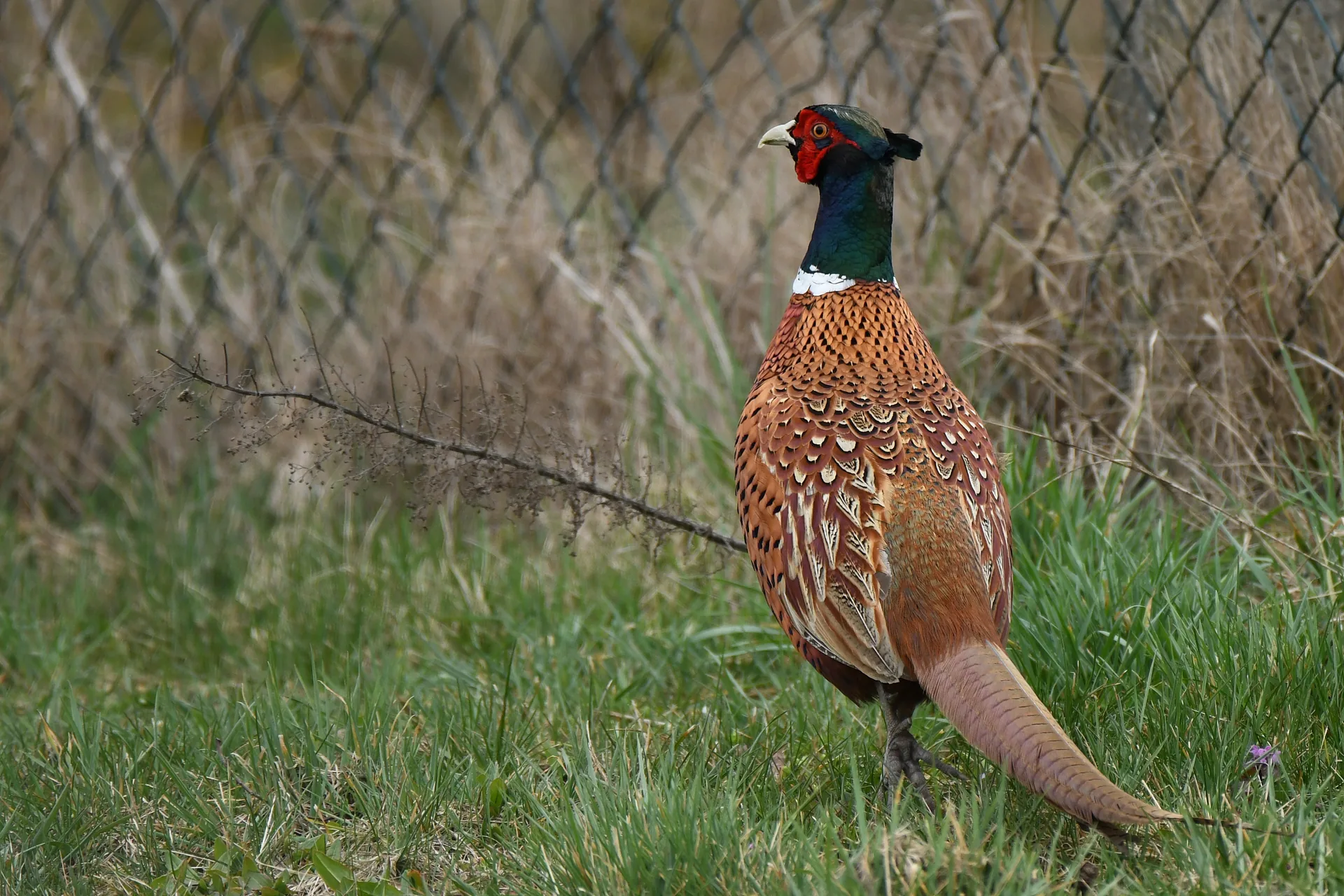
Season 2026 Pricing
2026-2027 hunting season — prices current as of August 2026
Faisan chinois
Frequently Asked Questions
How much does a Chinese pheasant cost?
What is the difference between the Chinese, US and common pheasant?
Does the Chinese pheasant fly better over dogs?
What is a Chinese cross pheasant and why choose it?
Is the Chinese pheasant harder to hold on a ground than the common?
At what age do you deliver Chinese pheasants?
Do you deliver Chinese pheasants throughout France?
See also
A pheasant that flies — our trade since 1951
Let's talk about your ground: acreage, cover, release period. We will tell you whether the Chinese is the right strain for you — or whether a cross would serve you better. Quote by phone or email.