
Game encyclopaedia
Hare tracks and signs
Secretive and often motionless, the European hare (Lepus europaeus) is rarely seen, but it leaves clues behind: footprints, trails, droppings, its form and clipped twigs. Reading them tells you whether it is there.
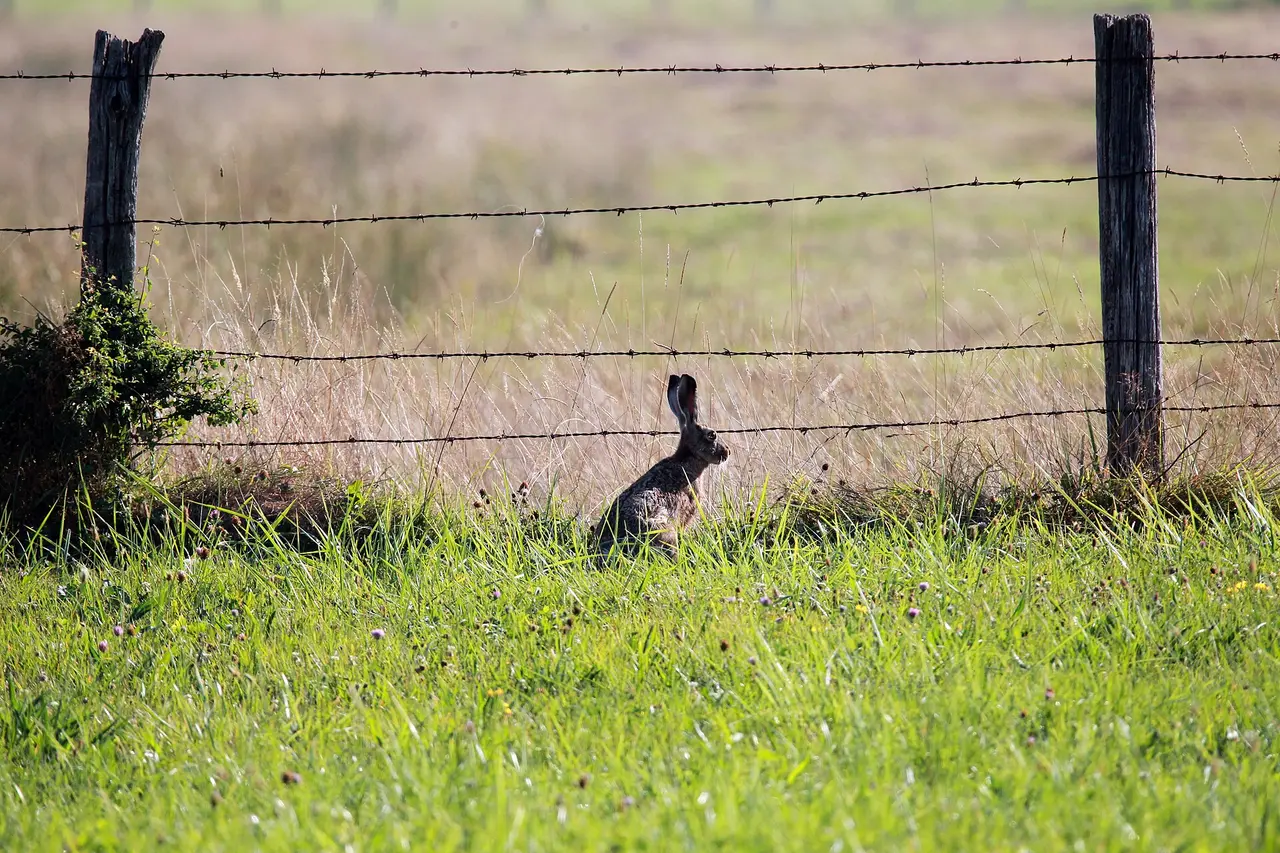
This article covers the signs of presence of the European hare. For the species, see European hare; for its young, see Leveret; for the rabbit, see European rabbit.
Reading the ground
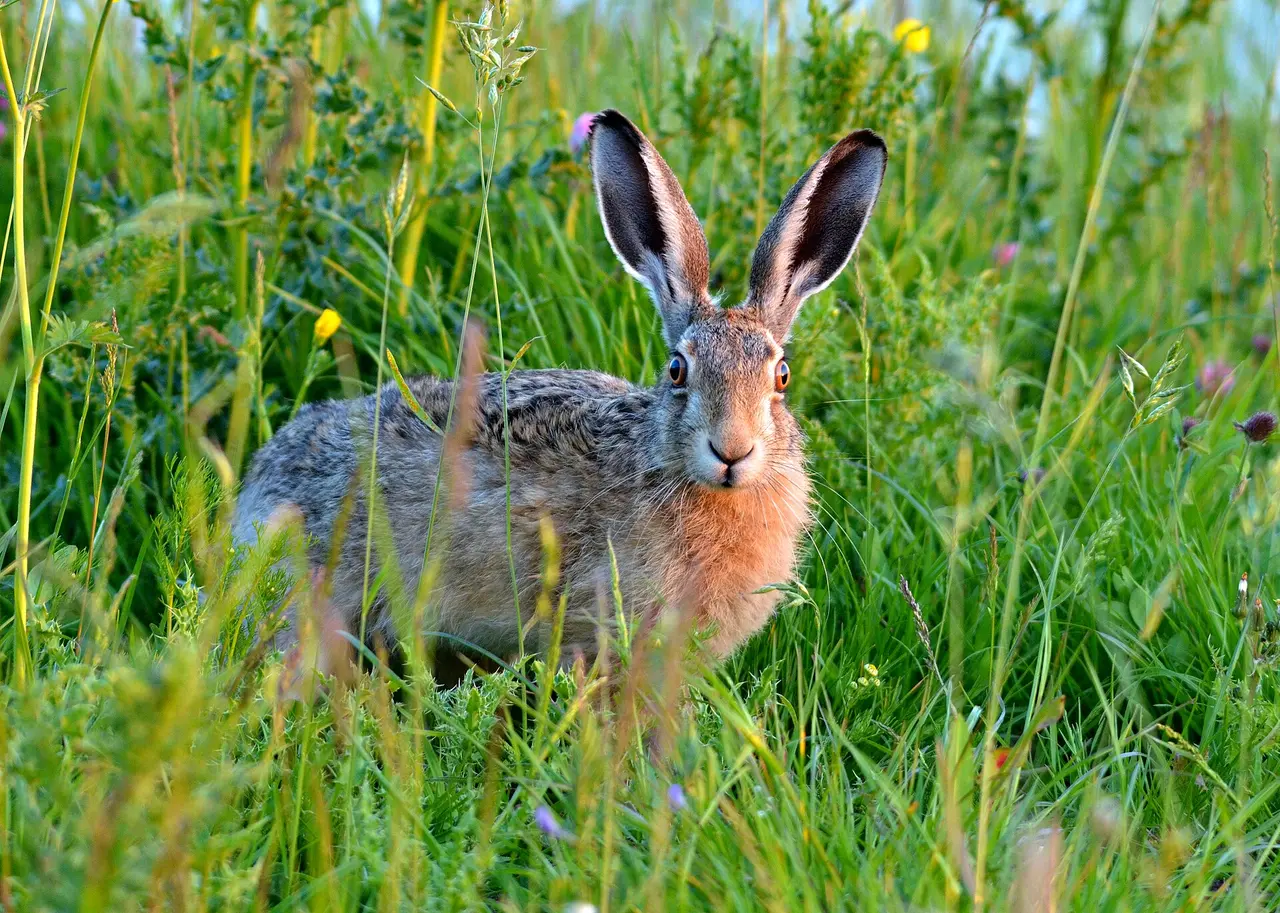
The footprint
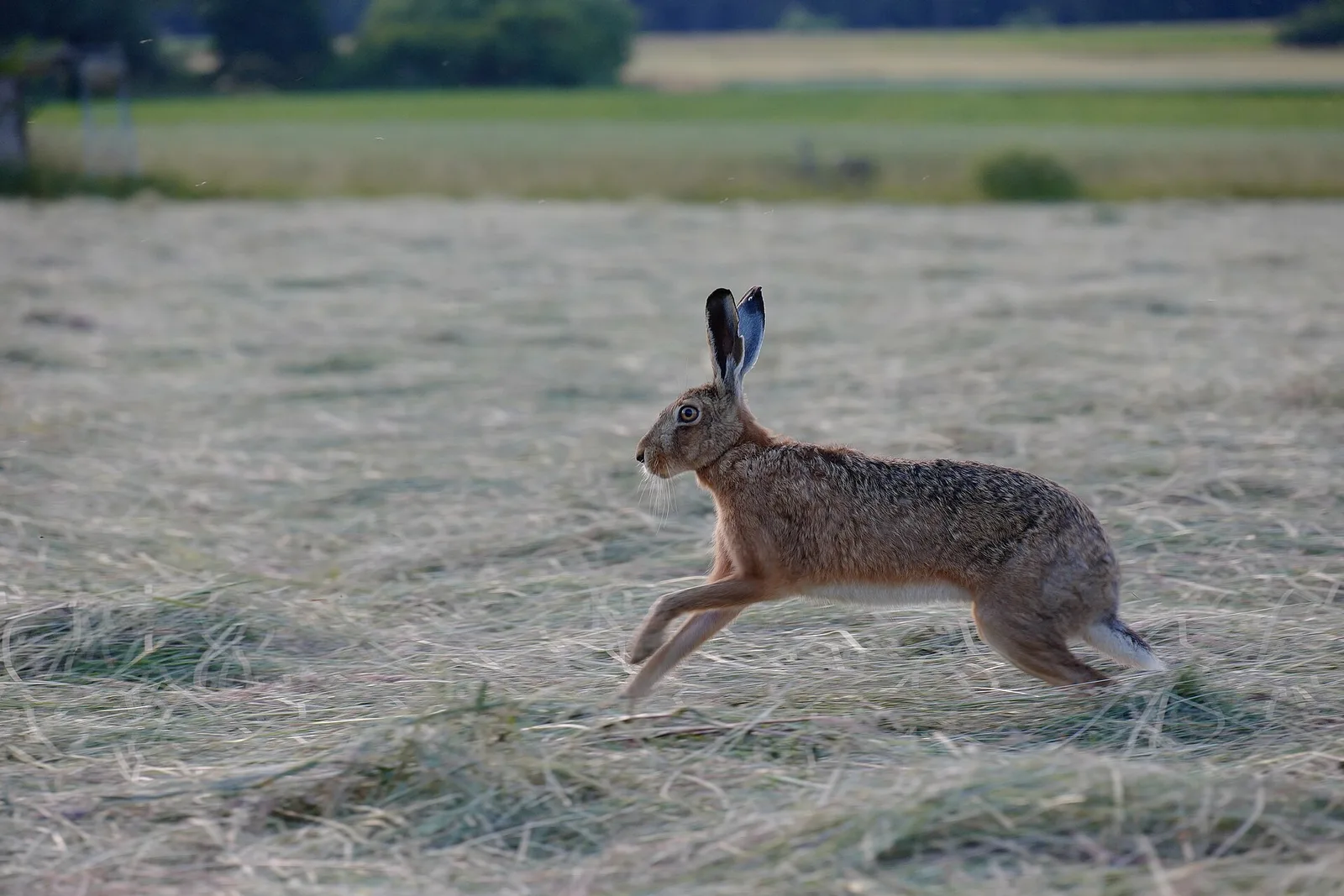
The trail: the hare's leap
Droppings
15 to 20 mm
The diameter of hare droppings, compared with about 10 mm for the rabbit.[3]
At the foot of a stake
More droppings next to a simple wooden stake, in Navarre.[9]
A field tradition
Oval droppings for the doe, round for the buck; a round form for her, a very elongated one for him: so reports a naturalist from the LPO.[4] No published study confirms this, to our knowledge.
The form
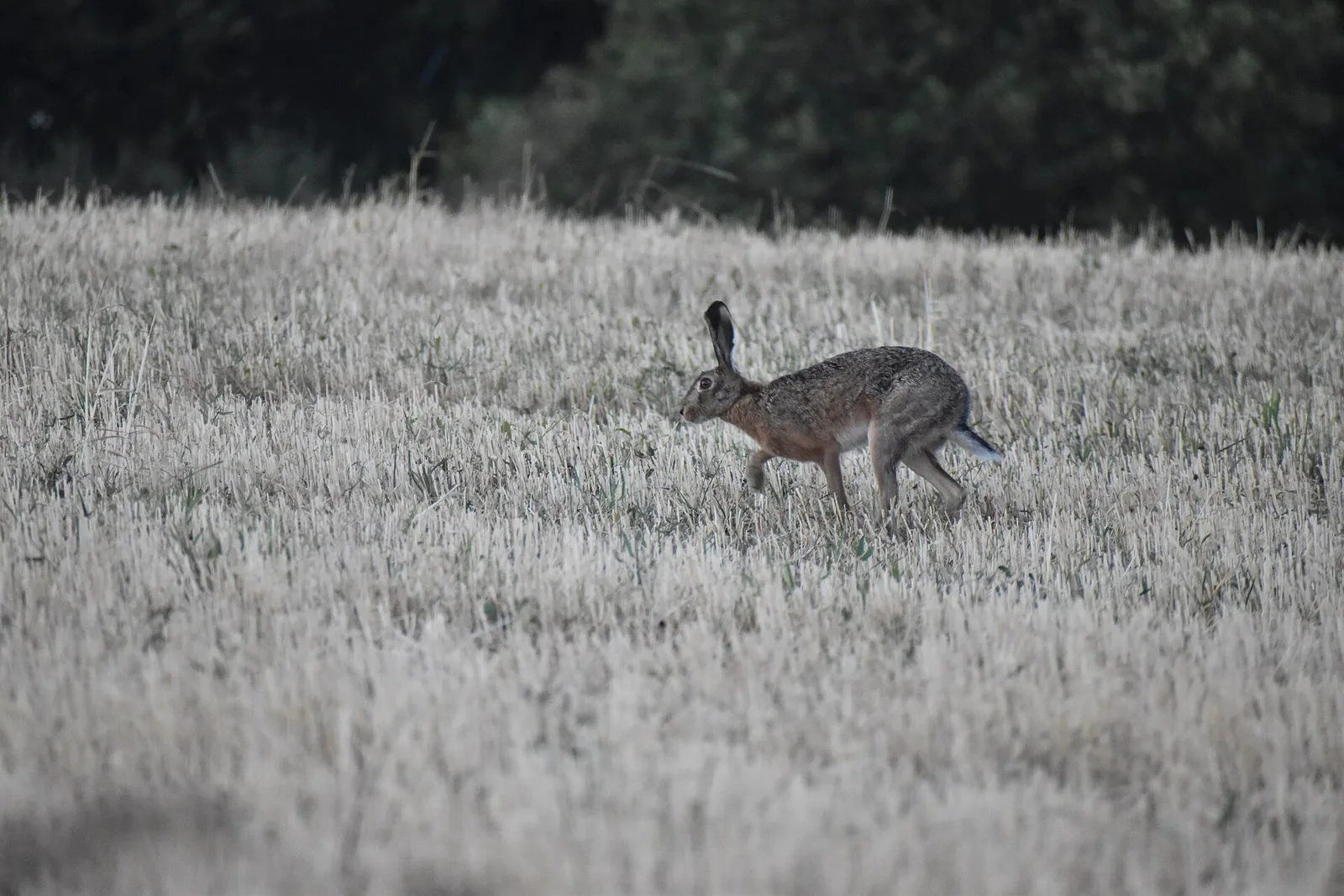
No burrow
A simple depression in the ground or the grass.[6]
Hare's shelter
In four letters, in a French crossword: gîte.
Runs, twigs and bark
Hare or rabbit: telling the signs apart
From signs to population monitoring
At GIBIS
References
- ↑Deutsche Wildtier Stiftung, *Ratgeber Fährten und Spuren*, Hamburg, n.d., deutschewildtierstiftung.de, accessed in 2026 — Tritt, Spur and Fährte; « Feldhase » and « Kaninchen » sheets; measurements taken from average males.
- ↑Hofmann H., « Spuren im Schnee – aber von wem? », *Natürlich*, no. 1/2007, pp. 20-23, reproduced on waldwissen.net (WSL), 16 November 2007 — Spur and Fährte, gaits and « Hasensprung » of the hare, fox trail like a string of beads.
- ↑Macagno G., « Traces et indices », *Bourgogne-Nature Junior*, no. 3, 2011-2012, Bourgogne-Nature, bfcnature.fr — feet of the European hare, hare and rabbit droppings, twigs and bark, warren.
- ↑Boisguérin J.-C. (LPO Lot), « Fientes, crottes, laissées, miroirs, moquettes, fumées et autres épreintes », Faune France, faune-france.org, accessed in 2026 — signs of presence, hare droppings, doe and buck tradition.
- ↑Forestry Commission, *Small mammals, beavers and domestic grazing species damage to trees: a visual guide*, GOV.UK, published 4 September 2026, gov.uk — diagonal cut, browsing height, incisor marks.
- ↑Kent Wildlife Trust, « Brown hare », *Wildlife explorer*, kentwildlifetrust.org.uk, accessed in 2026 — forms, absence of burrows.
- ↑Langbein J., Hutchings M. R., Harris S., Stoate C., Tapper S. C. & Wray S., « Techniques for assessing the abundance of Brown Hares *Lepus europaeus* », *Mammal Review*, vol. 29, 1999, pp. 93-116 — abstract consulted on gwct.org.uk.
- ↑Perry M. E. & Robertson A. W., « Cleared and uncleared pellet plots as indices of brown hare density », *New Zealand Journal of Ecology*, vol. 36, no. 2, 2012, pp. 157-163.
- ↑Fernández A. & Soriguer R. C., « Evaluación del empleo de estacas de madera como puntos de atracción para la liebre europea *Lepus europaeus* Pallas, 1778 en Navarra », *Galemys*, vol. 19, no. 1, 2007, pp. 23-34.
- ↑Lindén A. & Piha M., *Pienten ja keskikokoisten riistanisäkkäiden kannanmuutokset 1989–2024. Lumijälkilaskentojen tulosraportti*, Luonnonvara- ja biotalouden tutkimus 40/2024, Luonnonvarakeskus (Luke), Helsinki, 2024 — English abstract: counting triangles, track index, European hare.
- ↑Service public de Wallonie, *Comptage nocturne de lièvres : indice kilométrique par tronçons de 1 km (IK)*, version of 4 January 2018, biodiversite.wallonie.be — method and form.
- ↑Fédération départementale des chasseurs du Gers, *Infos Lièvre*, March 2025, chasse-nature-occitanie.fr — results of the 2024 IK counts, ICA and EPP.
- ↑Greiser G. & Martin I. (Thünen-Institut), *Kurzanleitung für die Scheinwerfertaxation ST Ost*, 2nd version, August 2020, for the Deutscher Jagdverband, jagdverband.de.
See also
Gallery
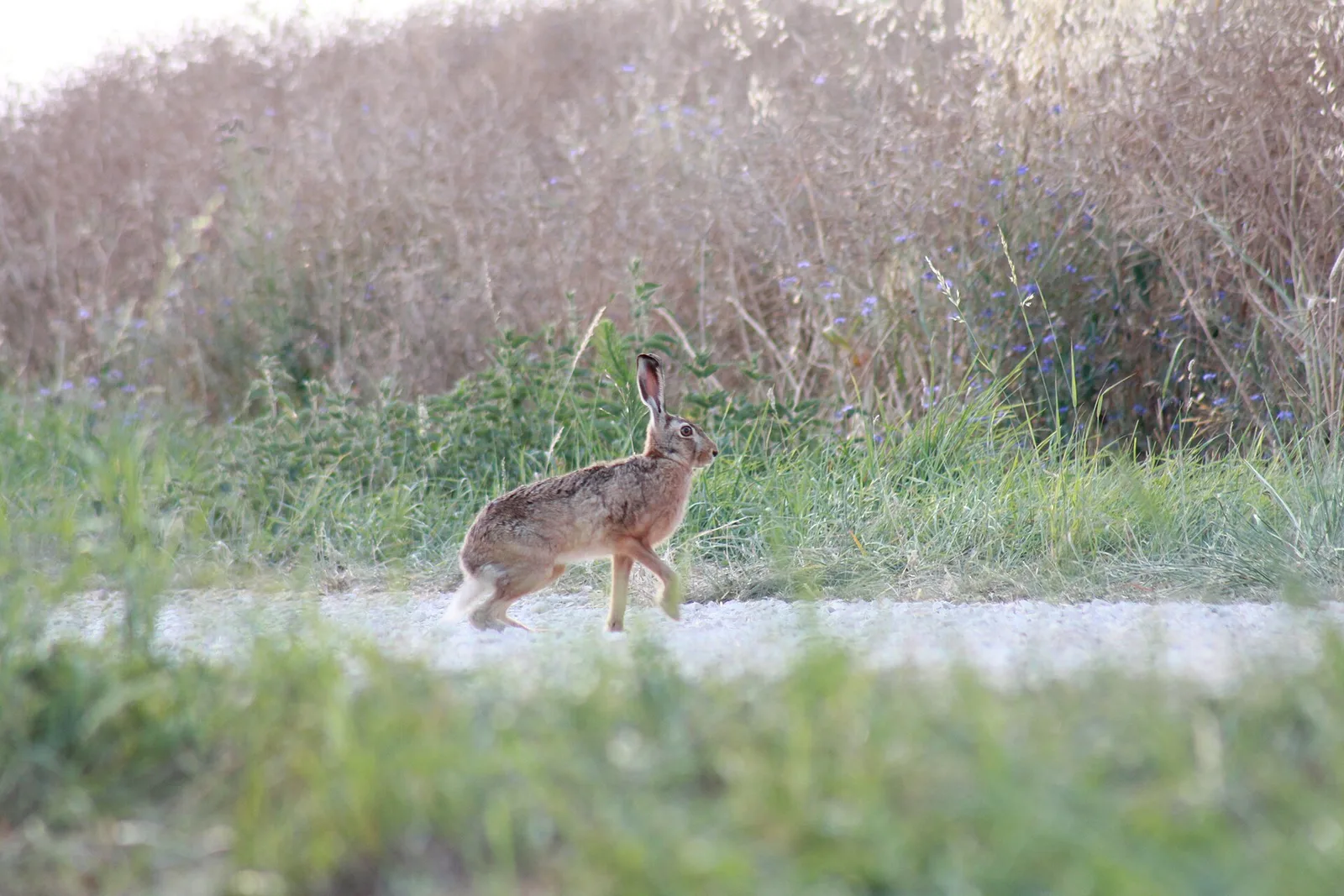
- Wild European hare, illustrative photo (not an animal from the GIBIS farm): Hyppolyte de Saint-Rambert, CC BY 4.0, Wikimedia Commons
- Wild European hare, illustrative photo (not an animal from the GIBIS farm): Stephan Sprinz, CC BY 4.0, Wikimedia Commons
See also
A question about the hare?
This article is part of GIBIS's game encyclopaedia, a breeder in Chatte (Isère) since 1951. For a question about the species or about a restocking project, the team answers by telephone or email.