
Game birds — summer releases
Pheasant poults for sale: 12 to 16 weeks, ready for your summer releases
Two strains to choose from — US cross or FAISAN PUR CHASSE® — reared in planted aviaries at Chatte (Isère). Birds that fly, take cover and go wild. Live delivery throughout France, from June to August.
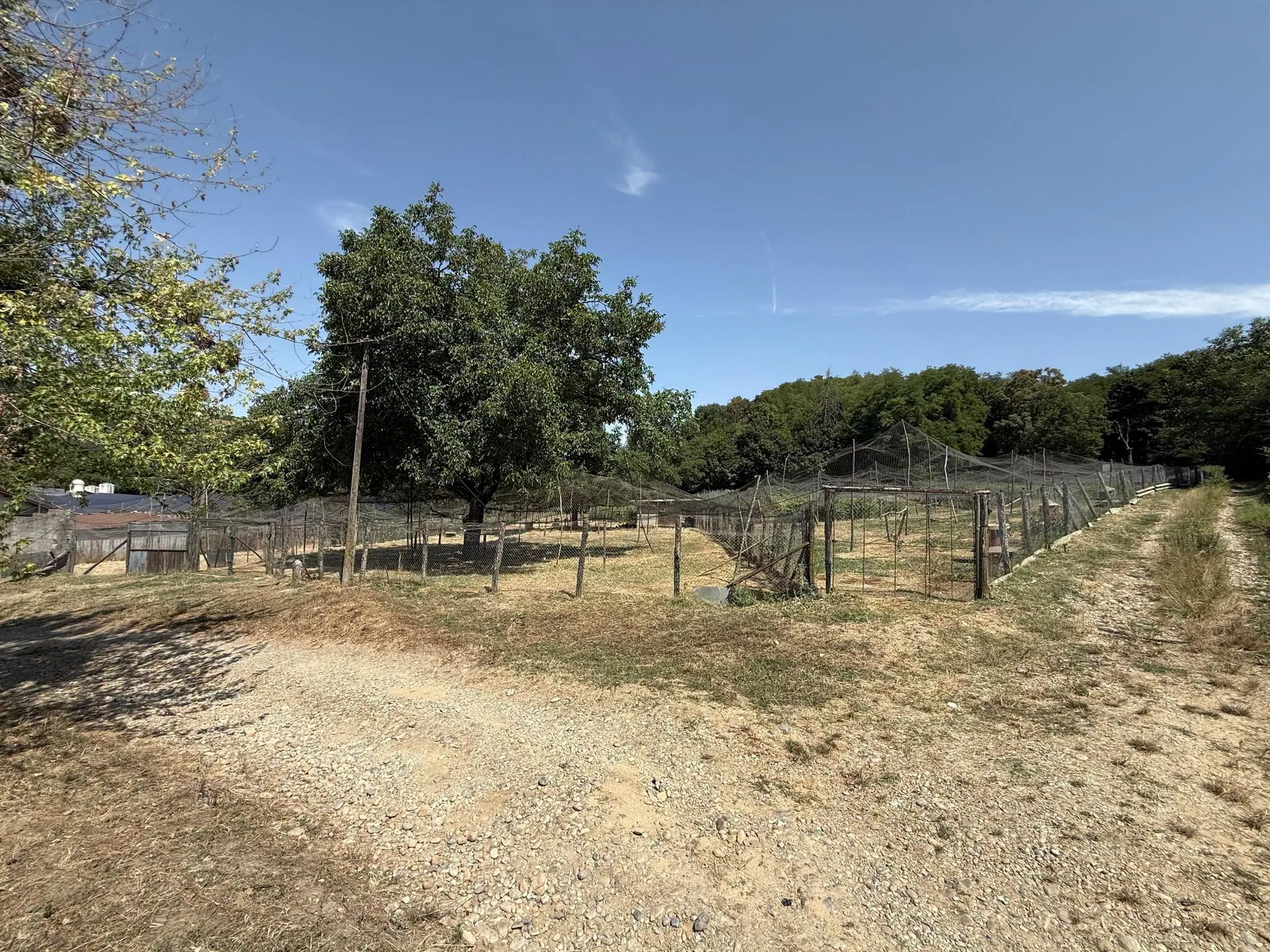
Our summer production
Pheasant poults reared to survive in the field
Every summer GIBIS produces pheasant poults of 12 to 16 weeks for restocking: fully feathered, flight-muscled, reared in large planted aviaries and flushed with pointing dogs. This is the bird expected by hunting clubs that release in summer rather than the day before the season opens. Two strains in the catalogue: the US cross, hardy and economical, and our exclusive FAISAN PUR CHASSE® strain, the closest thing to a wild pheasant. For a multi-species programme (partridge, rabbits, hares, mallard), see our restocking game page; for adult birds in season, our shooting pheasants page.
Two strains to choose from
US cross at 11,60 € or FAISAN PUR CHASSE® at 13,50 € each at 14 weeks: the right bird for every ground and every budget.
12 to 16 weeks: the right window
Developed enough to survive, young enough to go wild. This is the benchmark age bracket for a release from June to August.
Live delivery throughout France
Transport in our purpose-fitted vehicles, live arrival guarantee, health certificate and proof-of-origin invoice with every delivery.
Restocking — the method that works
Restocking pheasants for shooting
A restocking pheasant is not a shooting bird released the day before the season opens: it is a young bird put on the ground early enough to learn the terrain, find its own food, roost at night and escape the fox. The whole difference between a release that fills a bag for one morning and a release that leaves crowing cocks the following spring comes down to three decisions: the age of the birds, the release density and the preparation of the ground.Recommended release age: 14 weeks. That is the heart of the 12-16 week window, and the age at which we deliver most of our batches. At 14 weeks the poult is fully feathered, its flight muscles are formed, it flies several dozen metres and roosts — yet it is still young enough to take to its surroundings and go wild. Younger (8 to 10 weeks), it needs a pre-release pen and closer supervision, and pays a heavy price to predation. Older, it keeps its rearing reflexes and disperses more. It is this age class — 14 to 15 weeks — that the Isère poult scheme chose for its 2 312 birds in the summer of 2026.Densities per hectare. The benchmarks commonly used by the federations run from 45 to 90 poults per 100 hectares of suitable ground, roughly one bird per 1 to 2 hectares. The lower end applies to well-managed ground, rich in cover and hedgerows, where the aim is to establish a breeding population; the upper end to open plains short of holding cover, where losses are higher. Do not concentrate everything in one place: batches of 25 to 50 birds per release site, one site every 50 to 100 hectares near cover, a water point and a feeder, give far better results than a single mass release.Timing. Restocking releases take place in summer, from June to August, six to twelve weeks before the season opens — the time the birds need to go wild, disperse naturally and settle into the ground. A release in late August or September is shooting, not restocking. Avoid hot days and release at the end of the afternoon, immediately alongside cover.Preparing the ground before the birds arrive. A restocking pheasant needs three things the moment it touches the ground: somewhere to hide, water and food. Provide game cover crops (maize, sorghum, sunflower, wild bird mixes) over 2 to 3 % of the area, grass margins and hedges to link the holding cover, a clean water point within 200 metres of every release site, feeders installed and already visited before the release, and sustained control of foxes, mustelids and corvids in the preceding weeks. The pre-release pen — a few days on site, under shelter — sharply reduces mortality and dispersal in the first days. The full step-by-step method is in our guide to achieving a successful release, and the feeding side on our feeding and habitat management page. As for paperwork, introducing game into the wild is regulated: see our small game regulations page. And if you are hesitating between our strains, the guide to choosing your pheasant strain compares flight, hardiness and use; the classic strain is detailed on the common pheasant page.
14 weeks at release
The recommended age for a restocking pheasant: feathered, flying, roosting — and still young enough to go wild before the season opens.
45 to 90 birds / 100 ha
About one poult per 1 to 2 suitable hectares, in batches of 25 to 50 per release site rather than a single mass release.
Release from June to August
Six to twelve weeks before the opening: beyond that, it is no longer restocking but shooting.
Ground prepared
Game cover crops over 2 to 3 % of the area, a water point within 200 m, feeders already in place and predation under control.
Purchase and booking
Ordering your poults: booking, quantities, delivery
Poults are booked in the spring for delivery from June to August — batches go out in booking order, and the PUR CHASSE® strain is produced in limited numbers. Volume discounts apply, and joint orders between neighbouring clubs are welcome: a single delivery run across the massif, uniform batches, separate invoicing for each club. Quotation on 04 76 38 31 01 or by e-mail.
Book in spring
Order before the end of May to secure your summer delivery slot and enough birds of the strain you want.
Sliding-scale pricing
The higher the volume, the lower the unit price. Tailored quotation according to quantity and delivery location.
Group orders
Several clubs in the same massif, a single delivery round: the most economical and most efficient formula for restocking.
Our husbandry choices
What we have been doing day in, day out since 1951: producing restocking birds that survive in the field. Our exclusive strain, at the heart of these choices, has a page of its own: FAISAN PUR CHASSE®.
PUR CHASSE® PHEASANT strain
Our exclusive, registered-trademark strain, bred naturally in a one-hectare aviary: explosive flush, wary behaviour.
Planted aviaries
Large planted aviaries with crops and cover: the poults grow up in contact with the habitat they will find again on release.
Dog-based scaring
Regular flushing with pointing dogs: the birds learn to flee and to roost, reflexes that make the difference when a predator appears.
Age at release, criterion no. 1
Between 12 and 16 weeks the bird is developed enough to survive and young enough to go wild: this is the window we recommend.
Proof in the field
Summer 2026: 2 312 PUR CHASSE® poults released in Isère
On 31 July 2026, the Fédération Départementale des Chasseurs de l'Isère announced on its official page that "the first releases of pheasant poults have begun!": 2 312 birds of 14 to 15 weeks, for 59 holders of shooting rights — 57 ACCA hunting associations and 2 private shoots — distributed from six delivery points across the département (Chatte, Beaucroissant, Viriville, Saint-Savin, Bellegarde-Poussieu and Le Gua). These poults are ours: the federation describes them as "from Strauch strains available under the name Faisan PUR CHASSE®" and closes its post with these words, "Many thanks to the breeder Gibis for his support in this initiative". In a single summer campaign, that is what we know how to do: turn out several thousand young, uniform, flying birds and deliver them alive at the right age, to six points, within a few days. Source: post by the FDC Isère on its official Facebook page, 31 July 2026, accessed 1st August 2026 (no public permalink available). The full record of our references with federations and shooting grounds is gathered on our they trust us page.
59 holders supplied
57 ACCA associations and 2 private shoots in the summer 2026 campaign alone, according to the FDC Isère announcement of 31 July 2026.
2,312 PUR CHASSE® pheasant poults
Birds of 14 to 15 weeks at release: the age window that leaves time to go wild before the season opens.
6 delivery points
Chatte, Beaucroissant, Viriville, Saint-Savin, Bellegarde-Poussieu, Le Gua: grouped delivery, uniform batches, separate invoicing for each club.
Ringed birds
Ringing allows the federation and the clubs to track actual recovery and dispersal, season after season.
They came to see our methods
July 2026: hunters from Haute-Loire and the Drôme visit the farm
On Thursday 23 July 2026, the small-game hunters' association of the Haute-Loire — 24 ACCA associations represented, some forty participants accompanied by officers of their federation — travelled to Isère, joined on site by hunters from the Drôme. The day, organised with the Fédération Départementale des Chasseurs de l'Isère, included a presentation of the pheasant poult scheme — which the federation describes as having been run in the département for ten years — by its technical officers Sébastien Blanchard and Antony Valdivia, followed by a tour of our farm at Chatte "to see for themselves the rearing methods and the technical choices applied", as the federation reports in its write-up. Discussion covered the origin of the strain, the age of the birds at release, pre-release pens, feeding and predator control — with a live demonstration of the difference in behaviour between an intensively reared common pheasant and our birds reared in large aviaries. Source: write-up published by the FDC Isère on 24 July 2026 on its official page.
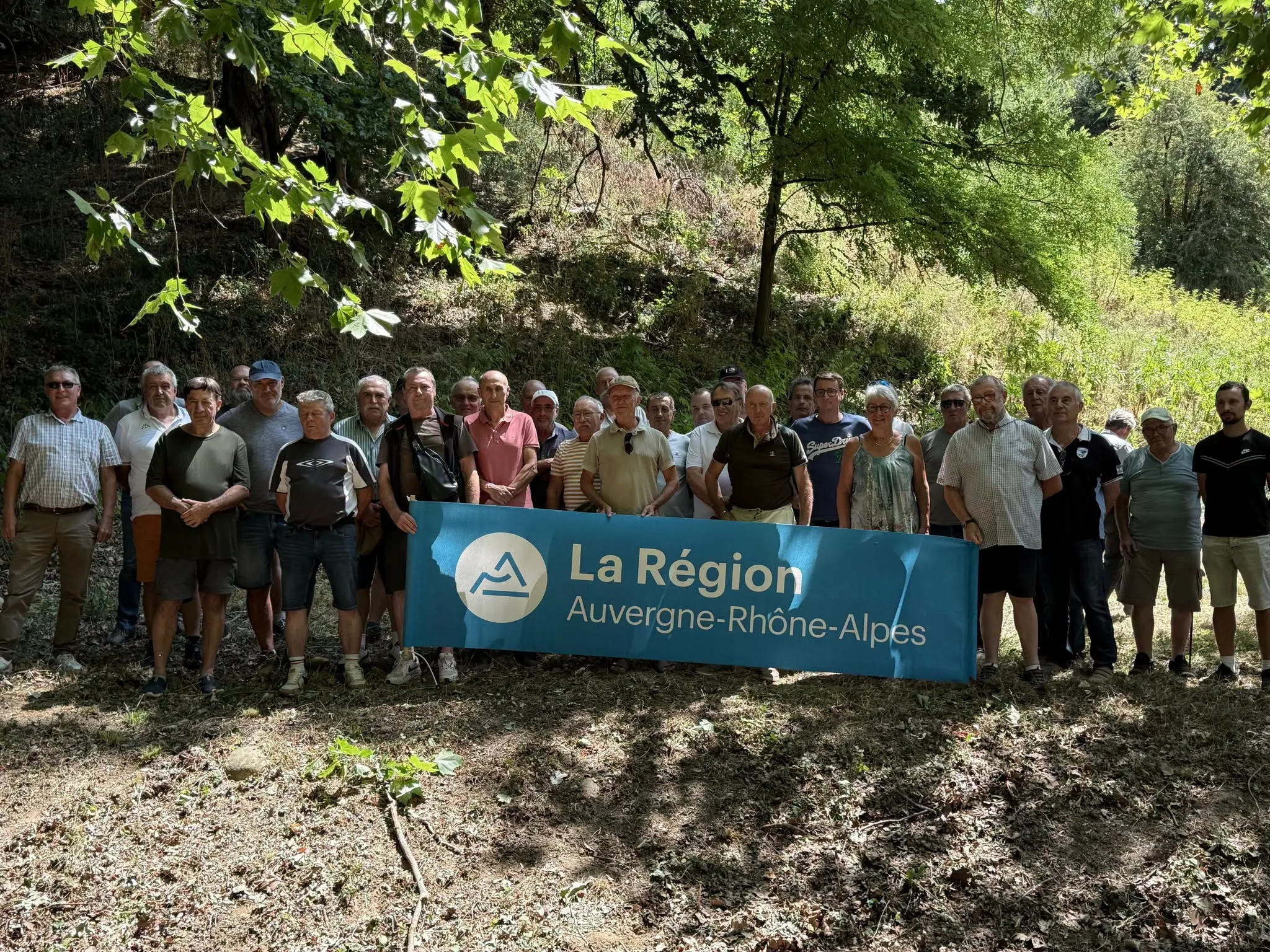
The Isère pheasant poult scheme, explained
For several years — and formally since 2023 in its departmental game management plan — the Isère federation has supported its hunting clubs in a summer restocking approach: poults of 12 to 16 weeks, ringed, released several weeks before the opening so that they go wild and settle, rather than adult birds released the day before shooting begins. The departmental plan sets out that direction: recover a strain close to the original bloodline and work with the small-game breeders of the Isère. That is precisely our farm's niche: young, hardy birds, reared in planted aviaries, that know how to fly and how to hide. One practical point emerges from the federation's monitoring: pheasants disperse — released birds do not stay in the commune where they were released. Hence the value of coordinated operations between neighbouring clubs, and of joint orders on the scale of a whole massif.
Summer release, no shooting
Poults of 12 to 16 weeks released from June to August: time enough to go wild before the opening, and to build a population.
Ringed and traced birds
Ringing allows clubs and federations to track the actual recovery and dispersal of the released birds.
Coordination between associations
The pheasant's natural dispersal argues for releases coordinated between neighbouring grounds — and for joint orders.
Season 2026 Pricing
2026-2027 hunting season — prices current as of August 2026
Pheasant poults — summer releases
Gallery
Frequently Asked Questions
How much does a pheasant poult cost?
When should poults be booked for a summer release?
Do you offer prices for large quantities and joint orders?
What age should a restocking poult be?
What is the difference between a restocking pheasant and a shooting pheasant?
How many restocking pheasants should be released per hectare, and when?
What is a pre-release pen for?
What is the difference between a common pheasant and a hardy strain at the flush?
Is authorisation required to release pheasant poults?
How many poults should be released, and how do several clubs organise together?
See also
Book your pheasant poults for the summer
Poults of 12 to 16 weeks, US cross or FAISAN PUR CHASSE® strain, delivered alive to your ground from June to August. Volume discounts, joint orders between neighbouring clubs welcome. Quotation on 04 76 38 31 01 or by e-mail.