
Expert guide — restocking
Returning game to the wild successfully: the complete guide
Acclimatisation pens, densities per hectare, calendar, predation, regulations: everything we have been advising our customers for three generations so that pheasants, partridges and wild rabbits settle on the ground for good.
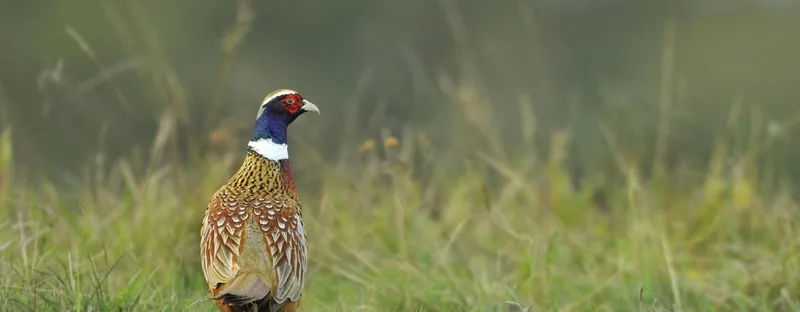
The breeder's experience
Why so many returns to the wild fail — and how to make yours succeed
Every season, hunting clubs return to the wild — what many still call a “release” — birds that have vanished a fortnight later: scattered, taken by predators, or unable to feed themselves. It is almost never the fault of the game — it is the fault of the preparation. Since 1951 in Chatte, Isère, we have been delivering restocking game to ACCAs, private shoots and federations, and we see what separates the grounds where pheasants crow in spring from those where everything has to start again every year. Three factors account for most of the result: the quality and hardiness of the animals returned to the wild, the timing of the operation, and the management of the ground that receives them. This guide goes through them one by one, with the densities and the calendar we recommend.
The strain first
A bird reared in a large planted aviary and flushed with dogs flies high and finds cover. A battery-reared bird gets caught. Genetics and rearing method count for more than numbers.
The right moment
6 to 12 weeks before the opening for summer feathered game, in spring when breeding is the aim. A late return to the wild does not build a population.
A ground that is ready
Cover, feeding, water and predation under control before the animals arrive. A well-prepared ground succeeds with less game than a poor habitat does with a lot.
Preparing the ground: cover, feeding, water points
The work starts months before delivery. A pheasant or partridge returned to the wild must immediately find three things: somewhere to hide, something to eat, something to drink. Game cover crops (maize, sorghum, specific mixes), hedgerows, set-aside and grass strips provide the cover; feeders, refilled regularly, hold the birds in the area; a water point less than 200 metres away is essential, especially when birds are returned to the wild in summer. For wild rabbits, everything depends on artificial warrens — mounds of stones and brushwood on free-draining soil. We detail these improvements on our feeding and habitat management page.
Cover and game cover crops
Unharvested strips of maize or sorghum, low hedgerows, wildlife set-aside: game only stays where it can disappear from sight in a few seconds.
Feeders
One feeding point per 15 to 20 hectares, filled with wheat and kept going for at least a month after the return to the wild: it is what prevents dispersal in the first few days.
Water points
Drinkers or ponds less than 200 metres from the sites where game is returned to the wild. In summer, water runs short before food does — it is the main reason birds move away.
Artificial warrens
For rabbits: mounds 4 to 5 metres across, stones and brushwood covered with earth, on light, south-facing soil. One warren per 2 to 3 suitable hectares.
The acclimatisation pen, key to the survival rate
If you were to remember only one technique, it would be this one. The acclimatisation pen — the hunters' “pre-release pen”, or recall aviary for birds — is an enclosure set up on the ground, in which the animals spend a few days to a few weeks before being set free. There they get used to the habitat and to the local water and food, find their bearings, and then disperse gradually instead of fleeing in a straight line. For pheasants and partridges, an aviary left in place after opening serves as a refuge and a feeding point that holds the coveys in the area. For hares and rabbits, a wire-mesh pen with buried mesh is strongly recommended (for hares, see our guide to returning hares to the wild). As for transport, the quality charter of the SNPGC — Syndicat National des Producteurs de Gibier de Chasse (the French national union of game producers), whose good practice guidelines govern our trade — requires animals to be returned to the wild within 24 hours of leaving the farm: our delivery rounds are organised with that in mind, with purpose-fitted vehicles and live arrival guaranteed. Every Gibis bird carries a numbered ring: hunters report their recoveries (report a ring you have found) and it is the hunters' federation of the département that validates each recovery.
Recall aviary
20 to 50 m² for a batch of birds, netted roof, drinker and feeder inside. Opened after 4 to 10 days, leaving the structure in place.
The 24-hour rule
Return the animals to the wild within 24 hours of leaving the farm, early in the morning, in calm, dry weather. Never in the heat of the day or in driving rain.
A quiet return to the wild
Open the pen without noise, without dogs, without onlookers, and walk away. The animals come out on their own within a few hours and remember the place as a refuge.
Controlling predation before the return to the wild
An undefended ground turns the finest return to the wild into a meal for foxes. Predator control must be carried out upstream — in the weeks before the animals arrive, not afterwards. Fox, stone marten, crows and magpies for the nests, feral cats around hamlets: licensed trapping, earth dog hunting and control shooting authorised by prefectoral order are an integral part of any serious restocking project. The operations monitored by the federations show it: with the same numbers, controlled predation pressure changes the survival rate radically. Get in touch with your gamekeeper and the licensed trappers of the commune several months before the planned date.
Licensed trapping
A trapping campaign against foxes and mustelids in the weeks before the return to the wild, continued while the animals settle in.
Corvids
Carrion crows and magpies raid nests: controlling them determines breeding on the spot, the ultimate aim of any restocking.
Monitoring
Regular rounds of the pens and feeders in the first few weeks: a return to the wild has to be followed up, not abandoned.
Densities: how many animals should be returned to the wild per hectare?
It is the question every club manager asks us — and the honest answer is: fewer than you think, better spread out than you imagine. It is better to return a few animals to the wild on a well-managed ground than many on an unsuitable habitat. The benchmarks below are those commonly used by the federations and drawn from our delivery experience; they are adjusted ground by ground according to cover, water and predation. Call us with the area and habitat of your ground and we will price the right batch.
| Species | Density benchmark | Habitat and remarks |
|---|---|---|
| Pheasant (poults) | 45 to 90 birds / 100 ha for a summer return to the wild; long-term target 2.5 to 7 breeding pairs / 100 ha | Woods, woodland edges, hedgerows. A breeding population needs a monitored block of 1,000 to 1,500 ha |
| Red-legged and grey partridge | 45 to 90 birds / 100 ha; in spring, in pairs or coveys of 10 | Red-legged: dry hillsides and scrubland. Grey: arable plains. Coveys with an adult leader |
| Wild rabbit | 4 to 6 animals per artificial warren, one warren per 2 to 3 suitable ha | Light, free-draining soils, sunny banks. Animals vaccinated against myxomatosis + VHD essential |
| Hare | 2 to 4 animals / 100 ha, in small nuclei, via an acclimatisation pen | Open plains and hedged farmland. Small, repeated returns to the wild rather than one large operation |
| Mallard | Depending on the water area: gradual returns to the wild in small batches to hold the birds | Ponds and marshes. Feeding on the bank, peace and quiet on the water for the first few weeks |
Indicative benchmarks drawn from federation practice and our delivery experience; the useful density depends on cover, water, predation and local management plans.
Annual game calendar
A successful return to the wild is first and foremost an operation ordered at the right time. Orders are placed from winter to early summer, spring partridges are returned to the wild from February to April, the heart of restocking runs from June to August — 6 to 12 weeks before the opening — and the hunting season runs from September to January. The table summarises the complete cycle; it scrolls horizontally on mobile.
| Operation | Jan | Feb | Mar | Apr | May | Jun | Jul | Aug | Sep | Oct | Nov | Dec |
|---|---|---|---|---|---|---|---|---|---|---|---|---|
| Breeding / laying | ● | ● | ● | ● | ● | |||||||
| Ordering | ● | ● | ● | ● | ● | ● | ● | |||||
| Return to the wild | P | P | P | ● | ● | ● | ||||||
| Hunting season | ● | ● | ● | ● | ● |
● main period of the operation · P = partridges returned to the wild in spring (pairs and coveys). Small game hunting season: exact dates set each year by prefectoral order, generally from September to January depending on the département.
Species by species: the points that make all the difference
Each species has its own technique for returning it to the wild. Restocking pheasants are returned to the wild young — poults of 12 to 16 weeks, at €11.60 each for US cross or €13.50 for the FAISAN PUR CHASSE® strain, our exclusive long-tailed line with an explosive flush — so that they revert to the wild before the opening; adult pheasants top up during the season. Partridges join the ground in spring in pairs or coveys to breed, or in summer at 14 weeks. The wild rabbit, vaccinated against myxomatosis and VHD at €16.30 each, only succeeds in prepared warrens on free-draining soil — it is the species where habitat management weighs most. Details of ages, strains and prices on the pheasant poults, partridges and wild rabbits pages.
Restocking pheasant
Returned to the wild from June to August, at 12-16 weeks, via a recall aviary with feeding kept going. The PUR CHASSE® strain gives the best rates of reversion to the wild.
Red-legged and grey partridge
In spring in pairs or coveys of 9 + 1 adult leader for breeding; in summer at 14 weeks for restocking. Never mix the two approaches in the same sector.
Wild rabbit
Returned to the wild directly into the artificial warren, with temporary netting for a few days and feeding nearby. VHD + myxomatosis vaccination is non-negotiable.
Hare
Acclimatisation pen compulsory, small repeated nuclei, predation under control. Animals tested for brucellosis and tularaemia.
What the regulations say
Returning game to the wild is a regulated act: introduction into the wild requires an application to the DDT, examined with the opinion of the departmental hunters' federation, and the animals must come from an authorised category A game farm — certificate of competence, operating licence, registers. Some species are prohibited locally (red-legged partridge in rock partridge areas, hares under a management plan), and departmental cut-off dates apply. Note: returning quail to the wild is prohibited in France — which is why we do not produce them. GIBIS is registered under no. 38001 with veterinary, health and environmental approvals; every delivery leaves with a health certificate and a supporting invoice, the documents the DDT or your federation may ask you for. Full details are on our page on regulations for returning small game to the wild.
DDT authorisation
Application to introduce game, examined by the DDT with the federation's opinion: allow several weeks.
Proven provenance
Category A game farm, health certificate and invoice to keep: every GIBIS delivery provides all three.
Local rules
Species prohibited by area, cut-off dates for returning game to the wild, management plans: check with your departmental federation before ordering.
Frequently Asked Questions
How do you successfully return restocking pheasants to the wild?
How do you successfully return wild rabbits to the wild?
What is a recall aviary and how long should the birds stay in it?
How many pheasants should be returned to the wild per hectare?
When should partridges be returned to the wild: spring or summer?
Does a return of game to the wild have to be declared?
What budget should be planned for returning game to the wild?
See also
Make your next return to the wild a success
Let's talk about your ground: area, habitat, target species, calendar. We have been advising our customers on densities and habitat management for three generations, and deliver alive throughout France. Free quotation for ACCAs and hunting clubs on +33 4 76 38 31 01 or by email.