
Hatching eggs — breeding season
Pheasant hatching eggs from our own breeding stock
GIBIS has been rearing hunting pheasants at Chatte, in Isère (France), since 1951. Our fertile eggs come from the same breeding pens as our poults: seasonal production, in limited quantities, on request. And because an egg is only worth as much as the incubator it goes into, we publish here the complete incubation protocol we follow in our own hatchery.
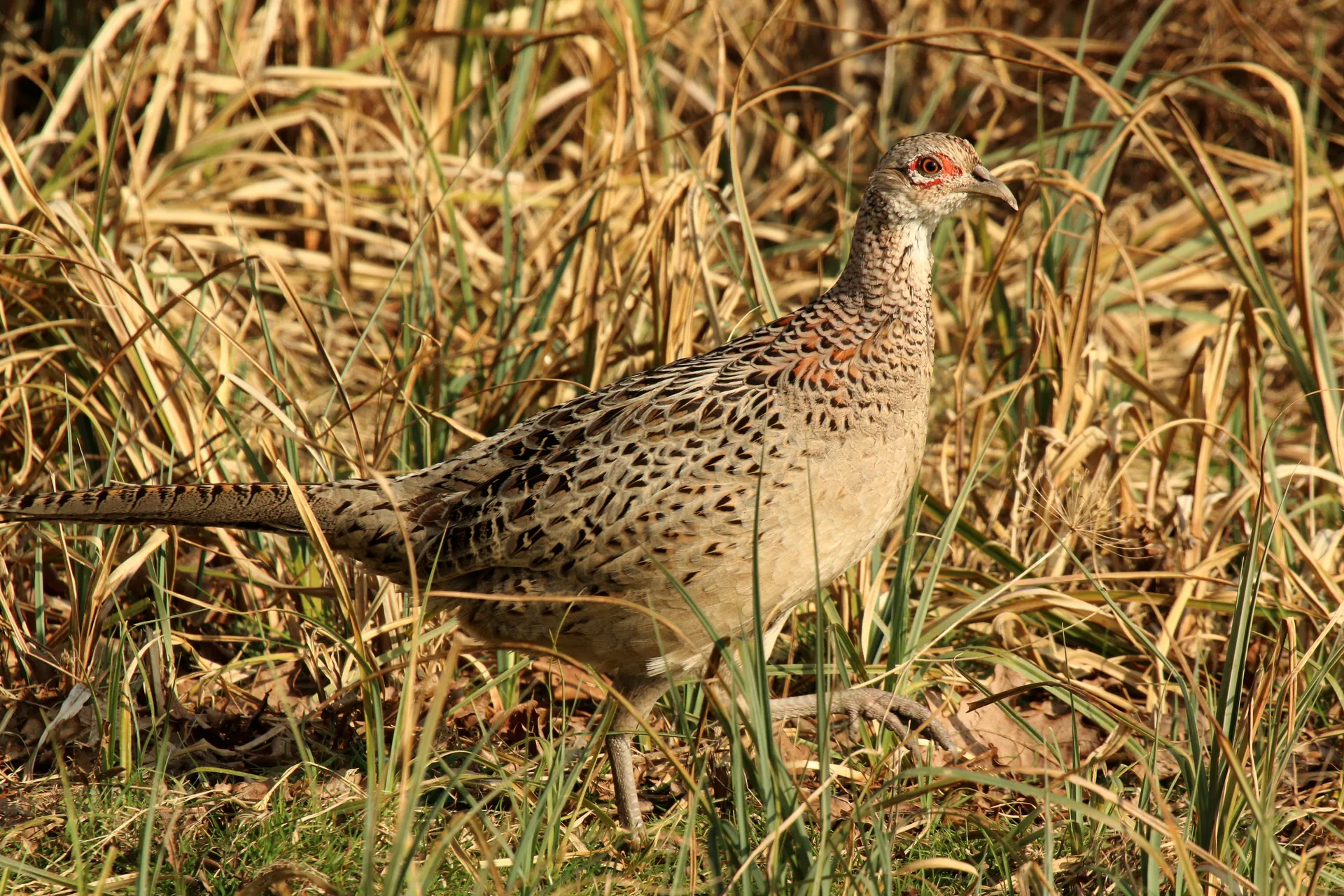
February to April
Availability: a seasonal product, on request
Pheasant eggs are a seasonal product, not a stock item. Our hens come into lay as winter ends, and collection runs from February to April depending on the year, the weather and the progress of our own settings. We therefore publish no prices and no stock online: hatching eggs are offered according to what the breeding season yields, strain by strain, and priority goes to filling our own incubators. In practice, that means calling us early — from January — to be pencilled in on a collection week, and an order is only confirmed once the eggs are actually available. We would rather tell you no in January than ship you late-lay eggs in April, when hatchability collapses.
Collection season
February to April depending on the year. Laying starts as the days lengthen and falls away sharply towards the end of the period.
Prices and availability on request
No published price list: quantity, strain and price are agreed case by case, on 04 76 38 31 01 or by email.
Book from January
Quantities are limited and committed first to our own poult production. Reserve before the hens come into lay.
Collection or shipping
Shipping is assessed case by case according to destination and quantity; collection from the farm is preferred.
No hatch guarantee
We guarantee the origin and freshness of the eggs, never the result: hatching depends on your incubator and your management.
Incubation guide
Incubating pheasant eggs successfully: the full protocol
A pheasant egg is not a hen's egg. The shell is thicker, embryonic development faster, and the margins for error narrower: 24 days of incubation instead of 21, lower humidity than for domestic poultry during the setting phase, then sharply raised over the last three days. Here are the benchmarks we work to and those used by professional hatcheries — the French reference values for forced-air incubators, cross-checked against those of the big American hatcheries. Two factors govern everything else: temperature and turning.
- Duration: 24 days
- 24 days is the reference value, with a real-world range of 23 to 25 days. Plan the transfer to the hatcher on day 21.
- Temperature: 37.7 °C then 37.2 °C
- 37.7 °C from day 1 to day 21 in a forced-air incubator, then down to 37.2 °C from day 22 until hatch. American professional hatcheries drop from 37.4 to 36.7 °C at transfer. Always double-check the display against a calibrated thermometer.
- Humidity: 45-50% then 65-75%
- 45 to 50% relative humidity from day 1 to day 21 — noticeably less than for hens — then 65 to 75% over the last three days so the chicks do not stick to the membranes.
- Turning: 4 to 6 times a day
- Tilting to 45°, at least 4 to 6 times a day, from day 1 to day 21. An interruption of more than 24 hours is enough for the embryo to stick to the shell.
- Candling: around day 7 and day 14
- A first candling around day 7 reveals clear (infertile) eggs; a second around day 14 lets you remove dead-in-shell embryos before they contaminate the batch.
- Hatch: stop turning on day 21
- On day 21, turning stops, eggs are laid flat in the hatcher, humidity is raised and the lid stays shut. The chicks position themselves to pip: any handling after that date costs you hatched chicks.
When the eggs arrive: the first 24 hours
Transport shakes up the air cell. An egg set immediately after a journey consistently hatches worse than a rested egg. On arrival, unpack promptly, check every egg for cracks and breakage, then let them rest for 24 hours, pointed end down, in a cool room (15 to 18 °C), away from draughts and direct sun. Do not wash them: the cuticle covering the shell is a sanitary barrier, and brushing or wetting it opens the door to bacteria. Then run the incubator empty for several hours, check that the temperature is stable, and set the eggs. Report any breakage found on opening the parcel, with photos: it is the only way for us to improve our packing.
24 hours' rest, pointed end down
Time for the air cell to settle after transport. This is the single step that makes the biggest difference to hatch rate.
15 to 18 °C, under cover
A cool, ventilated room — never the refrigerator, never near a radiator or a sunny window.
Do not wash the eggs
The cuticle protects the embryo. A soiled egg is dry-brushed very lightly, or not set at all.
Run the incubator empty first
Several hours of stabilisation before setting, with calibrated thermometer and hygrometer checked at egg level.
Three generations of game farmers
Where our pheasant eggs come from
Our hatching eggs come out of the same breeding pens as the poults and adult pheasants we deliver to hunting clubs: common pheasant of French strain, melanistic pheasant, Chinese ring-neck, and our exclusive FAISAN PUR CHASSE® strain, bred 100% naturally in large planted flight pens. Eggs are collected several times a day and graded — dirty, cracked, misshapen or off-size eggs are set aside — then stored cool until setting. Depending on the year, eggs from targeted crosses (a Chinese-strain cock over a common hen, for example) may be available: specify this when ordering, because the strain determines the flying behaviour of the bird you will get, not just its plumage. If your goal is a release rather than a rearing project, you are usually better off starting from 12-to-16-week poults or adult pheasants ready for release: the final return is more reliable than starting from the egg. And if you want to understand the whole rearing cycle, from lay to release, our pheasant rearing guide covers it step by step.
Hunting strains, not ornamental
Common pheasant of French strain, melanistic, Chinese and PUR CHASSE®: bloodlines selected for flight and hardiness.
Monitored breeding pairs
Controlled sex ratio in the breeding pens: a tight ratio improves the fertility of the batch. Breeders are renewed and selected on conformation and behaviour.
PUR CHASSE® in crosses
Our registered strain can go into targeted crosses depending on the season's availability. Price and feasibility on request.
Grading at collection
Eggs picked up several times a day, graded on cleanliness, size and shell integrity, stored cool until setting.
Registered game farm
GIBIS is a category A game-breeding establishment, registered in Isère under no. 38001, with a rearing register and health monitoring.
Frequently Asked Questions
Do you sell fertile pheasant eggs?
How long does a pheasant egg take to hatch?
What temperature and humidity for incubating pheasant eggs?
What should I do with the eggs when they arrive, before setting them?
What hatch rate can I expect from pheasant eggs?
Can a hen pheasant incubate her own eggs?
Do I need a licence to raise pheasants from hatching eggs?
How much does a pheasant egg cost?
How do you incubate pheasant eggs?
See also
Let's talk about your season before it starts
Hatching eggs, poults or birds ready for release: tell us your project and your target dates. Answers and availability by phone on 04 76 38 31 01 or by email.