
Species profile — ornamental and game pheasant
The Reeves's pheasant, the longest-tailed bird in the world
GIBIS bred the Reeves's pheasant in the past. We stopped producing it more than twenty years ago — but the species remains one of the most spectacular of its genus, and the best illustration of what, in our view, makes a fine pheasant: the tail.
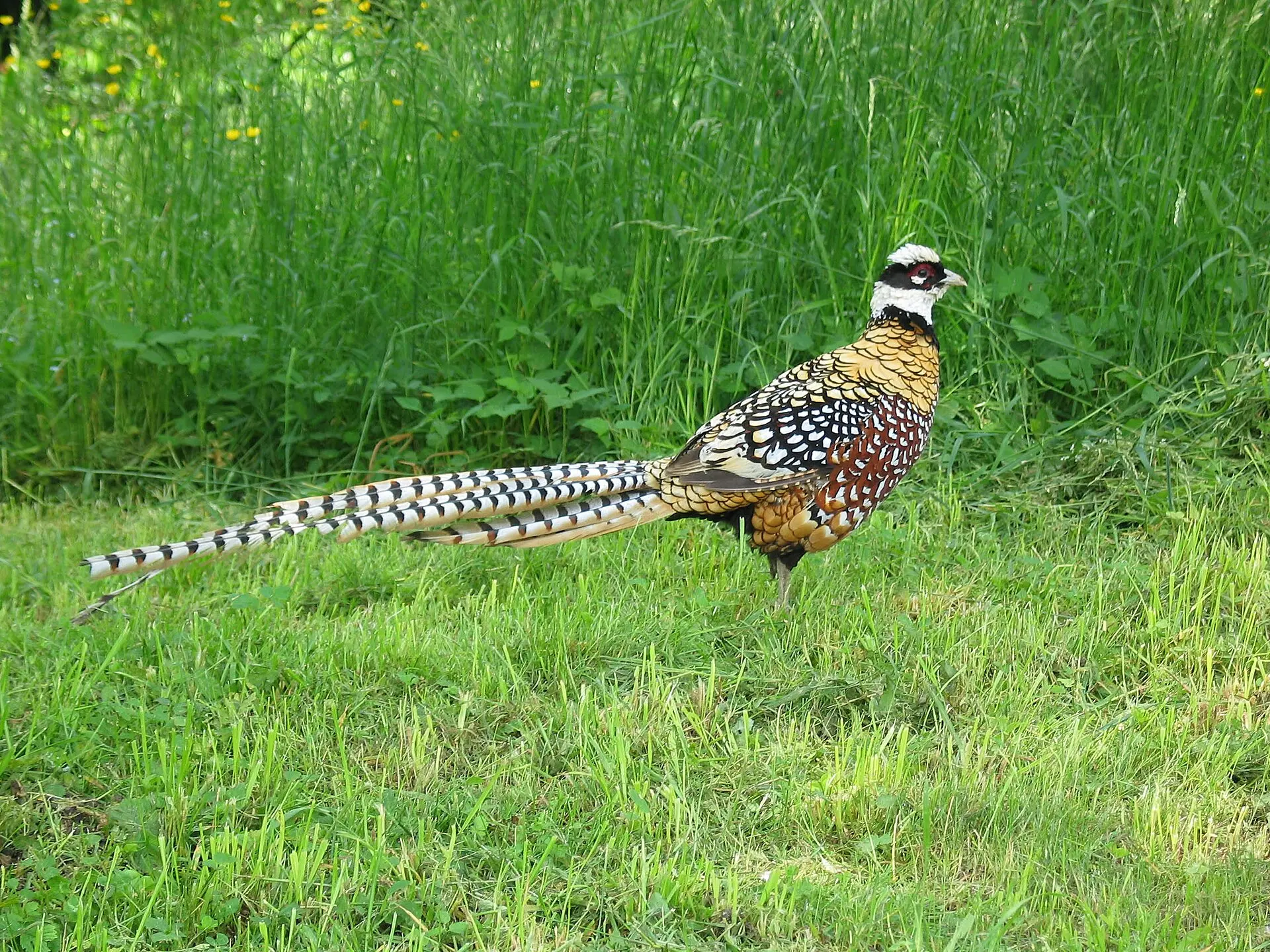
Syrmaticus reevesii
What is the Reeves's pheasant?
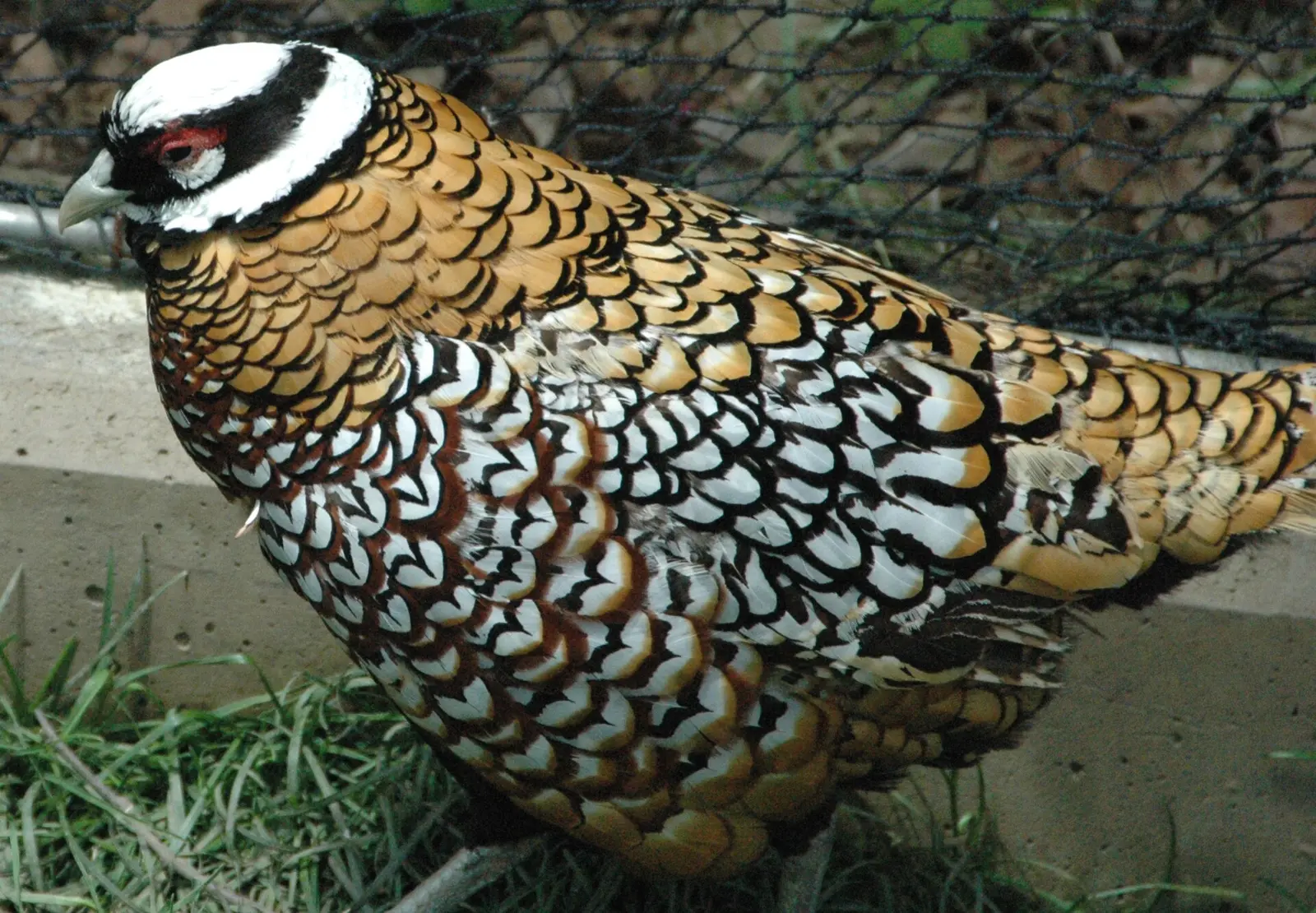
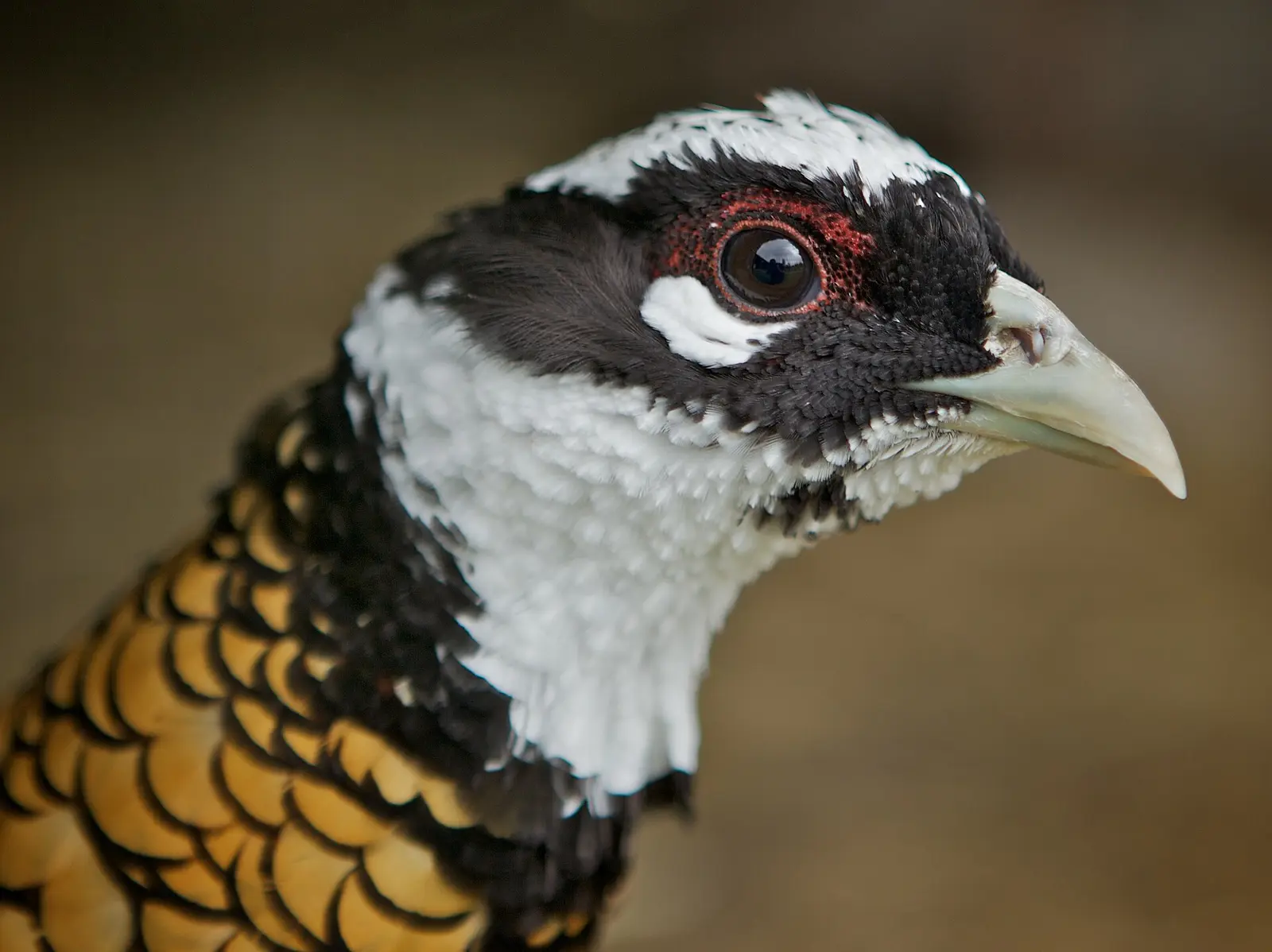
The Reeves's pheasant (Syrmaticus reevesii) is a species native to the wooded hills of central and eastern China. Described in the 19th century and named after the naturalist John Reeves — hence its English name, Reeves's pheasant — it was introduced into Europe, and France in particular, for hunting and ornament. The cock carries golden plumage heavily scalloped with black and a strikingly contrasted black-and-white facial mask, making it impossible to confuse with the common pheasant. It is a large, hardy bird, suited to wooded, hilly ground rather than open arable plains.
- Origin
- Hills and forests of central and eastern China, where the species is now considered threatened in the wild.
- Plumage of the cock
- Golden with black edging over the whole body, black-and-white facial mask: one of the most contrasted plumages of the genus.
- Preferred habitat
- Rolling, wooded or hillside ground rather than open plains.
- Status
- Classed as vulnerable in its native range; in Europe it belongs to ornamental breeding and a handful of shooting releases.
A tail over 1,50 m long: the world record
The Reeves's pheasant holds the record for the longest tail feathers in the animal kingdom: the central rectrices of an adult cock commonly exceed 1,50 metres, and can go well beyond that in older birds. It is the feature that strikes everyone, and it is more than an ornamental curiosity: in a pheasant, the tail is the first measure of a bird's quality. A long, intact tail carried high is the mark of a healthy, mature, well-reared bird — conversely, a short, broken or worn tail almost always betrays overcrowded rearing or unsuitable aviaries. That is precisely the criterion by which we judge our own pheasants.
The Reeves's in the field: strengths and limits
The Reeves's pheasant has won over certain estates for good reasons: it is a remarkable flier, fast, gaining height and using the terrain instead of running. On rolling, wooded ground it produces spectacular presentations. Its limitations are just as real: the cocks are extremely territorial and aggressive towards one another, which complicates rearing at density and cohabitation with other species; the bird disperses widely after release; and it copes poorly with the open plains that make up most French small-game country. For these reasons the Reeves's pheasant has remained a niche species in France, while the common pheasant and its shooting strains have established themselves everywhere.
Excellent flier
Powerful flight, quick to gain height, making good use of slopes and woodland edges.
Territorial cocks
Marked aggression between cocks: demanding to rear, low densities, difficult cohabitation.
Wide dispersal
The bird readily moves away from the release point, which makes managing an estate harder.
Suitable ground
Hillsides, woods and valleys rather than large arable plains.
Our experience
GIBIS and the Reeves's pheasant: a closed chapter
GIBIS bred the Reeves's pheasant in the past, at a time when a few estates were looking to diversify their releases. We stopped that production more than twenty years ago and no longer offer it for sale today — neither live birds nor eggs. This is in no way a criticism of the species: it follows from our trade. Since 1951, GIBIS has produced restocking game for hunting societies, ACCAs and federations that manage mostly plains and mixed farmland. On that kind of ground, it is the common pheasant strain selected for flight that gives the best results — and that is where we have concentrated three generations of selection.
What we breed today
If you have come here looking for a spectacular pheasant that is also a strong flier, the GIBIS answer is FAISAN PUR CHASSE®: our exclusive, registered strain, produced by 100% natural reproduction in large planted aviaries and flushed by pointing dogs from the earliest age. We also produce the common pheasant, the melanistic pheasant and the Chinese pheasant, as well as 12- to 16-week-old poults for restocking. For ornamental pheasants — Reeves's, golden, Lady Amherst, silver — you should approach breeders specialising in park pheasants, which is not our trade.
FAISAN PUR CHASSE®
Our exclusive game pheasant strain: explosive flush, high sustained flight, hardiness.
Common, melanistic and Chinese pheasant
The shooting varieties produced each season at Chatte, in the Isère.
Poults 12–16 weeks
For restocking programmes run with pre-release pens.
Breeding hen pheasants
Available occasionally, off catalogue: price and availability by telephone or e-mail.
Frequently Asked Questions
Do you sell Reeves's pheasants?
How long is a Reeves's pheasant's tail?
What is the difference between the Reeves's pheasant and the common pheasant?
Is the Reeves's pheasant suitable for restocking in France?
Can breeding stock of Reeves's pheasant be bought from GIBIS?
See also
A pheasant that flies has been our trade since 1951
Let's talk about your ground and the strain suited to your releases. Tailored quotation by telephone or e-mail.