
Technical guide
Game feeding and habitat management
A successful return to the wild is prepared months before the animals arrive. Game cover crops, sensible feeding, cover, water points, warrens and recall aviaries: the improvements that make the difference between a ground that holds its game and a ground that loses it.
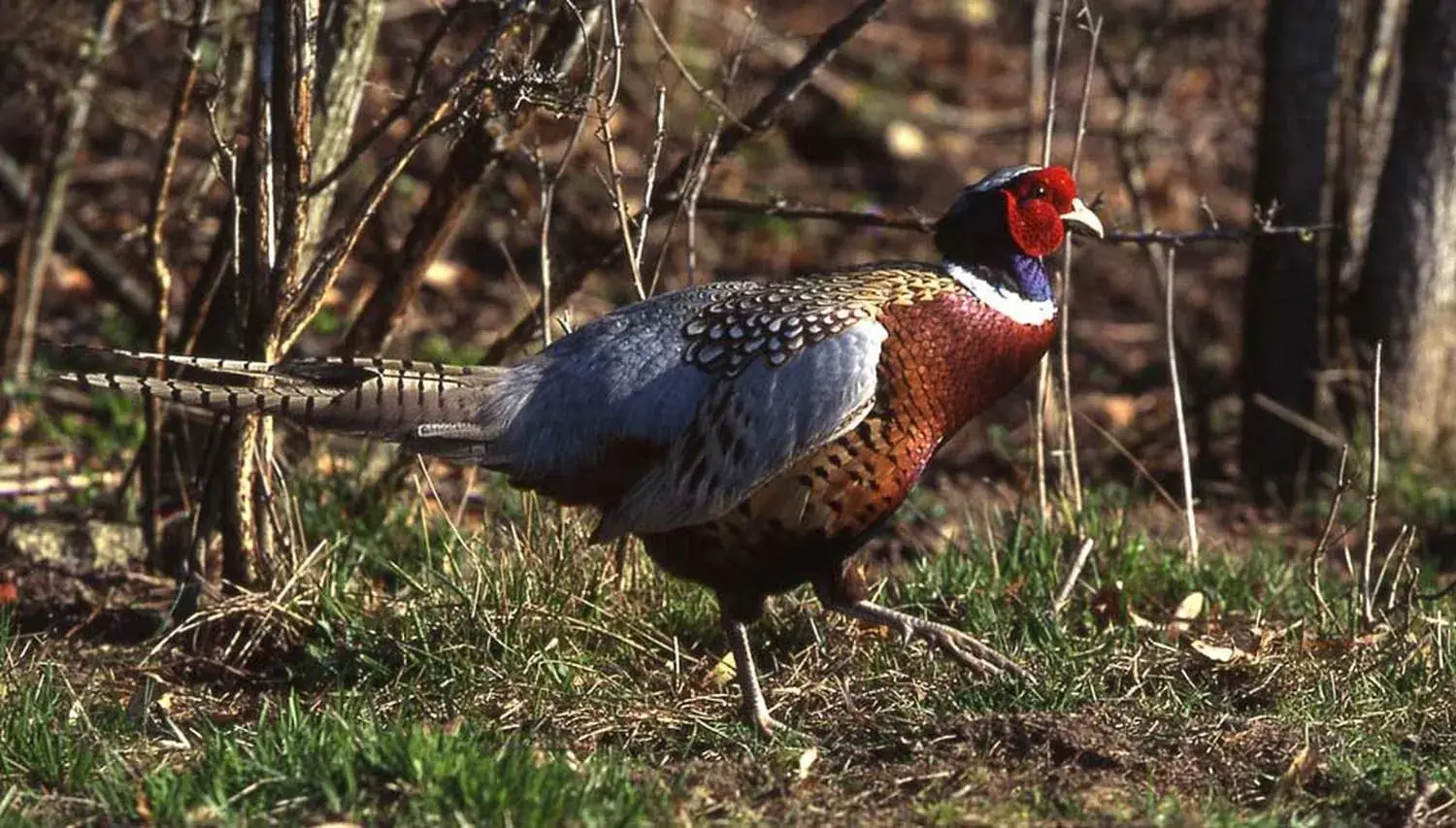
Why improve the ground before returning game to the wild?
Since 1951 we have delivered restocking game to a wide variety of grounds, and the finding never changes: with animals of equal quality, it is habitat management that determines the survival rate. A ground that offers food, refuge cover, water nearby and controlled predation pressure holds the birds and rabbits returned to the wild; a poor habitat scatters them within a few days, whatever the numbers put out. This guide brings together the improvements we recommend to our customers — ACCAs, hunting clubs, private shoots and private landowners — before any return to the wild of pheasants, partridges or wild rabbits.
Food available all year round
Game cover crops and feeding fill the lean periods, from late summer to the end of winter, when farmland no longer provides food.
Refuge cover
Hedgerows, set-aside and grass strips offer protection from predators and bad weather: without cover, the game will not settle.
Accessible water
A water point less than 200 metres from each living area is essential for the birds to settle, especially when they are returned to the wild in summer.
Game cover crops
Game cover crops — also called wildlife crops or game catch crops — are plots or strips sown specifically to feed and shelter small wildlife. Even small, well-distributed areas transform a ground: the usual recommendation is 1 to 3% of the hunted area, in strips 10 to 20 metres wide along woods, hedgerows or tracks rather than in large isolated plots. The most widely used mixes combine a cereal that stays standing through the winter (sorghum, millet, wheat, oats), a cover plant (maize, fodder kale, mustard) and a legume (clover, lucerne, sainfoin) that attracts the insects young pheasant poults and partridge chicks need in their first weeks. Sown in spring, these strips are left in place all winter and only mulched at the end of the season. Many departmental hunters' federations supply seed at reduced prices or subsidise these crops: ask before you buy.
Mixes suited to small game
Sorghum, millet, maize, fodder kale, clover and buckwheat: seed in autumn, cover in winter and insects in spring for the young birds.
Strips rather than plots
Strips 10 to 20 m wide along woodland edges and hedgerows are better than one large isolated plot: the game always moves close to a refuge.
Leave standing through the winter
Cover and seed must remain available from autumn to the end of winter, the critical period for the survival of birds returned to the wild in summer.
Partnership with farmers
Wildlife set-aside, field margins and agreements with farmers: the departmental federation often supports these schemes.
Feeders and feeding points
Feeding small game means keeping grain — usually wheat, sometimes mixed with cracked maize — permanently available at fixed points on the ground. For pheasants and partridges, it is the most effective holding tool there is: a bird that finds food every day in the same place establishes its home range there. A simple feeder consists of a drum or hopper that keeps the rain off the grain, set on legs or hung up, with an on-demand dispensing system (spring, dish or chute) that limits waste and keeps rodents out. Allow roughly one feeding point per 10 to 15 hectares of pheasant ground, placed along the edge of cover and never in open ground; keep them filled without interruption, because a feeder left empty for a few days is enough to send the birds drifting to the neighbour's ground. Feeding small game is regulated by the departmental hunting management scheme: the rules (periods, equipment, distances) vary from one département to another — the regulatory position is detailed on our small game regulations page.
Wheat on free access
Wheat is the benchmark for pheasants and partridges: palatable, economical and easy to dispense from a spring or dish hopper.
One point per 10 to 15 hectares
A regular network along the edge of cover, in the living areas you have identified: woodland edges, hedgerows, corners of woods, never out in the open.
Absolute continuity
Feeding cannot be interrupted: an empty point sends the birds drifting away within a few days. Check round every one to two weeks.
Departmental regulatory framework
The departmental hunting management scheme sets the conditions for feeding. Check the local rules with your federation.
Hedgerows, set-aside and cover
Cover is what modern arable plains lack most, and it is the leading cause of failure when game is returned to the wild in open country. A wide hedgerow of local species (blackthorn, hawthorn, dogwood, hazel, dog rose) that is not cut back hard gives small game a travel corridor, shelter from raptors and a nesting site. Set-aside and grass strips left unmown between 1 May and the end of July protect the broods of partridges and hen pheasants on the ground — mowing from the centre outwards at reduced speed saves whole clutches every year. Add brush piles along woodland edges, scrubby copses and a few patches of rough ground left in place: small game needs a network of refuges no more than 150 to 300 metres apart to occupy the area safely.
Hedgerows of local species
Blackthorn, hawthorn, dogwood, hazel: hedgerows that are dense at the base and wide, cut in rotation and never all cut back in the same year along their whole length.
Set-aside and grass strips
Mowing delayed until after 15 July and carried out from the centre outwards at reduced speed: ground broods survive the passage of the machines.
Network of refuges
A shelter every 150 to 300 m: copses, brush piles, bramble patches and rough ground left in place let the game move around without exposing itself.
Graded woodland edges
Between wood and crop, a gradual edge — grassy margin, then shrubs, then trees — multiplies the feeding and nesting areas.
Water points
The water needs of small game are almost always underestimated. A pheasant or a partridge drinks every day, and in summer — the height of the restocking season, from June to August — the lack of water near the site where game is returned to the wild is a major cause of dispersal and early mortality. The rule we apply: a water point less than 200 metres from each living area. Where there is no pond, wet ditch or stream, simple drinkers (shallow troughs with an exit stone to prevent drowning, siphon drinkers of the kind used in aviaries) placed near the feeders do the job perfectly well, provided they are cleaned and refilled regularly. Restoring an existing pond is also one of the most cost-effective improvements of all: it benefits waterfowl, mallards and all the wildlife on the ground. A restored pond can then be stocked very successfully with our restocking mallards, reared free-range on a lake.
Less than 200 metres
Every living area and every site where game is returned to the wild needs water within 200 m, especially from June to September.
Drinkers near the feeders
Putting water and grain at the same point doubles the holding effect. Shallow troughs with an exit stone or mesh for the young birds.
Ponds and wetlands
Restoring a pond benefits the whole ground: mallards, small game, insects. Partial dredging in autumn, gently sloping banks.
Artificial warrens for rabbits
The wild rabbit only settles for good where it can go to ground immediately. Before any return to the wild, you therefore need to build artificial warrens: underground or surface refuges that stand in for the burrow until the rabbits dig their own. The proven formula is a structured mound about 4 to 5 metres across: a base of pallets, pipes or brushwood forming the tunnels, covered with stones and earth, with several entrances facing away from the prevailing winds. On free-draining soil, a raised earth mound keeps the tunnels from flooding in winter. Allow one warren for every 3 to 5 rabbits returned to the wild, with warrens 100 to 200 metres apart to encourage step-by-step colonisation. Temporary protective netting for the first few days, removed afterwards, limits the initial dispersal. Our wild rabbits, pure French stock vaccinated against myxomatosis + VHD, are delivered with siting advice suited to your soil.
Structured mounds 4 to 5 metres across
Pallets, pipes or faggots at the base to form the tunnels, stones and earth on top, several entrances sheltered from the prevailing winds.
Spaced 100 to 200 metres apart
A chain of closely spaced warrens lets the rabbits colonise the ground step by step without crossing open ground.
Mounds on wet soils
On heavy or flood-prone ground, raising the warren on an earth mound keeps the tunnels dry all year round.
Protection for the first few days
Temporary netting around the warren for the first 8 to 10 days holds the rabbits returned to the wild until they dig their own burrows.
Recall aviaries and acclimatisation pens
The recall aviary is the improvement that does most to change the outcome when pheasants or partridges are returned to the wild. The principle: a wire-mesh enclosure set up on the site, in which the birds spend a few days getting used to the site, its water and its food, before being set free gradually. Some of the birds can be kept in the aviary after the hatches are opened: their calls hold the freed birds in the area, hence the name. An effective recall aviary measures at least 25 to 50 m² for a restocking batch, with mesh buried 30 cm deep against foxes, a net or mesh roof, a rain shelter, and a feeder and a drinker kept in use after the birds are freed. Set up along the edge of cover and kept supplied for several weeks, it then becomes a permanent feeding point that structures the ground. For hares, an acclimatisation pen on the ground, on the same principle, is strongly recommended.
Acclimatisation on site
A few days in the aviary are enough for the birds to learn the area, its water and its food: initial dispersal drops sharply.
Recall effect
The birds kept temporarily in the enclosure call to those that have been freed and hold them on the site where they were returned to the wild.
Protection against predators
Mesh buried 30 cm deep, netted roof, controlled exit hatches: the aviary protects the birds during their most vulnerable period.
Feeding continued after the birds are freed
Left open and kept supplied, the aviary becomes a permanent feeding point: refuge, grain and water in the same place.
Predator control
All the habitat work in the world cannot make up for excessive predation pressure on animals freshly returned to the wild, which are naturally more vulnerable in their first weeks. Control of foxes and small mustelids (stone marten, pine marten depending on the département), as well as of unprotected corvids (carrion crow, magpie) that destroy broods, must be carried out before the return to the wild — ideally at the end of winter and in spring, before the animals arrive — and not afterwards. Trapping is reserved for licensed trappers, in strict compliance with the list of species liable to cause damage (ESOD) adopted for your département and with the procedures set by the regulations: your departmental hunters' federation and the local trappers' association are the people to talk to in order to organise an effective and lawful campaign. On this point, as on feeding, our small game regulations page sets out the applicable framework. Keep in mind the order of magnitude observed in the field: a serious control campaign carried out beforehand can double the survival rate.
Before the return to the wild, not after
Control is carried out at the end of winter and in spring, so that predation pressure is low when the animals arrive.
ESOD framework and licensed trappers
Departmental list of species that may be controlled, trapping by licensed trappers, declarations at the town hall: predator control is strictly regulated.
Corvids and broods
Crows and magpies destroy eggs and young: controlling them in spring protects the breeding of birds that have settled.
Support from the federation
Federations and trappers' associations organise training and coordinated campaigns: do not tackle this on your own.
Where to start on your ground?
The classic mistake is to try to do everything in the first year. Our advice, refined over three generations: start with a simple assessment of your ground — where the cover is, where the water is, where the game moves — then concentrate the improvements on one or two favourable sectors rather than spreading them thinly. Year 1: a recall aviary or artificial warrens in the chosen sector, a network of feeders, a control campaign before the return to the wild. Year 2: strips of game cover crops and drinkers. Year 3: hedgerow planting and pond restoration, which pay off over the longer term. A well-managed ground gets better results with fewer animals — and that comes from a game supplier. When you order restocking game, we are happy to review your habitat plan with you and adapt species, ages and delivery schedule to the actual state of your ground.
Assessment before any work
Map the cover, water and game movement areas before investing: improvements belong where the game already lives.
A three-year plan
Aviary, warrens and feeding in year 1; crops and drinkers in year 2; hedgerows and ponds after that. Consistency matters more than scale.
Fewer animals, better received
A well-managed ground holds game and lets it breed: the budget gradually shifts from returning animals to the wild towards the habitat.
GIBIS advice included
Call +33 4 76 38 31 01: we adapt species, ages and delivery schedule to the progress of your habitat work.
Frequently Asked Questions
What is feeding small game?
How many feeders should be installed on a ground?
Which crops should be sown for game?
How do you build an artificial warren for rabbits?
What is a recall aviary for?
When should predators be controlled before a return to the wild?
Is feeding permitted everywhere in France?
How much of my ground should be devoted to habitat improvements?
See also
A ground that is ready, animals to match
Is your ground managed, or about to be? Let's talk species, densities and a timetable for returning game to the wild. Pheasants, partridges, wild rabbits, hares and mallards reared for restocking, delivered alive throughout France, with settling-in advice included.