
Game bird encyclopaedia
Grey Partridge
Perdix perdix (Linnaeus, 1758). A sedentary galliform of the cultivated plains of Eurasia, holder of one of the largest clutches of any bird, and now the symbol of the decline of wildlife on Europe's farmland plains.
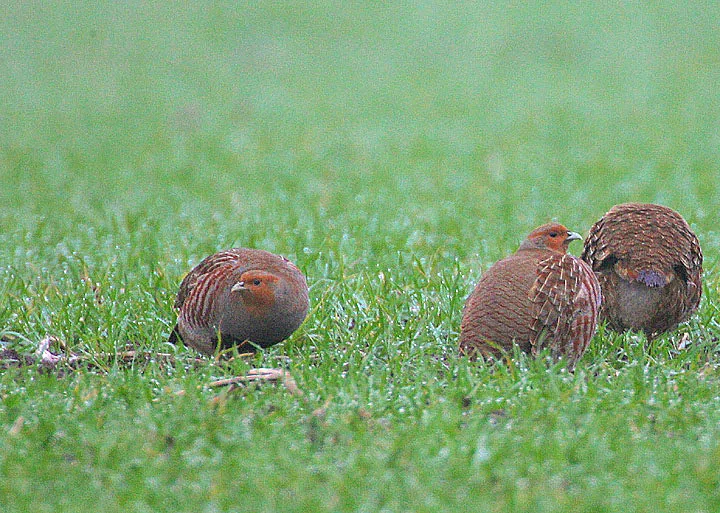
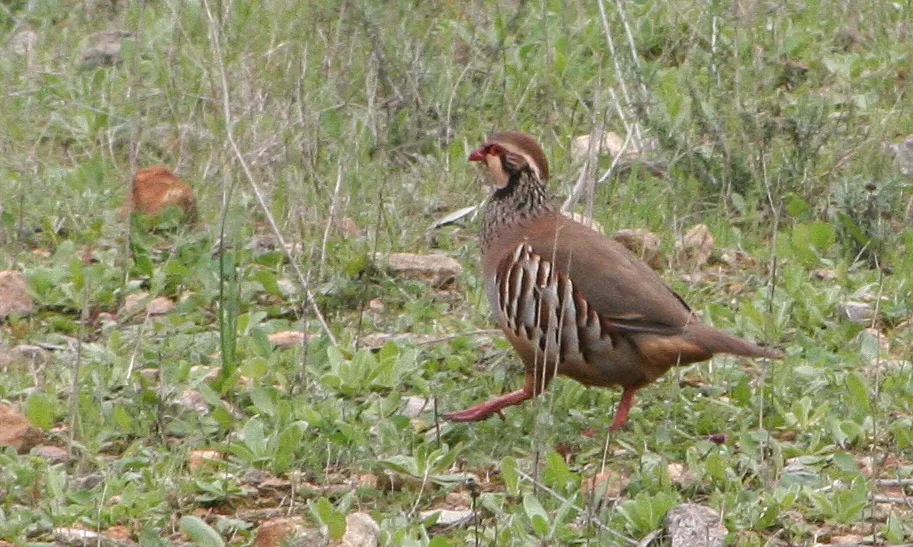
Not to be confused with the red-legged partridge (Alectoris rufa), which belongs to a different genus — see the article Red-legged Partridge —, nor with the rock partridge (Alectoris graeca). For farm-reared birds intended for restocking, see the grey partridges for sale page.
Description
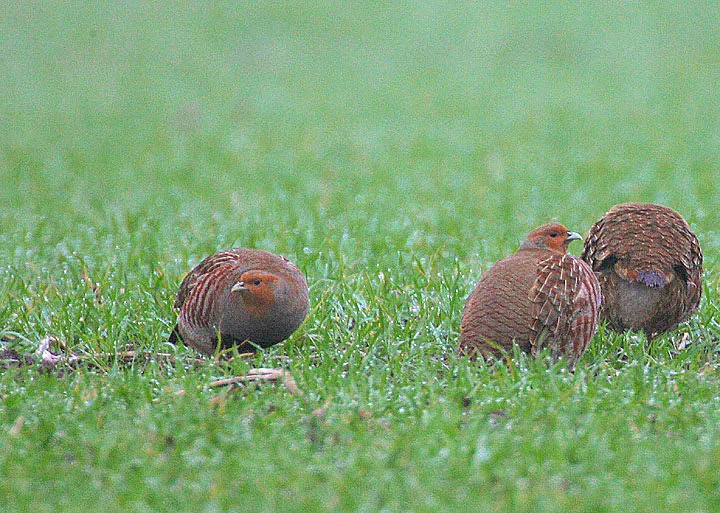
Taxonomy and systematics
Protonym and tautonym
Tetrao perdix Linnaeus, 1758 — reclassified in the genus Perdix erected by Brisson in 1760, giving the tautonym Perdix perdix.[2]
Etymology
Perdix, the Latin name for the partridge, borrowed from the ancient Greek perdix.[3]
Genus Perdix
Only three species: P. perdix, P. dauurica and P. hodgsoniae. The red-legged and rock partridges belong to Alectoris.[4]
Distribution
Habitat and diet
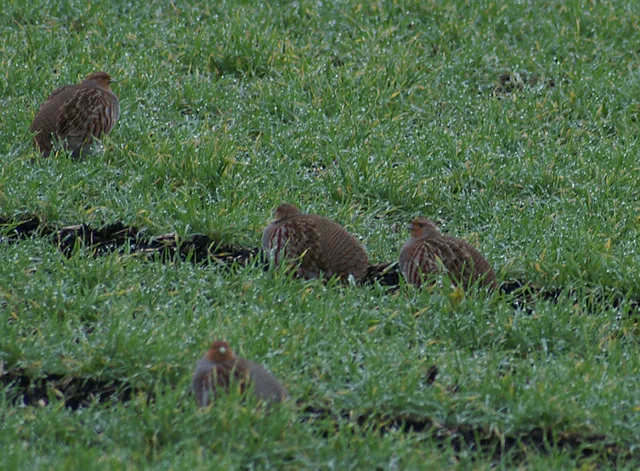
Breeding: the largest clutch in Europe
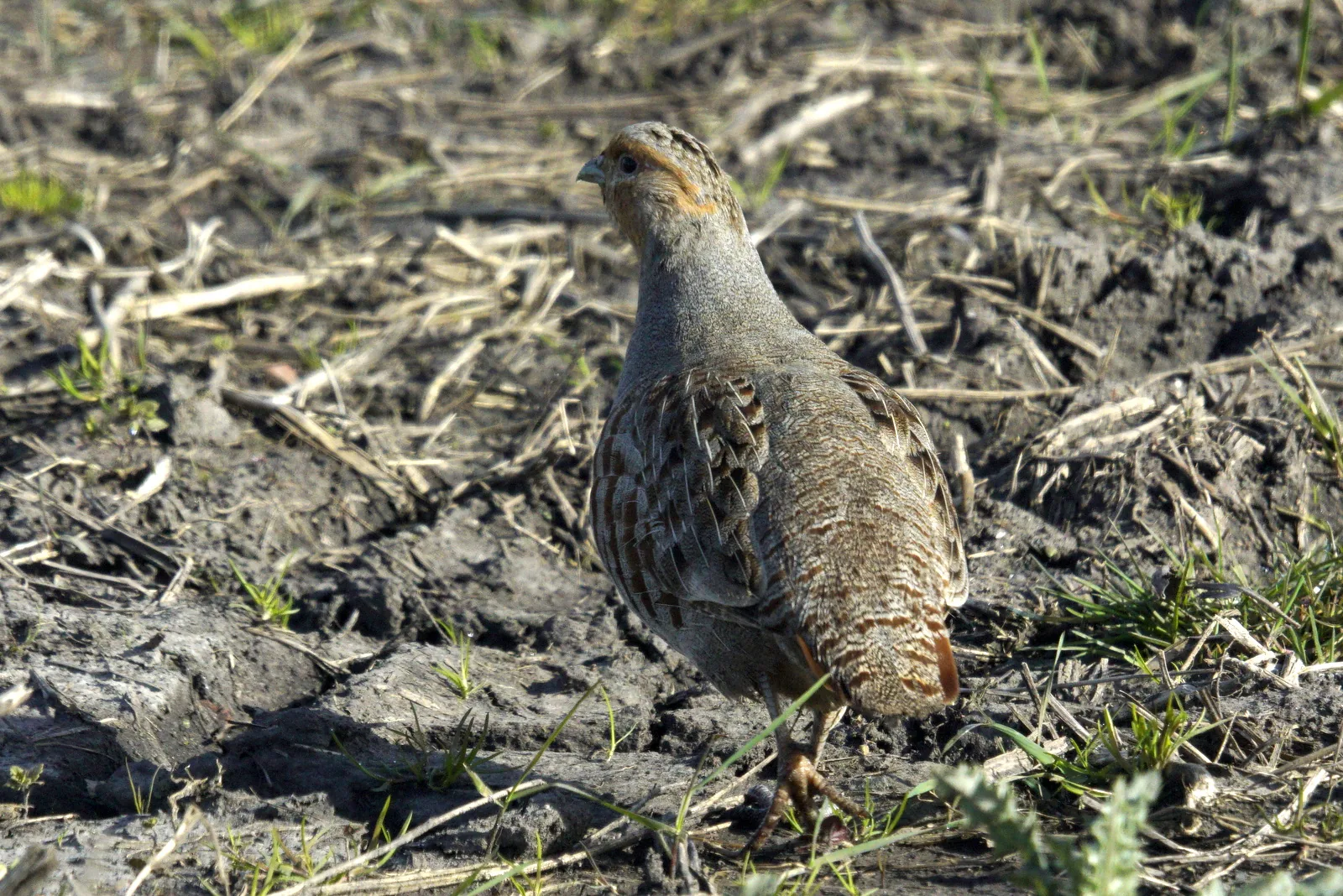
Behaviour and covey life
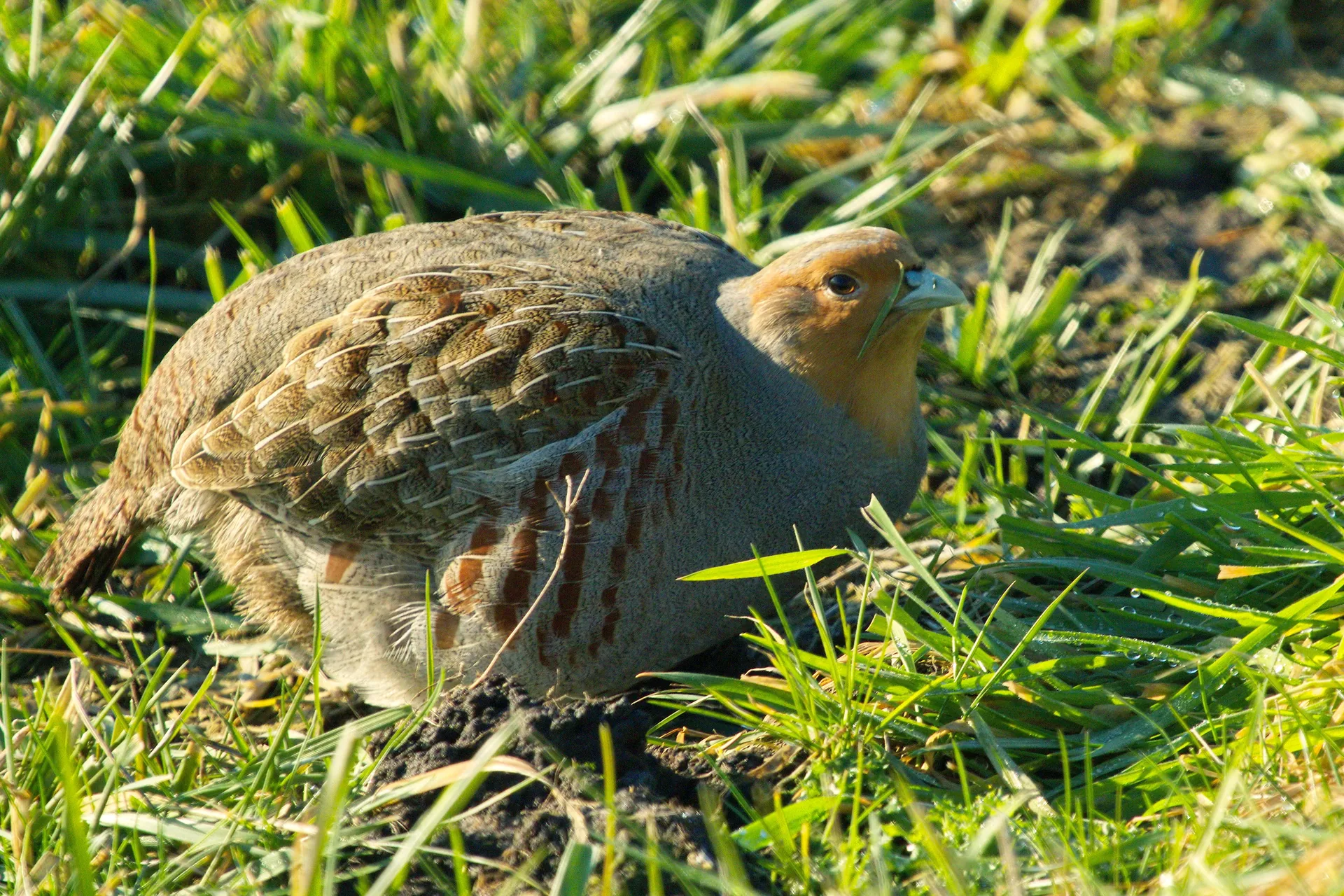
Roosting in a circle
The covey sleeps bunched together on the ground, heads facing outwards, to detect predators more easily.[13]
Grey partridge or red-legged partridge?
Status, decline and management in France
Pyrenean grey partridge
The subspecies hispaniensis, isolated in the mountains, is monitored and managed as a separate conservation unit.[6]
At GIBIS
A family farm since 1951
Production of feathered game and small game at Chatte, in Isère.
Pure French strain
A grey partridge flock kept without crossbreeding: see the grey partridges for sale page.
Restocking
Population reinforcement operations are detailed on the restocking page.
References
- ↑Office français de la biodiversité (OFB), species profile « Perdrix grise (Perdix perdix) », ofb.gouv.fr, accessed in 2026.
- ↑Brisson M. J., *Ornithologie, ou Méthode contenant la division des oiseaux en ordres, sections, genres, espèces et leurs variétés*, Paris, 1760 — erection of the genus *Perdix*.
- ↑Jobling J. A., *The Helm Dictionary of Scientific Bird Names*, Christopher Helm, London, 2010.
- ↑Madge S. & McGowan P. J. K., *Pheasants, Partridges and Grouse*, Christopher Helm, London, 2002.
- ↑Oiseaux.net, profile « Perdrix grise (Perdix perdix) », accessed in 2026.
- ↑Bro E., *La Perdrix grise : biologie, écologie, gestion et conservation*, Biotope Éditions, Mèze, 2016 (in French).
- ↑Potts G. R., *The Partridge: Pesticides, Predation and Conservation*, Collins, London, 1986.
- ↑Game and Wildlife Conservation Trust (GWCT), « Grey partridge », gwct.org.uk, accessed in 2026.
- ↑BirdLife International, *Perdix perdix* profile, IUCN Red List of Threatened Species, 2018 assessment.
- ↑UICN France, MNHN, LPO, SEOF & ONCFS, *La Liste rouge des espèces menacées en France — Chapitre Oiseaux de France métropolitaine* (Red List of threatened species in France — birds of mainland France), Paris, 2016.
- ↑Office français de la biodiversité (OFB), species profile « Perdrix rouge (Alectoris rufa) », ofb.gouv.fr, accessed in 2026.
- ↑PeGASE programme (Perdrix grise, agrosystèmes et environnement), OFB / FNC / departmental hunters' federations, launched in 2017.
- ↑Cramp S. & Simmons K. E. L. (eds.), *The Birds of the Western Palearctic*, vol. II, Oxford University Press, Oxford, 1980.
See also
Gallery
See also
Continue reading
This article is part of the game bird encyclopaedia of GIBIS, a breeder at Chatte (Isère) since 1951. For a question about the species or about our pure French strain grey partridges, the team can be reached by telephone or e-mail.