
Hares in Ukraine: the rusak of the plains and the white hare
Ukraine is home to two hares. The brown hare (Lepus europaeus), called « zaiets-rusak » in Ukrainian, is one of the country's main game species and appears in the official hunting statistics[2]. The mountain hare (Lepus timidus), or « white hare », is by contrast a rare species, listed in the Red Data Book of Ukraine[3]. The hunting framework is set by a national law of 2000 on game management and hunting[1].
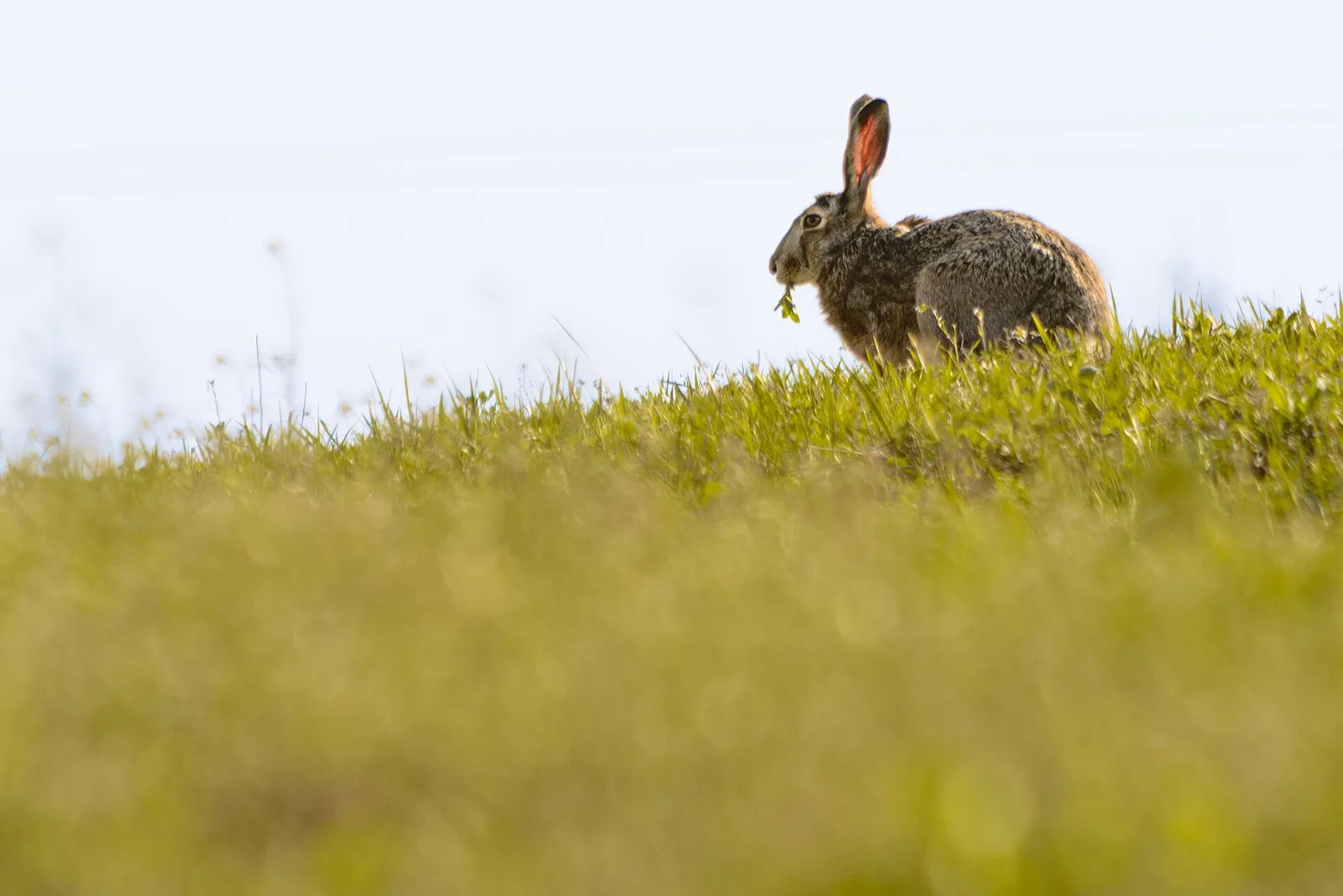
The brown hare: more than a million animals counted
The State Statistics Service publishes every year, based on returns from hunting-ground users, the number of animals counted and taken[2]. For the brown hare, it reported 1,248,500 hares counted in 2018, 1,258,700 in 2019 and 1,227,400 in 2020, with bags of 154,700, 158,400 and 155,600 animals respectively[2]. Reported numbers thus stayed close from one year to the next, and the bag amounted to roughly one eighth of the numbers counted[2].
The statistics service states that these data do not cover Crimea, the city of Sevastopol or part of the Donetsk and Luhansk regions[2]. These are counts made by hunting-ground users, not scientific surveys. For the biology of the species, see our brown hare profile.
The mountain hare, a Red Data Book species
According to the Red Data Book of Ukraine, the mountain hare has the status of a « rare » species[3]. Long considered extinct in the country, or only a visitor from Russia and Belarus, it is now recorded in the north of the Sumy, Chernihiv and Zhytomyr regions, and its presence is assumed in the neighbouring Rivne region[3].
The Red Data Book estimates that a few hundred individuals live in Ukraine, including up to 50 in and around the Polissia Nature Reserve[3]. It cites logging, poaching and increased fox predation as causes of decline[3]. The species is protected in particular in Desniansko-Starohutskyi National Park and in the Polissia and Rivne nature reserves[3].
A national law and hunting-ground users
Game management is carried out by hunting-ground users, under a contract concluded with the central executive body responsible for forestry and hunting policy[1]. Hunting grounds are allocated by the regional councils, on the proposal of that body, for a period of at least fifteen years and a minimum area of 3,000 hectares[1]. Regional administrations ensure that the legislation is applied and may restrict the use of hunting grounds and the practice of hunting[1].
Who sets the hunting season?
In Ukraine, the law itself sets, species by species, the window during which hunting is possible; the brown hare is listed together with the wild rabbit[1]. Within that window, the exact opening and closing dates, the hunting days and the bag limits per hunter are set by each hunting-ground user, in agreement with the competent central executive body and the regional administration, and then made public[1]. We do not reproduce the dates: check with the user of the hunting ground concerned.
Moving animals and return to the wild
The law makes the capture of game animals for settlement in new habitats subject to authorisation from the central executive body responsible for environmental protection[1]. It also penalises the relocation, acclimatisation and crossbreeding of game animals without authorisation, as well as bringing game animals into or out of the country in breach of the rules[1]. For any practical question, check with that body and the competent regional administration.
Our guide to returning hares to the wild points out that adding animals is no substitute for habitat or monitoring. GIBIS, a game breeder based in Chatte, in the Isère department of France, raises young hares there and also offers wild-caught hares from Central Europe: see our hares.
Frequently asked questions
How many brown hares does Ukraine have?
The State Statistics Service reported 1,227,400 hares counted and 155,600 taken in 2020, excluding Crimea and part of the Donetsk and Luhansk regions[2].
Is the mountain hare threatened in Ukraine?
It is listed in the Red Data Book of Ukraine with the status of a rare species, and only a few hundred individuals are thought to live there[3].
Who sets the hare hunting season in Ukraine?
The law sets the hunting window; the exact dates are set by each hunting-ground user, in agreement with the central authority and the regional administration[1].
A question about the brown hare? Write to us.
Contact usSources
This page summarises public sources consulted when it was written; it does not replace the texts in force or the advice of the competent authority.
- [1]Закон Украины « Об охотничьем хозяйстве и охоте » от 22.02.2000 № 1478-III (русский перевод украинского текста « Про мисливське господарство та полювання », редакция по состоянию на 08.07.2019) · Kodeksy.com.ua · kodeksy.com.ua
- [2]Ведення мисливського господарства (набір офіційних статистичних даних) · Державна служба статистики України, via data.gov.ua · data.gov.ua
- [3]Заєць білий Lepus timidus Linnaeus, 1758 · Червона книга України (redbook-ua.org) · redbook-ua.org