
The hare in Switzerland: a vulnerable species, cantonal hunting
Switzerland is home to two hares: the brown hare (Lepus europaeus), Feldhase in German, and the mountain hare (Lepus timidus), Schneehase, confined to the Alps. The former is classified as vulnerable on the national Red List. Both remain huntable species under federal law, but it is the cantons that regulate and plan hunting. Here is what public sources say.
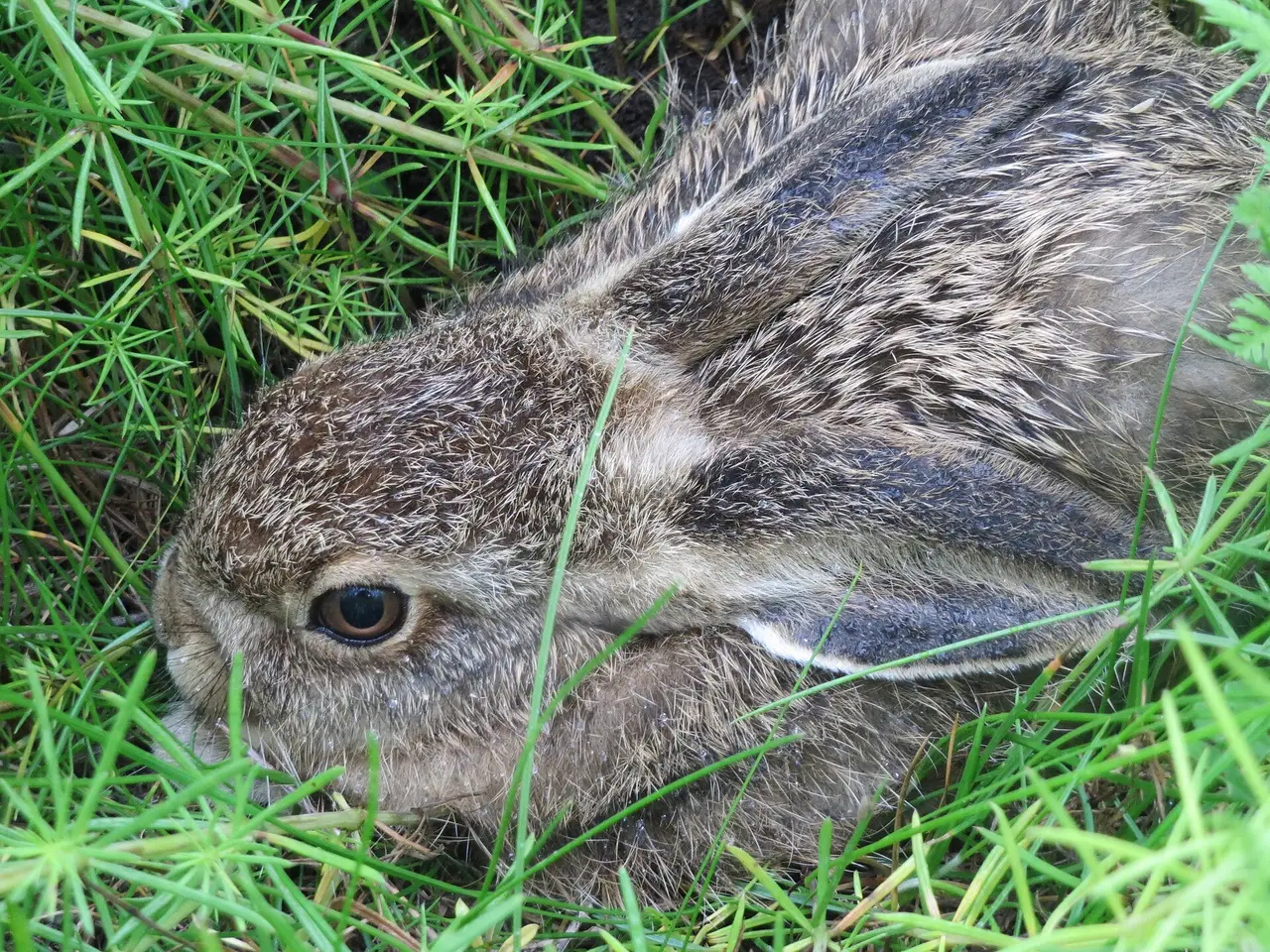
A vulnerable brown hare, a mountain hare threatened by climate
In the Red List of mammals published in 2022 by the Federal Office for the Environment (FOEN) and info fauna, the brown hare remains in the "vulnerable" (VU) category, because its numbers are still falling; the causes cited are agricultural intensification and the impoverishment of the landscape.[1]
The mountain hare is classified as "near threatened" (NT). The Red List considers a decline statistically likely and cites a study predicting that it will lose a quarter of its habitat by 2070 as a result of warming, which conversely favours the brown hare at altitude; the two species hybridise.[1] For the biology of the brown hare, see our entry Brown hare.
National counts since 1991
Since 1991, hare counts have been carried out every spring on behalf of the FOEN, at night, by spotlight. In 2020, they covered 58 areas totalling 38,438 ha. The median density observed was 2.72 hares per 100 ha. In arable areas, the mean density stood at 5.4 hares per 100 ha; in grassland areas, it fell from 1991 to 2010 and has since stagnated at a low level, about 2.6 in 2020.[2] The canton of Geneva states that its hare densities are among the highest in Switzerland.[4]
A federal framework, cantonal rules
The Federal Hunting Act (LChP, in German JSG) lists the brown hare and the mountain hare among the species that may be hunted. It leaves it to the cantons to regulate and plan hunting according to the principle of sustainability: they set the conditions for access to hunting, the hunting system and the hunting area, and keep harvest statistics. The Act itself sets the closed season for each huntable species; the cantons may extend it or shorten the list of huntable species.[3] Seasons, any quotas and the species actually hunted therefore vary from one canton to another: check with the cantonal hunting service.
Geneva is an exception: since a popular vote in 1974, hunting has been banned throughout the canton.[4]
Restocking and import: what the law provides
Federal law allows the cantons to release animals of huntable species, provided suitable habitat exists and sufficient protection is ensured. It makes the import of animals of huntable species intended for release into the wild subject to authorisation by the Confederation.[3]
Before any introduction project, check with the cantonal hunting service and the FOEN. Our guide to returning hares to the wild describes general good practice, established for France.
Frequently asked questions
Is the hare threatened in Switzerland?
The brown hare is classified as vulnerable (VU) on the 2022 Red List and the mountain hare as near threatened (NT).[1]
Who sets hare hunting seasons in Switzerland?
Is authorisation required to import hares intended for restocking?
Yes: under the Federal Hunting Act, importing animals of huntable species for release requires authorisation from the Confederation.[3]
What hares does GIBIS offer?
GIBIS, a game breeder based in Chatte, in the Isère department of France, raises young hares there and also offers wild-caught hares from Central Europe: see our hares. For Swiss regulations, contact your cantonal hunting service.
Una domanda sulla lepre europea? Scriveteci.
Contact usSources
This page summarises public sources consulted when it was written; it does not replace the texts in force or the advice of the competent authority.
- [1]Rote Liste der Säugetiere (ohne Fledermäuse). Gefährdete Arten der Schweiz · Bundesamt für Umwelt (BAFU) / info fauna (CSCF) – S. Capt, 2022 · bafu.admin.ch
- [2]Schweizer Feldhasenmonitoring 2020 · ECOTEC Environnement SA, im Auftrag des BAFU (veröffentlicht vom Staat Freiburg) · fr.ch
- [3]Bundesgesetz über die Jagd und den Schutz wildlebender Säugetiere und Vögel (Jagdgesetz, JSG), SR 922.0, Stand 1.2.2025 · Schweizerische Eidgenossenschaft · fedlex.admin.ch
- [4]Un canton sans chasse · République et canton de Genève · ge.ch