
The hare in Portugal: the lebre-ibérica, a species apart
Portugal is a special case in Europe: the hare hunted there is not the brown hare but the Iberian hare, the lebre-ibérica, a species found only on the peninsula. And this hare has been going through a difficult period since a new form of myxomatosis arrived. Here is what Portuguese sources say, and why this difference in species matters for any management project.
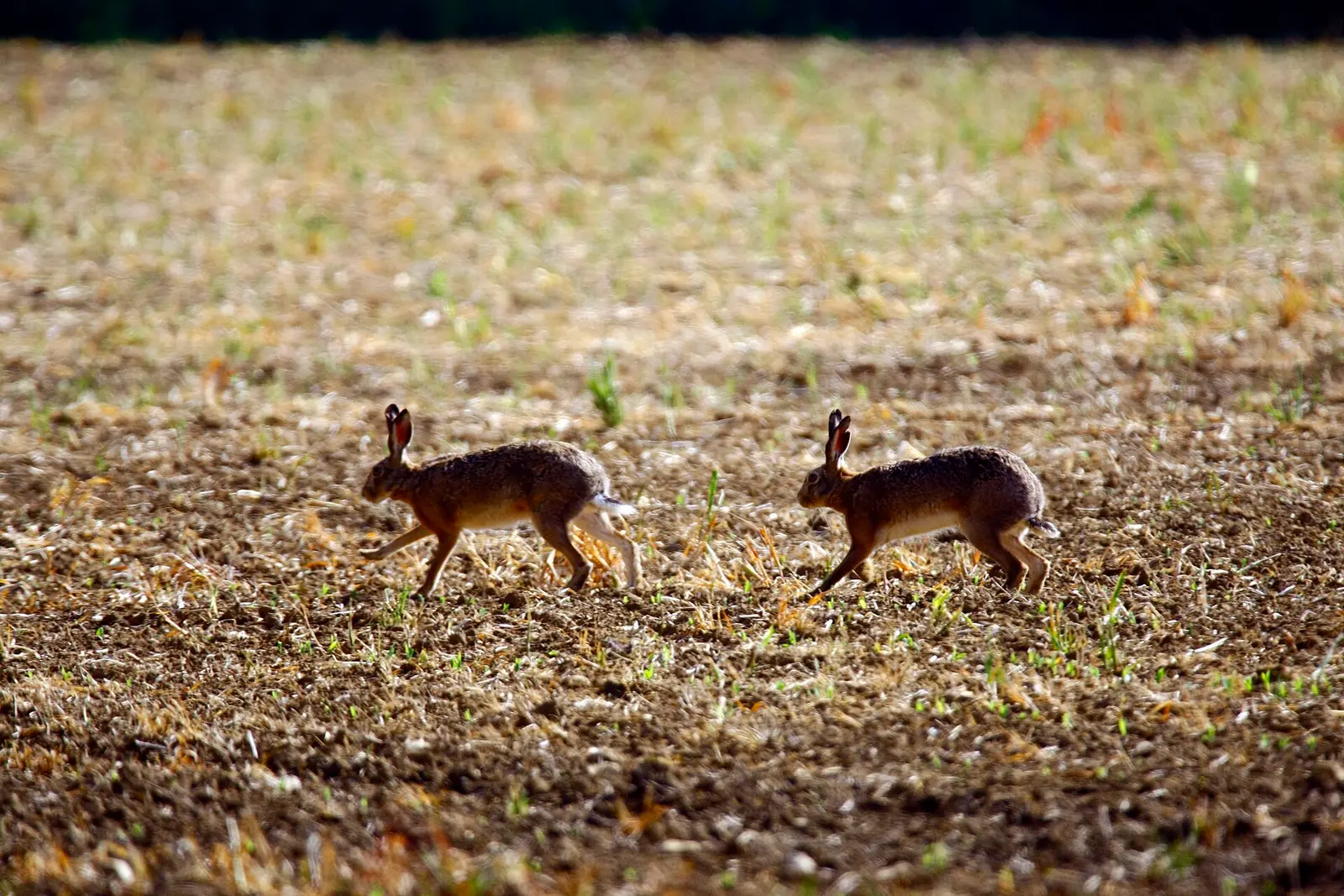
The country's only hare species
According to the National Institute for Agrarian and Veterinary Research (INIAV), the lebre-ibérica (Lepus granatensis) is the only hare species found in Portugal, and its range is restricted to part of the Iberian Peninsula[1][3]. The brown hare (Lepus europaeus), described in our Brown hare profile, is therefore not one of them.
Together with the wild rabbit, the lebre-ibérica is a key species in Mediterranean ecosystems: it is among the prey of the fox, the Iberian lynx, Bonelli's eagle, the Spanish imperial eagle and the eagle owl[1].
A marked decline since 2018
The IUCN lists the species as "Least Concern", but INIAV reports that recent assessments in Spain and Portugal point to population declines of 55 to 75%. The decline began as early as the 1980s, alongside that of the rabbit, driven by the abandonment of traditional farming practices, increased predation, hunting pressure that was at times excessive in relation to numbers, and diseases such as cysticercosis and myxomatosis, which appeared in hares in 2018[1].
A study published in 2024 measured the effect of this myxomatosis using game bag data: in Portugal, the number of hares harvested fell by 10% in the first season, then by 30.9% in the 2019-2020 season, a less abrupt decline than in some regions of Spain[2].
Active health surveillance
The national +Coelho 2 project, led by INIAV, monitors the health of rabbits and hares. In 2019 it detected, for the first time in Portugal, a hare herpesvirus (LeHV-5), initially in animals also affected by myxomatosis in the districts of Setúbal, Portalegre, Beja and Évora[1].
INIAV asks landowners, managers and hunters to report sick or dead hares and recommends suspending or reducing hare hunting depending on numbers and census results, as many hunting areas have already done[1]. In Torres Vedras, a breeding centre dedicated to safeguarding the species, now called LEPUS, hosted a vaccination trial for the project in 2021[3].
Hunting framework
Hunting is governed by the framework hunting law and its implementing decree (Decreto-Lei n.º 202/2004). Huntable species, seasons, methods and daily bag limits are set by government order (portaria); the 2021 order notably authorised hare hunting "a corricão", that is, coursing with greyhounds, as well as falconry, and referred to the hunting management and exploitation plans of each hunting area[5]. We do not reproduce the dates here: consult the order in force.
Breeding, restocking and origin of animals
According to the guidelines of the Institute for Nature Conservation and Forests (ICNF), breeding and keeping game in captivity for restocking is only possible on an authorised holding; the application, sent to the ICNF, must state, among other things, where the animals come from. For hares, these guidelines cover only the lebre-ibérica[4]. For any project, check with the ICNF. Our guide to returning hares to the wild sets out the basic precautions from a French perspective.
GIBIS, a game breeder based in Chatte, in the Isère department of France, raises young hares there and also offers wild-caught hares from Central Europe: see our hares. These are brown hares, a different species from the lebre-ibérica. The photos on this page show the species in its habitat and do not depict our animals.
Frequently asked questions
Which hare lives in Portugal?
Why has the lebre-ibérica declined?
Who sets the hare hunting rules?
The government, through an order (portaria) issued under Decreto-Lei n.º 202/2004, supplemented by the plans of each hunting area[5].
Can brown hares be used for restocking in Portugal?
The brown hare is a different species from the country's own, and the ICNF guidelines on breeding for restocking mention only the lebre-ibérica[4]. Check with the ICNF.
A question about the brown hare? Write to us.
Contact usSources
This page summarises public sources consulted when it was written; it does not replace the texts in force or the advice of the competent authority.
- [1]Lebre-ibérica (Lepus granatensis) – Alerta sobre a circulação de um herpesvírus (LeHV-5) nas populações de lebre-ibérica · INIAV – Projeto +Coelho 2 · iniav.pt
- [2]Effect of Myxoma Virus Species Jump on Iberian Hare Populations (Cardoso et al., Emerging Infectious Diseases 30(6), 2024) · Centers for Disease Control and Prevention (CDC) · wwwnc.cdc.gov
- [3]Notícia 121 – Reportagem ao Centro de Reprodução de lebre-ibérica pelo canal Cazavision · INIAV – GT +Coelho · iniav.pt
- [4]Normas orientadoras para elaboração dos pedidos de criação/detenção de exemplares de espécies cinegéticas em cativeiro · Instituto da Conservação da Natureza e das Florestas (ICNF) · icnf.pt
- [5]Portaria n.º 100/2021, de 10 de maio · Informador Fiscal (reprodução do Diário da República) · informador.pt