
Hares in Norway: the mountain hare, a game species in decline
In Norway, when people talk about the hare, they mean the mountain hare, the one that turns white in winter. The brown hare, the standard game hare elsewhere on the Continent, is regarded there as an unwelcome newcomer. This reversal of perspective, together with a steep fall in bags, makes Norway a special case. Here is what Norwegian sources say.
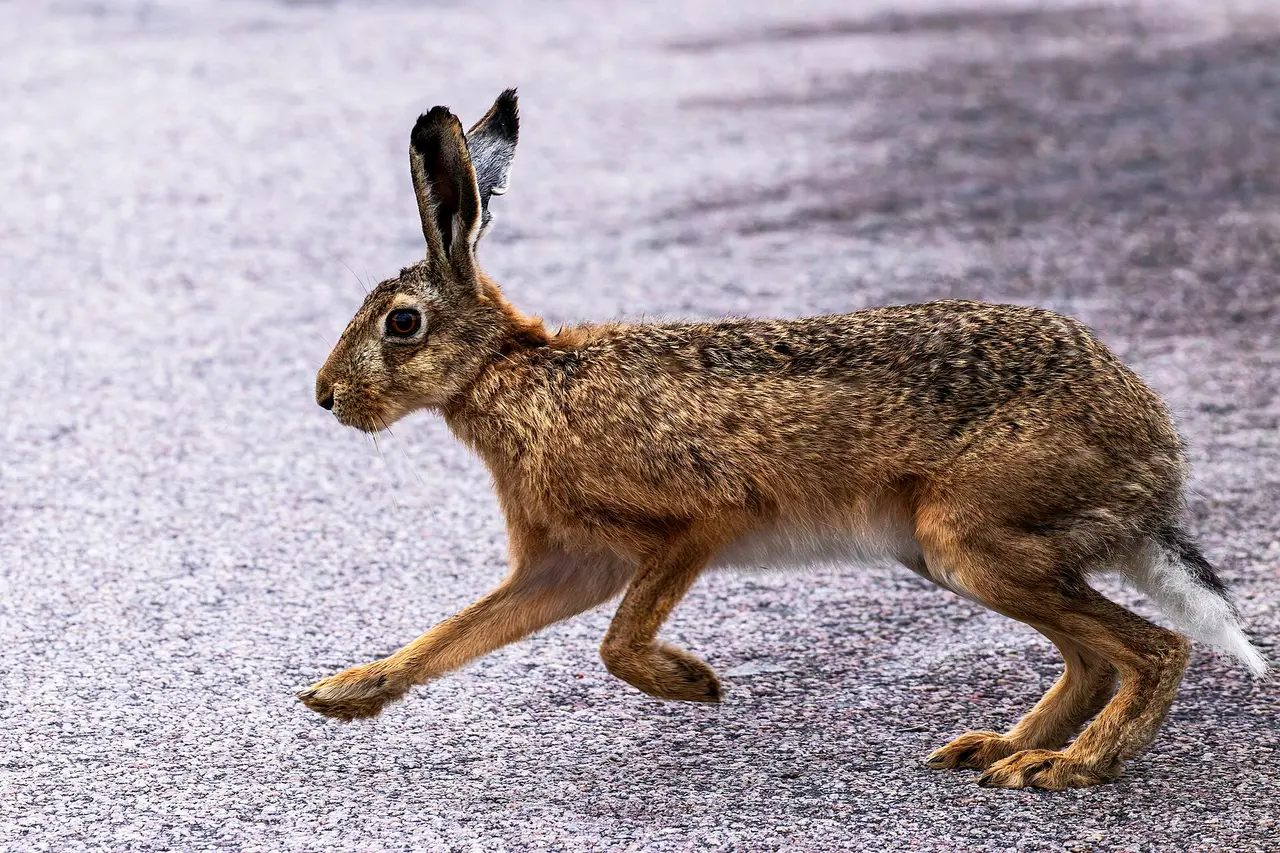
The hare of forests and mountains
Norway's native hare is the mountain hare (Lepus timidus), simply called « hare », or also fjellhare and nordhare. It occupies most of the country: mainly forests, but also treeless coasts and high mountains above the tree line. Its coat changes from greyish-brown in summer to white in winter[1].
The Norwegian Red List classifies it as « near threatened » (NT), whereas its global status remains « least concern »[1].
The brown hare, an alien species
The brown hare (Lepus europaeus), described in our brown hare profile, is called sørhare in Norway. It arrived in the far south-east of the country from southern Sweden, where it had been introduced. The Norwegian alien species list includes it as an undesirable species, in the « very high risk » category, because it can displace the native hare[2][1].
It remains rare in hunting bags: a few hundred animals a year according to Statistics Norway, against more than ten thousand mountain hares[4].
A steeply falling hunting bag
Statistics Norway (SSB) publishes the number of hares shot every year. It recorded 115,120 for the 1991-1992 season, then 19,890 in 2010-2011 and 14,310 in 2022-2023, a bag divided by eight in thirty years. Since 2023-2024, the statistics distinguish between the two species: 13,120 mountain hares and 220 brown hares were shot in 2024-2025[4].
These figures reflect bags, not population size directly, but they point in the same direction as the mountain hare's Red List classification[1][4].
An old tradition of hunting with hounds
Hare hunting with a scent hound, the harehund, is regarded as Norway's oldest sport hunting. It is said to have arrived in the 17th century with workers from the Continent, often Germans. Today the hare is hunted with hounds, by walking it up, or without a dog on fresh snow by following its tracks[3].
Who sets the rules?
Huntable species and the framework for hunting seasons are set at national level by the Norwegian Environment Agency (Miljødirektoratet) in a multi-year regulation; the one in force covers the 2022 to 2028 seasons[5]. We do not reproduce the dates here. Hunting rights belong in principle to the landowner, under the Wildlife Act[7].
The Nature Diversity Act prohibits introducing, without a legal basis or authorisation, species that do not occur naturally in Norway, or game of species, subspecies or populations that do not occur naturally in the district concerned[6]. For any question, contact the Miljødirektoratet or the Statsforvalteren (county governor) for your county.
GIBIS, a game breeder based in Chatte, in the Isère department of France, raises young hares there and also offers wild-caught hares from Central Europe: see our hares. They are brown hares, the species classed as alien in Norway. Our guide to returning hares to the wild concerns the French context. The photos on this page show the species in its habitat and do not depict our animals.
Frequently asked questions
Which hares live in Norway?
Is the hare threatened in Norway?
Who sets the hare hunting seasons?
The Miljødirektoratet, through a multi-year national regulation[5].
A question about the brown hare? Write to us.
Contact usSources
This page summarises public sources consulted when it was written; it does not replace the texts in force or the advice of the competent authority.
- [1]hare · Store norske leksikon · snl.no
- [2]sørhare · Store norske leksikon · snl.no
- [3]harejakt · Store norske leksikon · snl.no
- [4]Småvilt- og rådyrjakt (Statistikkbanken, tabeller 03886 og 14380) · Statistisk sentralbyrå (SSB) · ssb.no
- [5]Jakttider for 2022–2028 er fastsatt · JEGER (Norges Jeger- og Fiskerforbund) · jeger.no
- [6]Lov om forvaltning av naturens mangfold (naturmangfoldloven), § 30 · Lovdata · lovdata.no
- [7]Lov om jakt og fangst av vilt (viltloven), § 27 · Lovdata · lovdata.no