
Hares in Lithuania: a lowland game species and a Red Data Book species
Lithuania is home to two hares that the law treats in opposite ways: the brown hare (Lepus europaeus, « pilkasis kiškis », the grey hare), a traditional game species of the countryside, and the mountain hare (Lepus timidus, « baltasis kiškis », the white hare), a species of large wet forests listed in the Lithuanian Red Data Book[1]. Both appear on the list of small game in the national hunting rules, but those rules provide a hunting season only for the brown hare, at least in the version we consulted[3].
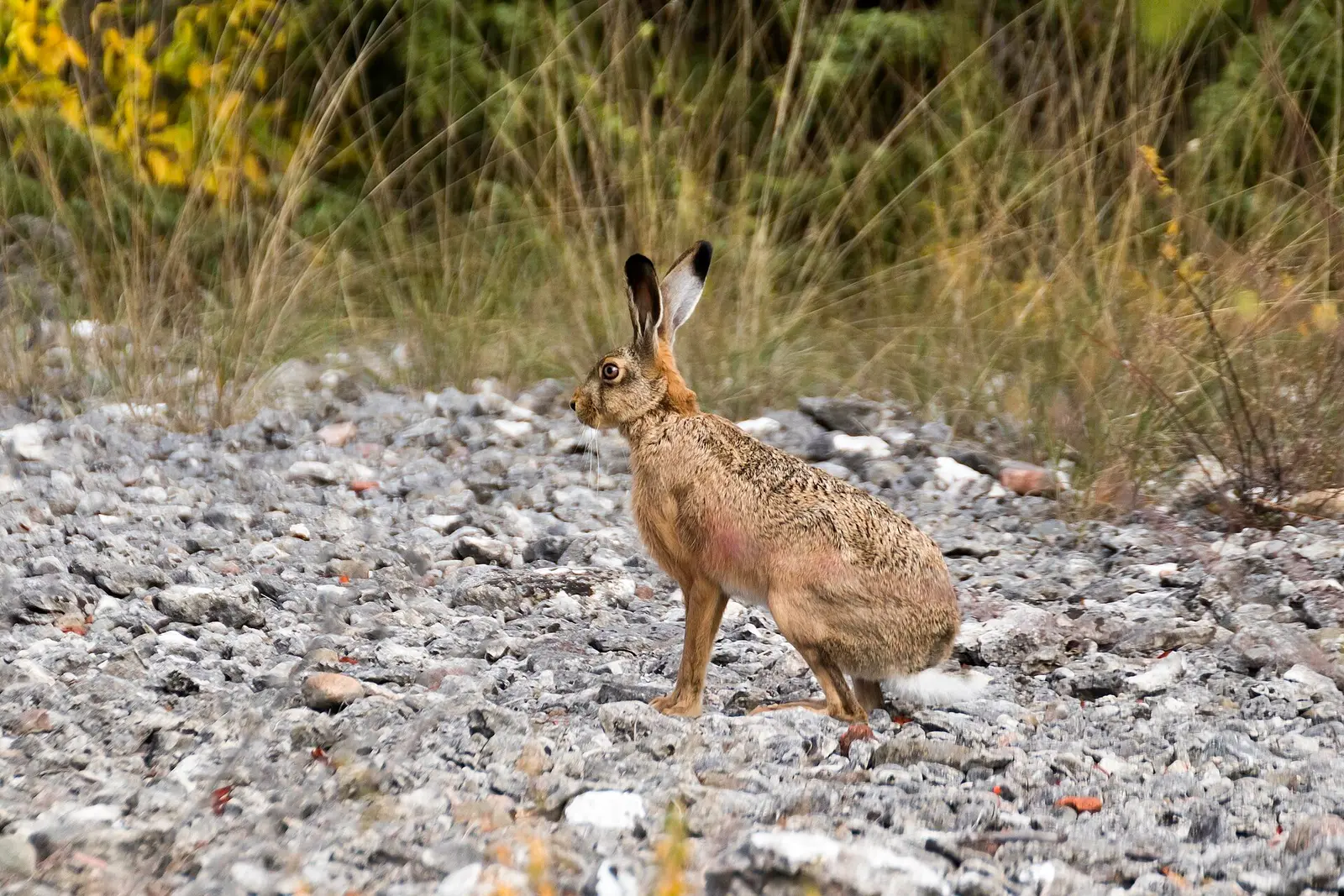
Two species, two habitats
The brown hare uses open habitats and woodland edges; it is hunted for its meat and fur[1]. The mountain hare, slightly smaller, lives in the country's large wet forest tracts; in winter it turns white, with only the tips of its ears remaining black[1].
For the biology of the brown hare, see our brown hare profile in the game encyclopaedia.
A fluctuating population
A study from Vytautas Magnus University reconstructed the trend of the brown hare over the 20th century: a peak in the early 1960s, a slump in the 1980s, a period of stability, then negative trends once more[2]. The sharpest decline was recorded in the south-west, even though it is the region most favourable to the species[2].
The Universal Lithuanian Encyclopaedia states that 2,273 brown hares were taken in the 2022-2023 hunting season[1]. We found no recent national count series published online: this figure is therefore a one-off benchmark, not a trend.
Climate, foxes and hunting pressure
The Lithuanian study identifies three climatic factors with the strongest effect: rainfall in June and July, temperatures in March and June, and the number of cold days in December and March[2]. It also shows that abundance falls markedly when two or more driven hunts are held in the same area[2].
The red fox is a limiting factor in districts where its bag exceeds that of the hare; parasites and road collisions complete the picture, with traffic accounting for about 5% of the hare bag studied[2].
The hunting framework
Hunting is regulated at national level by the Rules of Hunting in the Territory of the Republic of Lithuania, approved by the Ministry of Environment (Aplinkos ministerija)[3]. They set the brown hare hunting season and, in the 2018 version we consulted, limit the number of hare hunts on open ground per hunting unit according to its area, with the dates to be notified in advance to the regional environmental department[3]. These rules are amended regularly: consult the version in force in the official register of legal acts.
Restocking and return to the wild
The hunting rules specify that game held in captivity may be kept, used and released, and enclosures set up, only in compliance with Lithuania's rules on keeping wild animals in captivity[3]. For any question about bringing live hares into Lithuania, check with the Ministry of Environment.
The principles of a successful return to the wild are set out on our page on returning hares to the wild. GIBIS, a game breeder based in Chatte, in the Isère department of France, raises young hares there and also offers wild-caught hares from Central Europe: see our hares.
Frequently asked questions
Which hares live in Lithuania?
The brown hare (pilkasis kiškis), in open habitats, and the mountain hare (baltasis kiškis), in large wet forests[1].
Is the mountain hare hunted in Lithuania?
Who sets the hare hunting rules?
The Ministry of Environment, through the national hunting rules[3].
Can hares be returned to the wild in Lithuania?
The hunting rules refer to the rules on keeping wild animals in captivity[3]. Check with the Ministry of Environment before any project.
A question about the brown hare? Write to us.
Contact usSources
This page summarises public sources consulted when it was written; it does not replace the texts in force or the advice of the competent authority.
- [1]kiškiniai (pilkasis kiškis, baltasis kiškis) · Visuotinė lietuvių enciklopedija · vle.lt
- [2]The European hare (Lepus europaeus Pallas) population in Lithuania: the status and causes of abundance change · Acta Biologica Universitatis Daugavpiliensis (K. Pėtelis, G. Brazaitis, 2009) – notice Vytauto Didžiojo universitetas · vdu.lt
- [3]Medžioklės Lietuvos Respublikos teritorijoje taisyklės (įsakymas Nr. 258, suvestinė redakcija 2018 m.) · Lietuvos Respublikos aplinkos ministerija / e-seimas.lrs.lt · e-seimas.lrs.lt