
Hares in Finland: two species on opposite paths
Finland is one of the few countries in Europe where the brown hare is not the « default » hare. The traditional game of Finnish forests is the mountain hare, the metsäjänis, which turns white in winter. The brown hare, called rusakko, lives mainly in the farmed countryside of the south and west, and its numbers have risen sharply over three decades. Here is what Finnish public institutes say about these two species and how their hunting is organised.
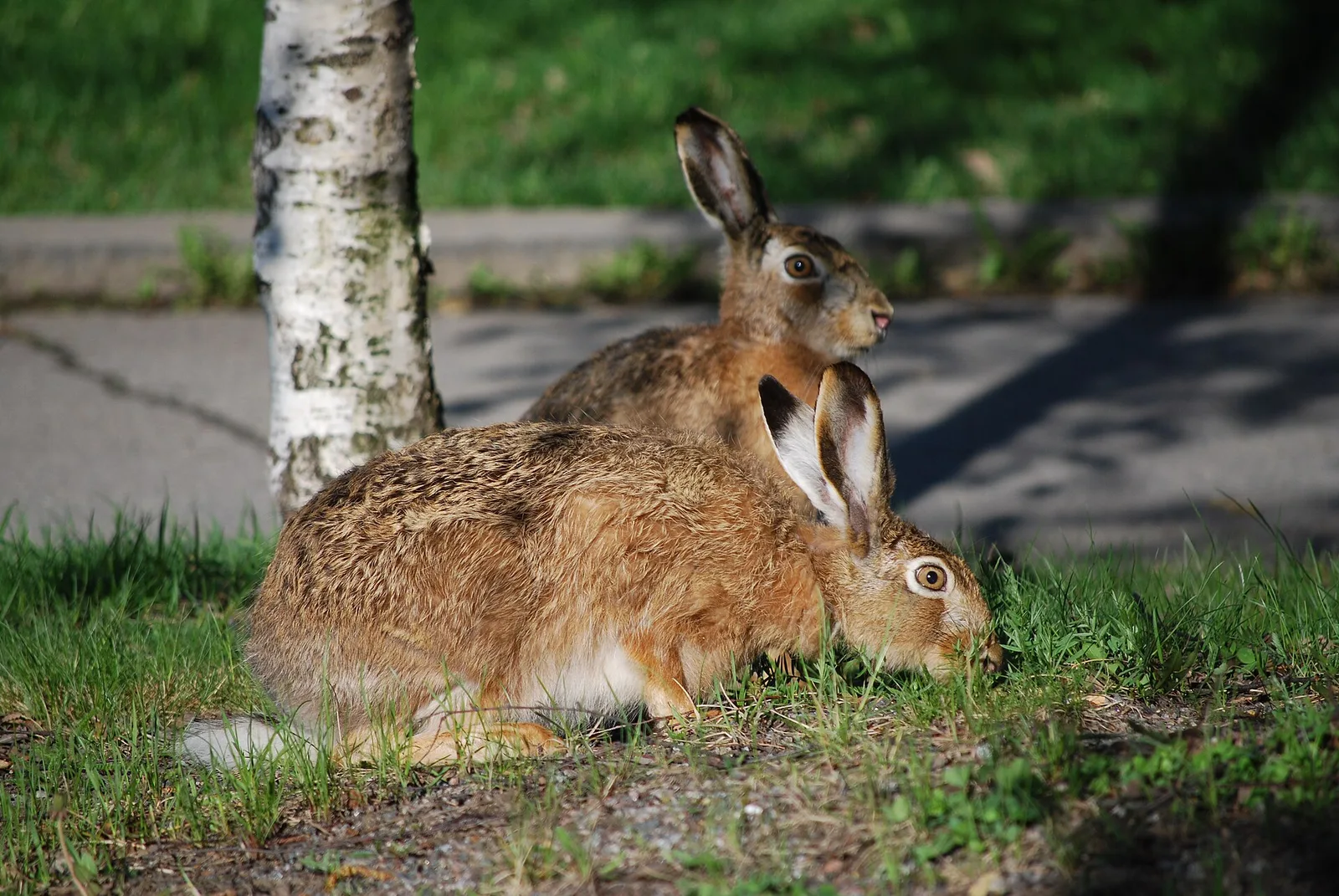
Metsäjänis and rusakko: who lives where?
The mountain hare (Lepus timidus) is found throughout the country, from the fells of Lapland to the archipelago. It uses forests, the edges of mires, stream banks and young stands, and may venture above the tree line in the north[3].
The brown hare (Lepus europaeus), described in our brown hare profile, is above all a species of farmland. In Finland its range is concentrated on the cultivated land of the south and west, but it is gaining ground, with faster spread towards the east of the country[2].
Trends tracked in the snow
Since 1989, the Natural Resources Institute Finland (Luke) has monitored small game mammals through snow-track counts on permanent « wildlife triangles ». According to its 2024 report, the mountain hare index has fallen by about half in 36 years; the decline is most marked in the south and more moderate in the centre, while numbers in the north have stayed almost stable for some twenty years[2].
The brown hare has followed the opposite path: its numbers have at least increased tenfold over the same period, in the south, centre and north alike, even though the exact size of the increase remains uncertain[2].
Why the mountain hare is declining
The Finnish Environment Institute (SYKE) classifies the mountain hare as least concern (LC) and considers its conservation status favourable under the Habitats Directive, in whose Annex V it is listed[3]. The species fact sheet nevertheless notes a decline of around 40% over thirty years in the south of the country. The exact cause is not known; several factors are put forward: winters with less snow, which make its white coat conspicuous, the loss of thickets due to intensive forestry, competition from the brown hare, with which it can hybridise, and predation by foxes and lynx. Hunting pressure is not considered a cause of the decline[3].
Hunting: landowners' rights and national monitoring
In Finland, hunting rights belong to the landowner, who may lease them; more than 4,000 hunting clubs thus manage extensive areas. Every hunter pays an annual game management fee, and hunting seasons are published by Suomen riistakeskus, the Finnish Wildlife Agency[5]. The closed seasons for game species are set by government decree under the Hunting Act[4].
Bags are estimated every year by Luke from a survey of hunters: for 2024, the institute puts the bag at 67,000 mountain hares and 59,000 brown hares[1]. For comparison, SYKE notes that recent mountain hare bags are only about a quarter of those of the early 1990s[3].
Return to the wild and the legal framework
The Finnish Hunting Act (Metsästyslaki 615/1993) prohibits importing and releasing a non-native game species or population without authorisation from Suomen riistakeskus, which must refuse it if the operation is likely to harm nature or wildlife[4]. For any project, check with Suomen riistakeskus. Our guide to returning hares to the wild sets out the basic precautions from a French perspective.
GIBIS, a game breeder based in Chatte, in the Isère department of France, raises young hares there and also offers wild-caught hares from Central Europe: see our hares. The photos on this page show the species in its habitat and do not depict our animals.
Frequently asked questions
Which is the most widespread hare in Finland?
How many hares are taken each year?
Luke estimates the 2024 bag at 67,000 mountain hares and 59,000 brown hares[1].
Is the mountain hare threatened in Finland?
Who issues authorisations for returning hares to the wild?
For non-native game, the Act designates Suomen riistakeskus[4]. Contact the agency before any project.
A question about the brown hare? Write to us.
Contact usSources
This page summarises public sources consulted when it was written; it does not replace the texts in force or the advice of the competent authority.
- [1]Hunting 2024 · Luonnonvarakeskus (Luke) – Natural Resources Institute Finland · luke.fi
- [2]Pienten ja keskikokoisten riistanisäkkäiden kannanmuutokset 1989–2024. Lumijälkilaskentojen tulosraportti (Lindén & Piha, Luonnonvara- ja biotalouden tutkimus 40/2024) · Luonnonvarakeskus (Luke) · jukuri.luke.fi
- [3]Metsäjänis – luontodirektiivilajiesittely · Suomen ympäristökeskus (SYKE) · ymparisto.fi
- [4]Metsästyslaki 615/1993 · Finlex – oikeusministeriö · finlex.fi
- [5]Suomi riistamaana · Suomen riistakeskus · riista.fi