
The hare in Estonia: two species, two trajectories
Estonia is home to two hares: the brown hare, called halljänes ("grey hare"), and the mountain hare, valgejänes ("white hare"), which turns white in winter. National game monitoring is published every year by the Estonian Environment Agency (Keskkonnaagentuur), which combines game-bag data, snow-track counts and hunters' estimates[1]. What these data say about the hare is fairly clear: one is increasing, the other is at best holding steady.
The brown hare on the rise
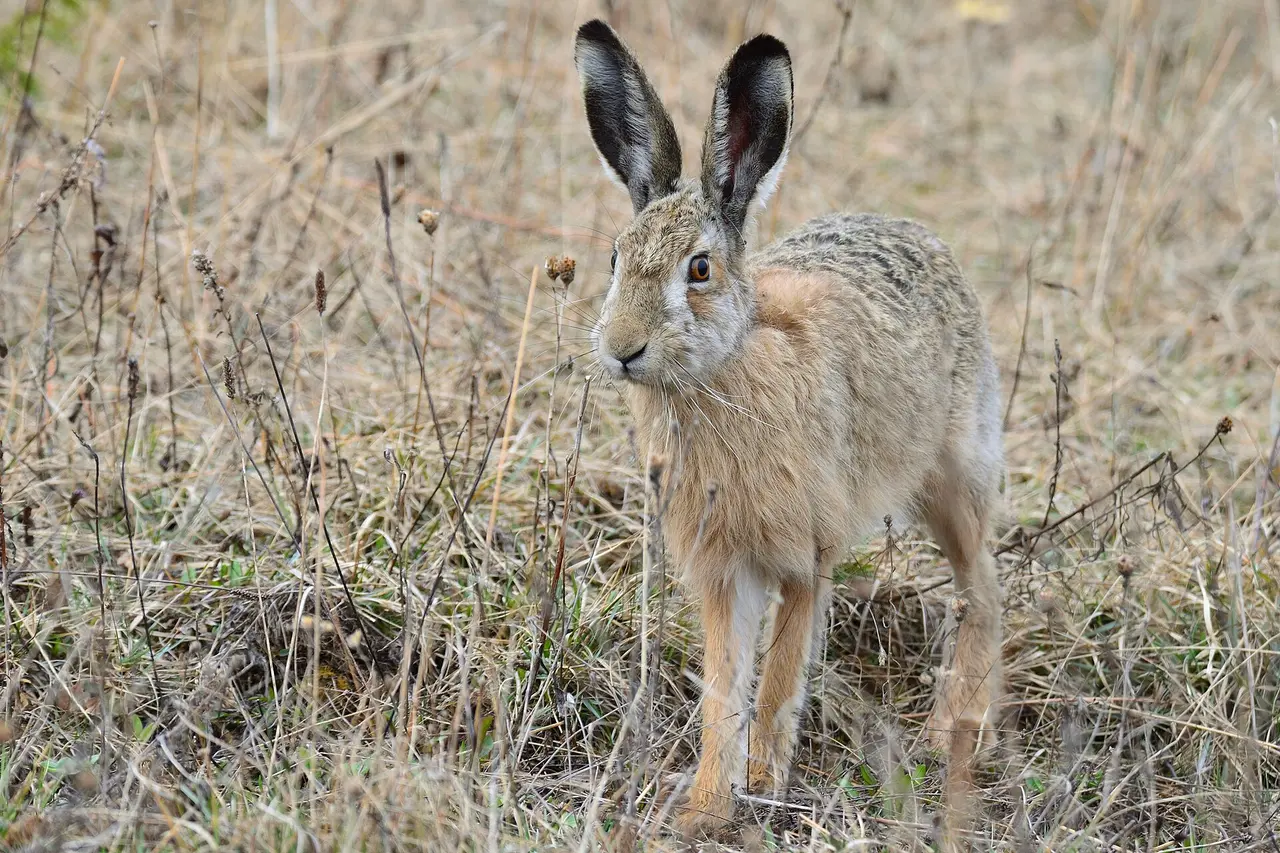
For the brown hare (Lepus europaeus), the Keskkonnaagentuur's 2023 report finds a continuing upward trend, visible both in hunters' estimates and in snow-track counts[1]. The national track index rose from 0.25 tracks per kilometre in 2013 to 0.58 in 2023[1].
The bag has followed suit: 412 brown hares reported in 2013, 947 in 2022, with a peak of 1,295 in 2018[1]. The counties of Pärnu, Lääne-Viru and Jõgeva are among those where it is hunted most, while the island of Hiiumaa reports almost none[1]. For the species' biology, see our entry Brown hare.
The mountain hare, at best stable
The mountain hare (Lepus timidus) occupies every habitat except the most open farmland, whereas the brown hare is found mainly on cultivated land[4]. According to the same report, its numbers have probably remained stable or declined slightly: track counts and hunting data suggest a slight decrease, with hunters' estimates somewhat more optimistic[1]. Its harvest has become very small, fewer than 100 animals in the season preceding the report[1].
The agency points out a methodological limitation: the pellet counts carried out for deer do not distinguish between the two hares; as the transects are mostly in forest, it assumes that most of the droppings recorded are those of the mountain hare[1].
A closely watched coexistence
Throughout northern Europe, the spread of the brown hare is closely monitored, because the two species can hybridise. A review published by the Swedish Association for Hunting and Wildlife Management notes that this hybridisation is considered mainly unfavourable to the mountain hare, which also suffers from milder winters, whereas the brown hare may on the contrary expand northwards[4]. The Estonian figures, an increase on one side and stagnation on the other, fit this context, although the national report draws no causal conclusion from them[1].
Who organises hunting
Hunting is organised by hunting districts (jahipiirkond). The Keskkonnaamet, the Estonian Environmental Board, organises hunting in these districts, issues licences and permits, coordinates the hunting councils and checks that hunting is lawful, including compliance with seasons[2]. Big game is reserved for district users; the list of small game, which includes hares, is set out in the hunting rules[2].
These rules (jahieeskiri), drawn up by the Ministry of the Environment, notably set the hunting seasons[3]: we do not reproduce any dates. For the current season, check with the Keskkonnaamet. For both hares, the agency recommends continuing to hunt on the same principles, or even more for the brown hare, as hunting is considered a secondary cause of mortality[1].
Returning hares to the wild and GIBIS
As there is no public source on Estonian rules for introducing hares into the wild, check with the Keskkonnaamet before any project. Our guide to returning hares to the wild details the habitat and monitoring conditions that matter everywhere. GIBIS, a game breeder based in Chatte, in the Isère department of France, raises young hares there and also offers wild-caught hares from Central Europe: see our hares.
Frequently asked questions
Which hares live in Estonia?
Is the hare declining in Estonia?
Not the brown hare, whose indicators are rising; the mountain hare is probably stable or declining slightly according to the Keskkonnaagentuur[1].
A question about the brown hare? Write to us.
Contact usSources
This page summarises public sources consulted when it was written; it does not replace the texts in force or the advice of the competent authority.
- [1]Ulukiasurkondade seisund ja küttimissoovitus 2023 (Status of game populations in Estonia and proposal for hunting in 2023) · Keskkonnaagentuur (Estonian Environment Agency) – Veeroja, Männil, Jõgisalu, Kübarsepp · keskkonnaportaal.envir.ee
- [2]Hunting · Keskkonnaamet (Environmental Board) · keskkonnaamet.ee
- [3]Valmiv jahieeskirja muudatus pikendab šaakali küttimise aega · ERR · err.ee
- [4]Trender i utbredning och avskjutning av skogshare och fälthare i Sverige (Viltforum 1/2020) · Svenska Jägareförbundet – Bergqvist & Elmhagen · jagareforbundet.se