
The hare in Denmark: a farmland game species in sharp decline
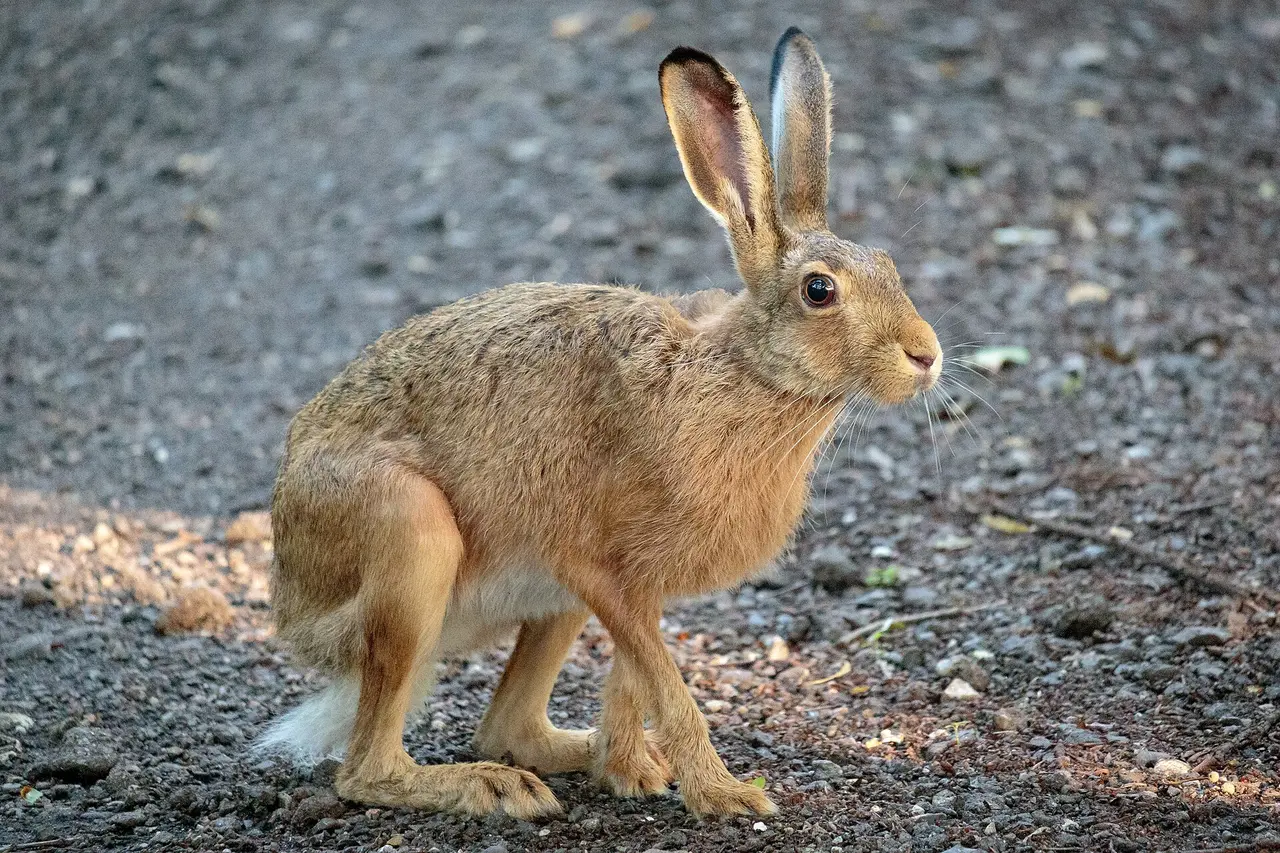
In Denmark, the brown hare (Lepus europaeus) is the only hare covered by the national management plan for the species[1]. It occurs throughout the country, from Jutland to the small islands, but in very uneven numbers. The country has a rare asset: a national game bag record kept since 1941 from the mandatory returns of all hunters[1]. It tells the story of one of the best-documented declines in Europe, and it has led the authorities towards management based on habitat rather than on harvest alone.
A species that arrived with farming
According to the management plan published by Naturstyrelsen (the Danish Nature Agency), the hare reached Denmark after the last glaciation, about 5,500 years ago, as agricultural clearance opened up suitable habitats[1]. Long scarce, it became one of the most characteristic mammals of farmland in the 20th century: the mosaic of small fields, varied crops and grassy margins of the years 1900-1950 suited it particularly well[1].
For the biology of the species (form, leverets, breeding), see our Brown hare profile in the game encyclopedia.
What the game bag record shows
Between 1941 and 1960, Danish hunters took 360,000 to 480,000 hares each year; by the late 1990s, the bag had fallen to around 60,000[1]. The plan points out that the bag probably fell faster than the population itself, because many hunters chose to stop shooting hares, or to shoot fewer, on their ground[1].
The decline has continued: according to figures from DCE – Aarhus University reported in 2025, about 28,000 hares were taken in the 2024/25 season, a drop of about 94% compared with the best years around 1960[3]. The plan also notes that bag density on the islands is more than twice that of Jutland[1].
Why the hare is declining
Research at Aarhus University points first to the survival of young hares: the proportion of leverets in the bag fell markedly between the 1950s, when populations were stable, and the 1980s[2]. The management plan identifies two limiting factors, a lack of suitable habitat and increased leveret mortality, in a landscape of large, intensively farmed fields and fragmented natural areas[1].
Predation also plays a part. The plan cites the example of Bornholm, where hare bags rose after mange wiped out the island's foxes in the early 1990s[1].
The hunting framework
Open seasons are set nationally by an executive order (bekendtgørelse) issued under the Hunting and Game Management Act[4]. For the hare, the order sets a general season but refers to regional and local seasons that depart from it, for example for Bornholm or certain parts of Jutland; on the islands of Strynø and Endelave, the hare has no open season at all[4]. Miljøstyrelsen, the Danish Environmental Protection Agency, may grant exemptions[4]. Dates vary by area and revision: consult the text in force on Retsinformation.
Management, restocking and return to the wild
The national objective is for the hare to remain "common and widespread"[1]. The plan focuses on habitat: grass strips within crops, uncultivated margins, hedgerows, plus guidelines for adjusting the harvest to the local population[1]. For any question about introducing or moving live hares in Denmark, check with Miljøstyrelsen.
For the general principles of a successful return to the wild (habitat, timing, monitoring), see our page on returning hares to the wild. GIBIS, a game breeder based in Chatte, in the Isère department of France, raises young hares there and also offers wild-caught hares from Central Europe: see our hares.
Frequently asked questions
Which hare species lives in Denmark?
The brown hare (Lepus europaeus), found throughout the country; it is the species covered by the national management plan[1].
Is the hare declining in Denmark?
Who sets the hare hunting seasons?
A national executive order on open seasons, with regional and local seasons specific to certain islands and regions[4]. Refer to the text in force on Retsinformation.
Can hares be introduced in Denmark?
We have not found any public source setting out this case in detail. Check with Miljøstyrelsen before any project.
A question about the brown hare? Write to us.
Contact usSources
This page summarises public sources consulted when it was written; it does not replace the texts in force or the advice of the competent authority.
- [1]Forvaltningsplan for hare · Miljøministeriet, Naturstyrelsen (fondement scientifique : DCE, Aarhus Universitet) · sgavmst.dk
- [2]Identifying causes for population decline of the brown hare (Lepus europaeus) in agricultural landscapes in Denmark · DCE – Aarhus Universitet (T. Wincentz, 2009) · dce.au.dk
- [3]Harebestand stadig i frit fald · netnatur.dk (chiffres DCE – Aarhus Universitet) · netnatur.dk
- [4]Bekendtgørelse om jagttid for visse pattedyr og fugle m.v. (nr. 470 af 17. maj 2024) · Retsinformation / Miljøministeriet · retsinformation.dk