
The hare in Cyprus: an endemic subspecies under heavy hunting pressure
In Cyprus, the hare is not just one game species among others: it is a subspecies found only on the island, Lepus europaeus cyprius, and the country's main quarry.[1][2] Its management rests with a single public body, the Υπηρεσία Θήρας & Πανίδας (Game and Fauna Service), which counts the populations every year and even oversees breeding in enclosures.
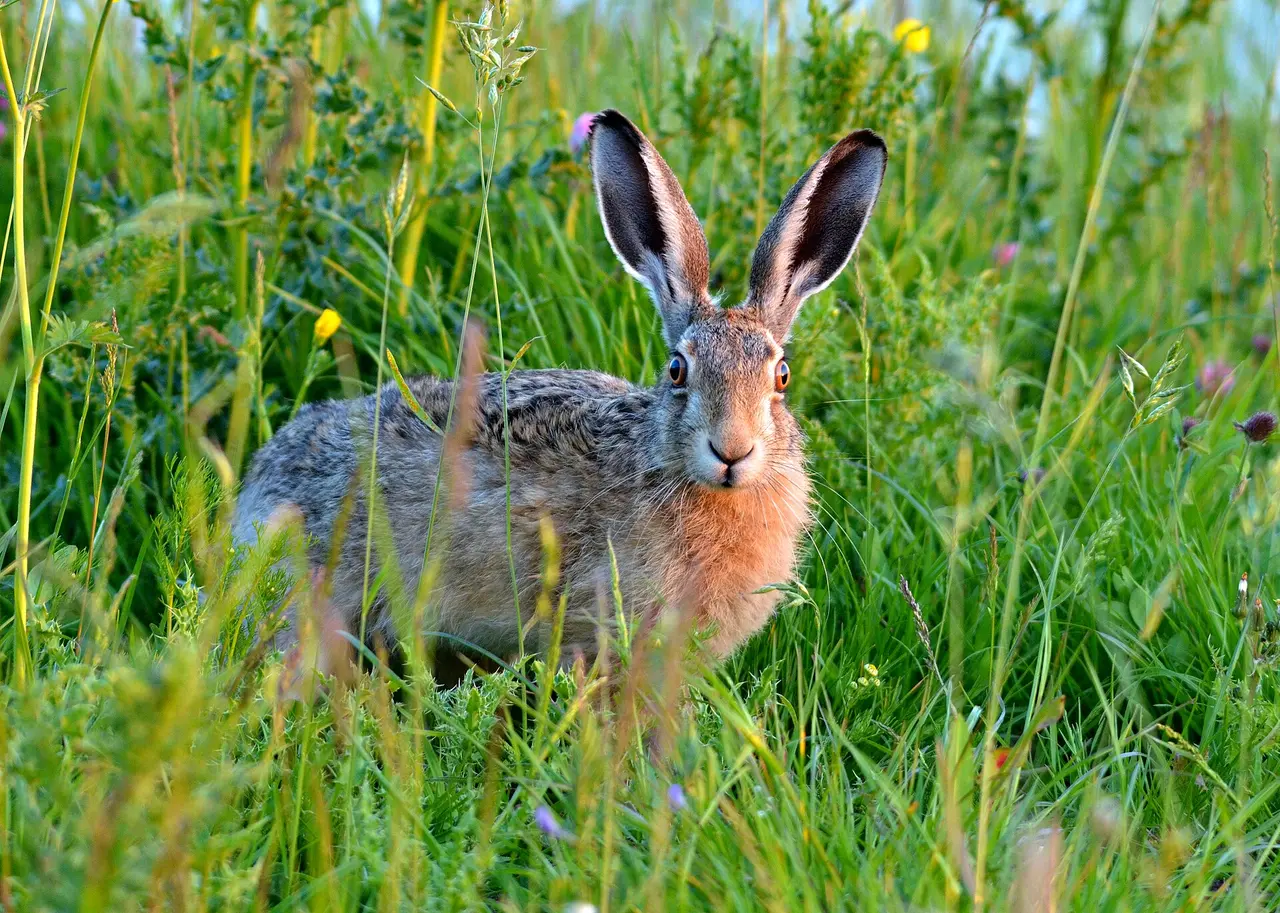
An island subspecies, the Cyprus hare
The Cyprus hare belongs to the brown hare (Lepus europaeus), but it is described as a subspecies endemic to the island, cyprius.[1][2] It occurs in every district. Its yellowish-brown coat varies with age and habitat; it is mainly nocturnal, feeds on grasses, leaves and the fruit of shrubs, and the doe most often gives birth to one or two leverets per litter.[1] The fox is among its predators.[1]
For the general biology of the species, see our entry on the brown hare.
A population considered satisfactory despite hunting pressure
CYCERE describes the population as "satisfactory" in view of the heavy pressure hunters put on it.[1] The hare is indeed presented as the island's first and largest game species.[2]
The Game and Fauna Service tracks trends through three counts carried out every year on the same reference areas across the island: a late winter count (breeding pairs), a summer count (breeding success) and a night count covering the hare, the fox and nocturnal birds. The summer counts take place before game is returned to the wild, which is thus excluded from the estimates.[3] In its estimate published ahead of the 2016 season, the Service noted an increase of about 22% in hares on the previous year, but also an increase of about 77% in foxes, considered very unfavourable for all game; it pointed out that weather during the breeding season (drought, hail, heavy rain) weighs heavily on numbers.[3]
The legal framework: Law 152(I)/2003
Hunting is governed by the Law on the Protection and Management of Wild Birds and Game (Law 152(I)/2003), which defines game, hunting licences, prohibited means, closed seasons, protected areas, the game trade, hunters' associations and the State Game Fund.[5] The Υπηρεσία Θήρας & Πανίδας, part of the Ministry of the Interior, is the competent authority, except in the British Sovereign Base Areas, where very similar provisions apply.[6] Hunting days and seasons are set each season by the authorities: consult the Service's official publication; we do not reproduce any dates here.
The Service observes that around 20 to 25% of the game taken over the whole season is shot on opening day alone.[3]
Breeding enclosures stocked with hares from the island
Cyprus uses an original form of population support: hare breeding enclosures, approved by the Service and subject to strict specifications.[4] The hares placed in them are caught, under the Service's responsibility, in unhunted habitats near the enclosure; they are marked, and only Cypriot hares may be kept there. The animals and their offspring remain wild game in law: hunting inside the enclosure and trading in hares are prohibited. The young produced are caught, marked and then returned to the wild by the Service near where they were born, and the Veterinary Services inspect the breeding.[4]
For any question about introducing hares or returning them to the wild in Cyprus, check with the Υπηρεσία Θήρας & Πανίδας and the Veterinary Services (Τμήμα Κτηνιατρικών Υπηρεσιών). Our general principles are set out in our guide to returning hares to the wild.
GIBIS and the hare
GIBIS, a game breeder based in Chatte, in the Isère department of France, raises young hares there and also offers wild-caught hares from Central Europe: see our hares.
Frequently asked questions
Which hare species lives in Cyprus?
Who manages hare hunting in Cyprus?
Is the hare population monitored?
Yes: every year the Service carries out winter, summer and night counts on the same reference areas.[3]
Can hares be bred in Cyprus?
The Service approves breeding enclosures, reserved for Cypriot hares, where hunting and trade are prohibited; check with it for the conditions currently in force.[4]
A question about the brown hare? Write to us.
Contact usSources
This page summarises public sources consulted when it was written; it does not replace the texts in force or the advice of the competent authority.
- [1]The species of June 2013 – Cyprus Hare (Lepus europaeus cyprius) · Cyprus Center for Environmental Research and Education (CYCERE) · kykpee.org
- [2]The Fauna of Cyprus · pedoulas.org.cy · pedoulas.org.cy
- [3]Δελτίο τύπου – Εκτίμηση κατάστασης θηραμάτων (10 Οκτωβρίου 2016) · Υπηρεσία Θήρας & Πανίδας, Υπουργείο Εσωτερικών · moi.gov.cy
- [4]Προϋποθέσεις για εξασφάλιση άδειας δημιουργίας και λειτουργίας εκτροφείου λαγών · Υπηρεσία Θήρας & Πανίδας, Υπουργείο Εσωτερικών · moi.gov.cy
- [5]Protection and Management of Wild Birds and Game Law, 2003 (Law No. 152(Ι)/2003) · InforMEA (UNEP) · informea.org
- [6]Contact numbers for responsible anti-poaching authorities · BirdLife Cyprus · birdlifecyprus.org