
The hare in Austria: a lowland game species managed Land by Land
In Austria, the brown hare — the Feldhase — remains one of the most heavily harvested game species in the country, especially on the farmland plains of the east. But there is no single Austrian hunting regime: there are nine, one per Land, each with its own law. On top of that there is a second hare, the mountain hare, which lives at altitude in the Alps.
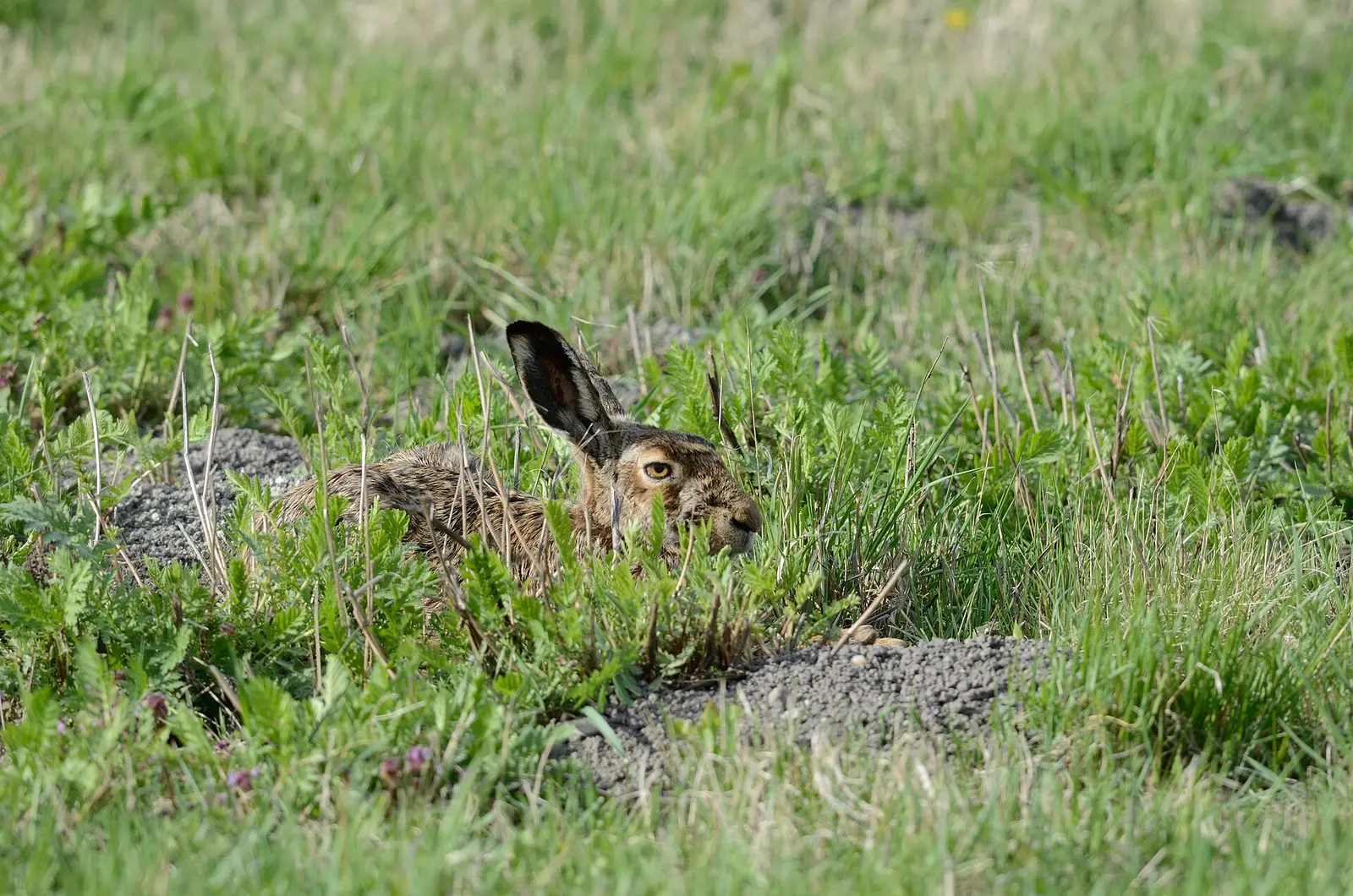
Two hares: lowland and mountain
The brown hare (Lepus europaeus) lives on arable land, grassland and vineyards, particularly in the east of the country: Lower Austria, Burgenland, Upper Austria. It is the species described in our Brown hare profile.
Higher up, in the Alpine arc covering the west and south of the country, lives the mountain hare (Lepus timidus), which turns white in winter. It is a cold-climate species: a study by the Swiss WSL institute, the University of Bern and the University of Natural Resources and Life Sciences, Vienna (BOKU) projects that, in the Swiss Alps, about a third of its suitable habitat will be lost by 2100, with more fragmented populations[4]. This work concerns Switzerland, but it illustrates the pressure that warming puts on this mountain hare throughout the Alpine region.
What the game bag figures say
Statistik Austria publishes hunting statistics every year, based on data supplied by the Länder authorities. For the 2024/25 season, the office records 104,800 hares shot, an increase of 0.5% on the previous season[1]. The same press release, corrected after its first publication, counts 25,200 hares among game found dead (Fallwild); across all species, road traffic accounts for 56.3% of these losses[1].
These national figures hide local trends. In 2018, the Upper Austrian hunting association reported that around 30,300 hares had been shot in that Land in 2016/17, roughly half the number of fifteen years earlier; it pointed to habitat loss and increased predator pressure[2]. A game bag measures harvest, not directly the size of a population.
Hunting regulated by each Land
In Austria, hunting falls under the legislation of the nine Länder. Each Land defines the hunting year — which does not start on the same date everywhere — as well as the open seasons and close seasons[1]. Statutory shooting plans apply to ungulates; for other species, including the hare, a harvest plan is drawn up without being governed by law in the same way[1].
In practice, to find out the hare season in a given district, you need to refer to the hunting act and hunting regulations of the Land concerned, or ask the Landesjagdverband (the Land hunting association) and the Bezirkshauptmannschaft (district administration).
Restocking hares: a matter for the Länder
The rules on Aussetzen von Wild (releasing game into the wild) are also set out in the Länder hunting acts. In Lower Austria, for example, only the holder of the hunting right may do so, with the lessor's consent where the shoot is leased, and the operation must be notified in writing to the district authority beforehand, stating in particular the number of animals per species and their origin[3]. The other Länder have their own provisions.
Before any project, check with the competent Bezirkshauptmannschaft and the Landesjagdverband of your Land. Our guide to returning hares to the wild describes the steps for preparing a shoot from a French perspective.
GIBIS and the hare
GIBIS, a game breeder based in Chatte, in the Isère department of France, raises young hares there and also offers wild-caught hares from Central Europe: see our hares. The photos on this page show the species in its habitat and do not depict our animals.
Frequently asked questions
How many hares are shot each year in Austria?
According to Statistik Austria, 104,800 hares were shot during the 2024/25 season, up 0.5% year on year[1].
Who sets the hare hunting season in Austria?
Each Land, through its hunting act and regulations[1]. You therefore need to consult the texts of the Land concerned or its Landesjagdverband.
Does the mountain hare live in Austria?
Yes, in the Alps. It is a cold-climate species whose suitable habitat could shrink sharply with warming, according to a study carried out with BOKU Vienna among others[4].
Can hares be returned to the wild in Austria?
The rules depend on the Land; in Lower Austria, for example, prior notification to the district authority is required[3]. Check with the Bezirkshauptmannschaft and the Landesjagdverband.
A question about the brown hare? Write to us.
Contact usSources
This page summarises public sources consulted when it was written; it does not replace the texts in force or the advice of the competent authority.
- [1]Hunting season 2024/2025: 4.6% fewer game shot (corrected press release 14 016-209/25) · Statistik Austria · statistik.at
- [2]OÖ Landesjagdverband warnt: Niederwild bedroht · Tips (Linz) · tips.at
- [3]§ 95a NÖ Jagdgesetz – Aussetzen von Wild · JUSLINE Österreich · jusline.at
- [4]Klimawandel: Schneehasen verlieren Lebensraum (WSL, Universität Bern, BOKU Wien) · idw – Informationsdienst Wissenschaft · idw-online.de