
Hares in Czechia: a lowland game species at a historic low
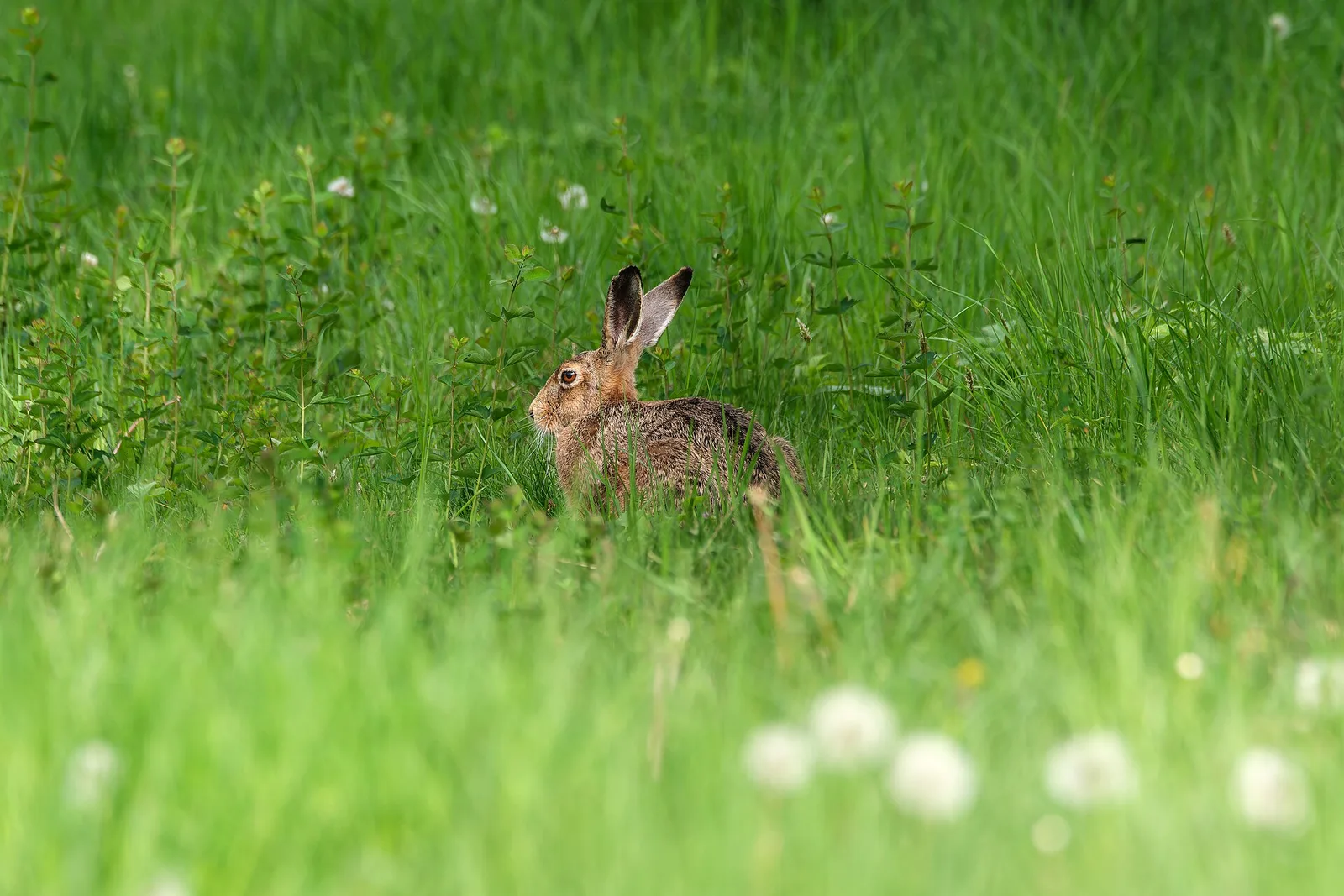
A single species: the brown hare
The hare found in Czechia is the brown hare (Lepus europaeus), a species of open farmland. Its global IUCN status of « least concern » (see our brown hare profile) hides contrasting national situations: in Central Europe, most studies describe a sharp fall in numbers since the 1960s, which Czech authors link to agricultural intensification, simplified cropping and the loss of cover.[3]
Historically low hunting bags
The Czech Statistical Office (ČSÚ) publishes an annual report on the hunting year, which runs from 1 April to 31 March. For 2025/2026, it reports 25,924 hares taken, 10,488 fewer than the previous year (−28.8%): the lowest figure in the series.[1]
The report by the Forestry and Game Management Research Institute (VÚLHM), produced for the state enterprise Lesy České republiky, compares bags across Central Europe: in 1983, Czechia recorded the highest bag in the region, around 4 hares per 100 hectares, against 0.5 in 2014.[3] More locally, a study of nine hunting grounds around Olomouc from 1964 to 2002 measured an average decline of about 5.8% a year.[2]
Why the hare is declining
The Olomouc study shows that mild winters with little snow are followed by better autumn bags, while the underlying downward trend is thought to be linked to rising predator numbers, especially the red fox.[2] The VÚLHM report adds farm machinery, road traffic, disease and the impoverished food supply on large fields given over to a handful of crops.[3] On the hunters' side, the secretary of the Czech-Moravian Hunting Union (ČMMJ) already pointed in 2014 to the shift to industrial farming, with the spread of oilseed rape and maize, as the main problem for small game.[7]
The hunting framework
Hunting is governed by Act No. 449/2001 Coll. on game management (zákon o myslivosti). State administration in this field operates at three levels: the Ministry of Agriculture at central level (the Ministry of the Environment in national parks), the regions (kraje) and municipalities with extended powers.[5] Each hunting-ground user draws up an annual game management plan (plán mysliveckého hospodaření) covering, among other things, game stocks and bags.[5]
Hunting seasons are not set region by region: the Act refers to a national decree of the Ministry of Agriculture, Decree No. 245/2002 Coll., which includes the hare.[5][6] For the dates in force, refer to the consolidated version of that decree.
Import and return to the wild: what the texts say
The Act makes the import and export of live game subject to the consent of the game management authority, in addition to veterinary requirements, and lays down several prohibitions on introducing animals into hunting grounds.[5] Before any project, check with the competent authority: the municipality with extended powers, the region or the Ministry of Agriculture.
Czech researchers radio-tracked 22 farm-reared hares returned to the wild in East Bohemia: 82% died during the monitoring period, mainly because of foxes, health problems (coccidiosis, stress) and road traffic, but the animals returned to the wild in July-August survived markedly longer.[4] The authors recommend summer, sites that offer cover, and coccidiosis prevention.[4] Our page on returning hares to the wild sets out general good practice.
Frequently asked questions
Which hare species lives in Czechia?
The brown hare (Lepus europaeus), known as zajíc polní, found mainly in lowland farmland.[3]
Who sets the hare hunting seasons in Czechia?
Is the hare declining in Czechia?
Which hares does GIBIS offer?
GIBIS, a game breeder based in Chatte, in the Isère department of France, raises young hares there and also offers wild-caught hares from Central Europe: see our hares. For Czech regulations, contact the authorities cited on this page.
Máte otázku o zajíci polním? Napište nám.
Contact usSources
This page summarises public sources consulted when it was written; it does not replace the texts in force or the advice of the competent authority.
- [1]Minulý myslivecký rok opět přinesl několik rekordů · Český statistický úřad (ČSÚ) · csu.gov.cz
- [2]Populační dynamika zajíce polního (Lepus europaeus) na střední Moravě (Hladíková B., Zbořil J., Tkadlec E., Lynx n. s. 38, 2007) · Národní muzeum – Lynx, new series · nm.cz
- [3]Faktory mortality, využívání stanovišť a podpora populací zajíce (Havránek F. et al., 2018) · Výzkumný ústav lesního hospodářství a myslivosti, v. v. i. – Lesy České republiky, s. p. · lesycr.cz
- [4]First findings of brown hare (Lepus europaeus) reintroduction in relation to seasonal impact (Cukor J. et al., 2018) · PLoS ONE (PubMed Central) · pmc.ncbi.nlm.nih.gov
- [5]Zákon č. 449/2001 Sb., o myslivosti · Zákony pro lidi (AION CS) · zakonyprolidi.cz
- [6]Vyhláška č. 245/2002 Sb., o době lovu jednotlivých druhů zvěře a o bližších podmínkách provádění lovu · Zákony pro lidi (AION CS) · zakonyprolidi.cz
- [7]I v Česku ubývá zvířat. Tajemník myslivců odkazuje na zemědělství · ČT24 – Česká televize · ct24.ceskatelevize.cz