
The hare in Slovenia: from the Mura plain to the Triglav pastures
In Slovenia, the brown hare (Lepus europaeus), poljski zajec in Slovene, is a game species managed within a highly planned system: the Slovenia Forest Service (Zavod za gozdove Slovenije) draws up a plan for each major management area, setting harvests and guidelines.[1] These plans are public and give a close-up view of the hare from one region to another.[3][4]
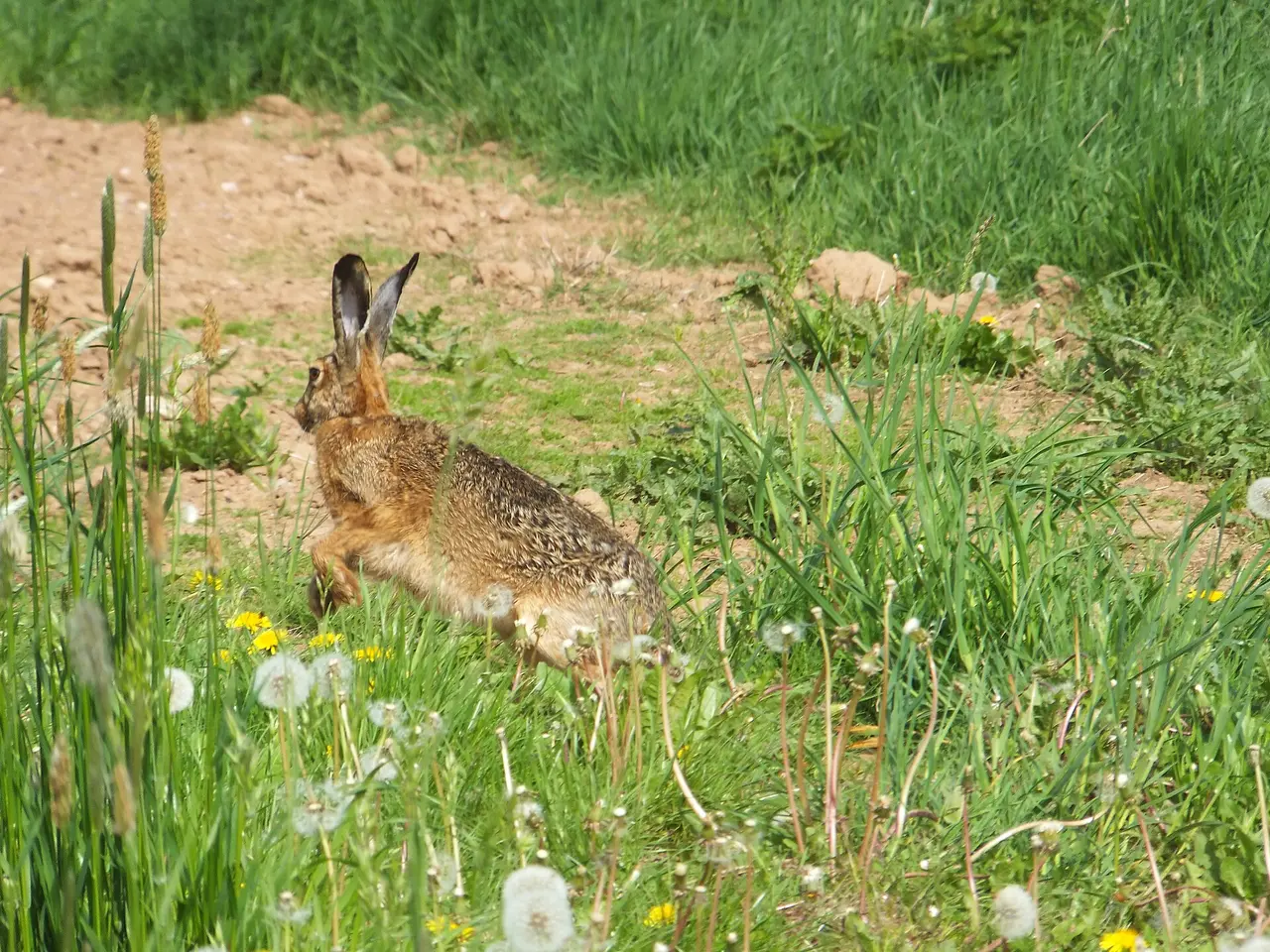
The brown hare, a game species of lowland and mountain
The government regulation defining game species and their hunting seasons lists the brown hare as game.[2] It is found in very different landscapes: in the Pomurje area, in the north-east, it occurs everywhere and is more common in the lowland part;[3] in the Triglav area, in the north-west, it occupies all hunting grounds, from high mountain pastures down to the valleys of the major rivers.[4] For its biology, see our Brown hare profile.
A population that has declined, now considered stable but low
A thesis from the University of Ljubljana notes a marked decline of the brown hare in Europe and in Slovenia over the previous ten years, and attributes it to agricultural intensification, weather during the leveret-rearing season, predators, land abandonment and scrub encroachment, urbanisation, roads, as well as diseases and parasites.[5]
The Forest Service's 2025-2026 plans point the same way. In Pomurje, the population "is not high, but stable", with large fluctuations from year to year; hunting grounds that hunt foxes intensively in winter have more hares.[3] In the Triglav area, numbers are considered stable with a slight decline, well below what they were thirty or more years ago.[4]
Low and falling harvests
In Pomurje, the six-year average harvest (2019-2024) is 149 hares, and the plans were fulfilled at only 57% on average; the plan also stresses that losses (predation, traffic) are probably several times greater than the game bag.[3] In the Triglav area, the average is 54 hares a year, down to 28 over the last two years, a drop the plan attributes mainly to a lack of interest in this type of hunting and a lack of well-trained dogs.[4] In both cases, the plan states that the planned harvest does not have to be reached.[3][4]
Who manages hare hunting?
Hunting is governed by the Game and Hunting Act (ZDLov-1). The country is divided into hunting management areas (lovsko upravljavska območja), and the Slovenia Forest Service is responsible for game planning and monitoring.[1] Hunting grounds are managed by hunting clubs (lovske družine), while the Hunters Association of Slovenia (Lovska zveza Slovenije) organises, among other things, the hunting exam.[1]
Hunting seasons are set nationally by a government regulation (Uredba o določitvi divjadi in lovnih dob).[2] For the dates in force, consult the consolidated version of this text. The plans also recommend that managers count hares in spring and summer and control predators.[3]
Restocking and import
The ZDLov-1 Act lists the reintroduction of extinct species and the reinforcement of rare or threatened native species among the tasks of special-purpose hunting grounds, managed under conditions set by the government.[1] For any project to import hares or return them to the wild, check with the ministry responsible for hunting and the Slovenia Forest Service. Our page on returning hares to the wild sets out general good practice.
Frequently asked questions
Which hare lives in Slovenia?
Who sets hare harvests in Slovenia?
Is the hare declining in Slovenia?
Which hares does GIBIS offer?
GIBIS, a game breeder based in Chatte, in the Isère department of France, raises young hares there and also offers wild-caught hares from Central Europe: see our hares. For Slovenian regulations, contact the authorities mentioned on this page.
Imate vprašanje o poljskem zajcu? Pišite nam.
Contact usSources
This page summarises public sources consulted when it was written; it does not replace the texts in force or the advice of the competent authority.
- [1]Zakon o divjadi in lovstvu (ZDLov-1), čistopis 4. 3. 2026 · Tax-Fin-Lex · tax-fin-lex.si
- [2]Uredba o določitvi divjadi in lovnih dob · Tax-Fin-Lex · tax-fin-lex.si
- [3]Dvoletni načrt VIII. Pomurskega lovsko upravljavskega območja za leti 2025 in 2026 · Zavod za gozdove Slovenije, Območna enota Murska Sobota (gov.si) · gov.si
- [4]Dvoletni načrt XI. Triglavskega lovsko upravljavskega območja za leti 2025 in 2026 · Zavod za gozdove Slovenije, Območna enota Tolmin (gov.si) · gov.si
- [5]Razlogi za zmanjšanje populacije poljskega zajca (Lepus europaeus) v Evropi (Jež N., diplomsko delo, 2021) · Univerza v Ljubljani, Biotehniška fakulteta (Repozitorij UL) · repozitorij.uni-lj.si