
Hares in Poland: a closely monitored game species and restocking programmes
Poland has two hares: the brown hare (Lepus europaeus), zając szarak, a game species of the farming plains, and the mountain hare (Lepus timidus), zając bielak, which is rare and strictly protected. The country publishes annual estimates of game populations and bags, and several small-game restocking programmes have been carried out there. Here is what public sources say.
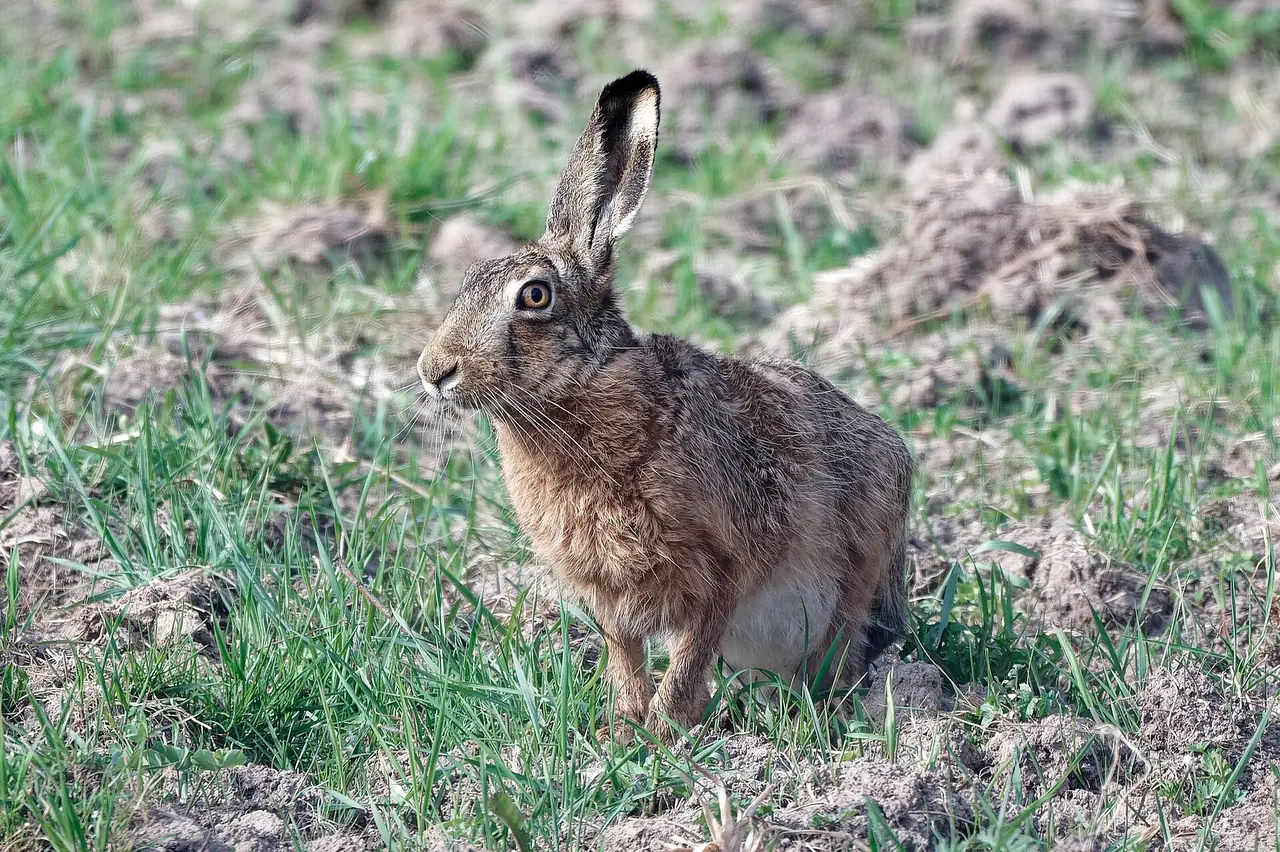
Two species, only one huntable
Only the zając szarak is a game species. The zając bielak has been strictly protected in Poland since 1952, is listed in the Polish Red Data Book of animals and has been recorded only in the north-east of the country.[5] For the biology of the brown hare, see our brown hare profile.
Estimated numbers rising since 2015
The forestry statistical yearbook of Statistics Poland (GUS) publishes population estimates as at 10 March, based on data from the State Forests, the Polish Hunting Association (PZŁ) and other managers. For the hare, they rise from 709,600 in 2015 to 814,500 in 2020, 923,400 in 2024 and 956,800 in 2025.[1]
Bags remain modest compared with these numbers: 15,200 hares shot in the 2015/16 hunting year, 12,300 in 2023/24 and 11,200 in 2024/25. The same yearbook records more than 11,000 hares killed by dogs in hunting grounds in the latest year published.[1] This recent trend contrasts with the « sharp fall » in numbers reported by foresters in the early 2010s.[3]
A national framework: the Hunting Act and a ministerial regulation
In Poland, hunting seasons are set at national level by a regulation of the minister responsible for the environment, issued under Article 44 of the 1995 Hunting Act (Prawo łowieckie). For the hare, this regulation provides a shooting season, a live-capture season (odłów) and a season for falconry. It also allows foxes to be hunted all year round in hunting grounds where hares, pheasants or partridges have been restocked in the previous two calendar years.[2] Refer to the text in force for the seasons.
Hunting is organised by hunting districts (obwody łowieckie). As at 31 March 2025, the PZŁ had 2,786 hunting clubs, 131,816 members and 4,547 districts.[1]
Restocking: regional and forestry programmes
Several programmes have sought to halt the decline of small game. In Kuyavia-Pomerania, the small-game restoration programme run from 2010 to 2014 by the PZŁ and the foresters, with a regional environmental fund, had introduced 700 hares in 2012.[4] In Masovia, the State Forests reintroduced fifty hares in 2013, captured in another forest district and fitted with transmitters, as part of a programme funded by their forest fund.[3] GUS also records live hare captures: 150 in 2015/16, 27 in 2023/24.[1]
Before any introduction project, check with the PZŁ and the competent Regional Directorate of State Forests (RDLP). Our guide to returning hares to the wild describes general good practice, established for France.
Frequently asked questions
How many hares are there in Poland?
GUS estimates the population at 956,800 hares as at 10 March 2025, against 709,600 in 2015.[1] These are estimates, not exhaustive counts.
Who sets the hare hunting seasons in Poland?
The minister responsible for the environment, through a national regulation issued under the Hunting Act.[2]
Can the mountain hare be hunted in Poland?
No. The zając bielak has been strictly protected since 1952.[5]
Which hares does GIBIS offer?
GIBIS, a game breeder based in Chatte, in the Isère department of France, raises young hares there and also offers wild-caught hares from Central Europe: see our hares. For Polish regulations, contact the PZŁ.
Pytanie o zająca szaraka? Napisz do nas.
Contact usSources
This page summarises public sources consulted when it was written; it does not replace the texts in force or the advice of the competent authority.
- [1]Rocznik Statystyczny Leśnictwa 2025 · Główny Urząd Statystyczny (GUS) · stat.gov.pl
- [2]Obwieszczenie Ministra Klimatu i Środowiska z dnia 9 grudnia 2022 r. w sprawie ogłoszenia jednolitego tekstu rozporządzenia Ministra Środowiska w sprawie określenia okresów polowań na zwierzęta łowne (Dz.U. 2023 poz. 99) · Dziennik Ustaw Rzeczypospolitej Polskiej – Sejm RP · api.sejm.gov.pl
- [3]„Nadające zające” · Lasy Państwowe – Nadleśnictwo Garwolin (J. Sagan, RDLP w Warszawie) · garwolin.warszawa.lasy.gov.pl
- [4]Kujawsko-Pomorskie: Odradzają się zagrożone gatunki zwierząt · Bankier.pl · bankier.pl
- [5]Zając bielak – nowy gatunek we wrocławskim zoo · Wrocław.pl (Urząd Miejski Wrocławia) · wroclaw.pl