
The hare in Latvia: two species under the same regulations
Latvia is one of the countries where two hare species share the land: the brown hare (Lepus europaeus), called pelēkais zaķis, "grey hare", and the mountain hare (Lepus timidus), baltais zaķis, "white hare", which turns white in winter. Both are game species, hunted with no bag limit, under the supervision of the State Forest Service (Valsts meža dienests, VMD).[1]
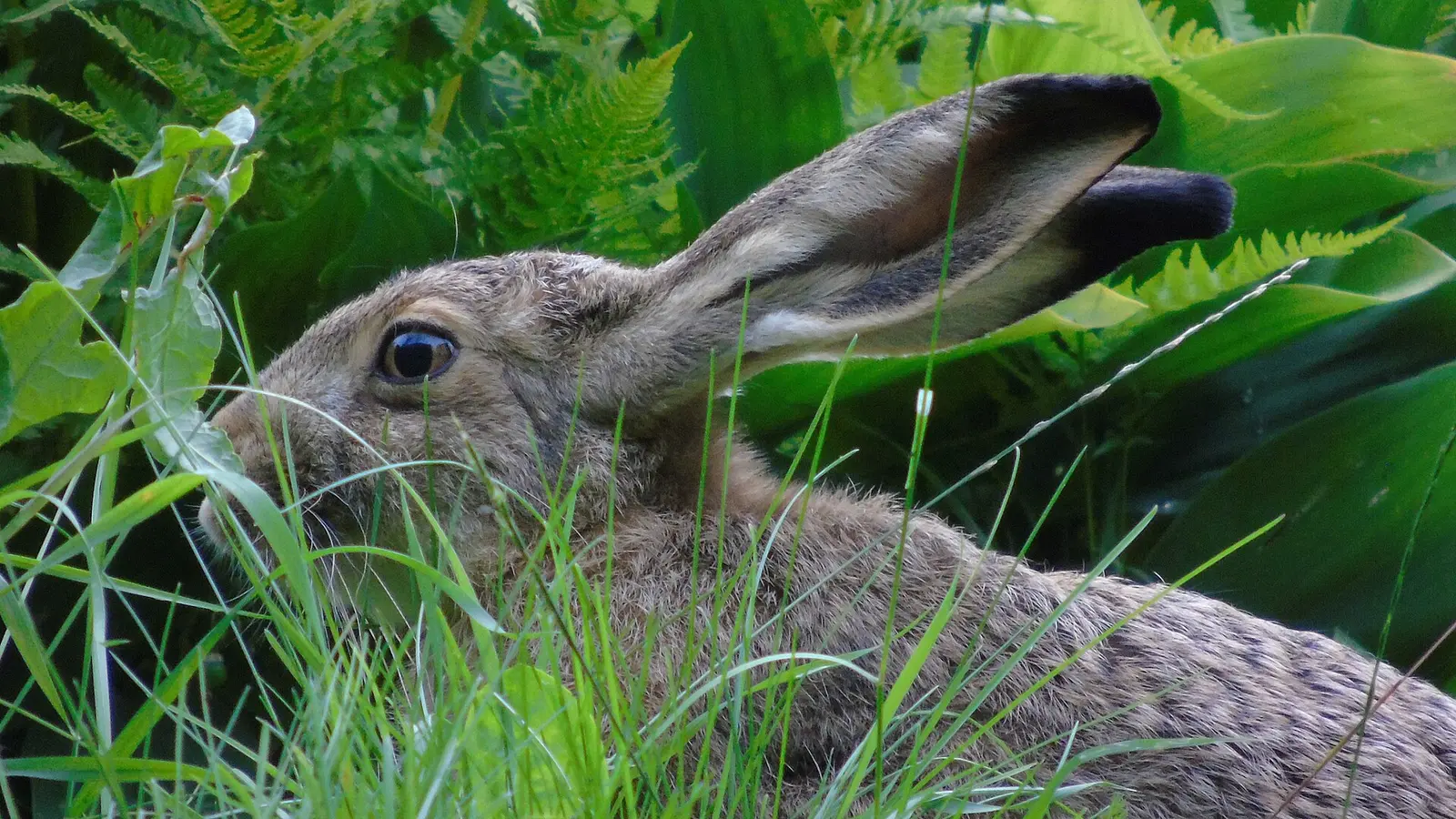
Two species, two habitats
The brown hare is an animal of fields and open landscapes. The mountain hare lives rather in mixed forests bordering clearings, meadows, bogs or water bodies.[3] Where their ranges overlap, the brown hare tends to dominate, and both competition and hybridisation between the two species are cited among the threats facing the mountain hare.[3] For the biology of the brown hare, see our entry Brown hare.
Population estimates and game bags
The Central Statistical Bureau (CSP) publishes every year the estimated game populations as of 1 April and the season's harvest. For 2026, the series shows about 32,000 brown hares and 10,000 mountain hares; in 2016, the estimates were about 25,000 and 11,000.[2] Harvests remain modest: around 2,000 hares per season in about 2019-2021, then a few hundred in the most recent years of the series.[2] These figures, based on reports, should be read as orders of magnitude.
The Latvian Red Data Book (Latvijas Sarkanā grāmata) classifies the mountain hare as "least concern". It describes a population that has been stable for about ten years, at around 10,000 to 11,000 animals, after a decline that began in the early 2000s and is attributed in particular to winters with less snow, pesticides, competition and hybridisation with the brown hare.[3]
National hunting regulations
Hunting rules are set nationally by the hunting regulations, Cabinet Regulation No. 421 of 22 July 2014 (Medību noteikumi).[1] Both hares are listed among the "unlimited" game species (neierobežoti medījamie dzīvnieki), with a common hunting season.[1] The VMD may change the hunting seasons for mammals or add restrictions depending on the state of populations or other objective circumstances.[1] For the dates in force, consult the consolidated version of the regulations on likumi.lv.
The mountain hare, a Habitats Directive species
The mountain hare is listed in Annex V of the Habitats Directive (92/43/EEC), which allows it to be exploited provided a favourable conservation status is maintained.[3] The Latvian wolf conservation plan, drawn up by the Latvian State Forest Research Institute "Silava", noted that, of the Annex V species hunted in the country (beaver, mountain hare, pine marten, polecat), only the wolf was subject to a bag limit.[5]
During the 2022 public consultation on the revision of the hunting regulations, the association "Latvijas ainavas" asked for the mountain hare to be removed from the list of huntable species, citing the poor state of its population.[4] The version of the regulations in force keeps it among the game species.[1]
Import and returning hares to the wild
The hunting regulations provide that permits to capture game in the wild, introduce it into Latvia, keep it in captivity and release it into the wild (izlaišana savvaļā) are issued by the VMD, in compliance with the legislation on animal protection and welfare.[1] Before any project, check with the Valsts meža dienests. For general principles, see our page on returning hares to the wild.
Frequently asked questions
Which hare species live in Latvia?
The brown hare (pelēkais zaķis), mainly in open landscapes, and the mountain hare (baltais zaķis), which is more of a forest animal.[3]
Is the mountain hare protected in Latvia?
Who regulates hare hunting in Latvia?
The national hunting regulations (Regulation No. 421 of 2014) set the rules, and the State Forest Service (VMD) may adjust hunting seasons for mammals.[1]
What hares does GIBIS offer?
GIBIS, a game breeder based in Chatte, in the Isère department of France, raises young hares there and also offers wild-caught hares from Central Europe: see our hares. For Latvian regulations, contact the Valsts meža dienests.
Vai jums ir jautājums par pelēko zaķi? Rakstiet mums.
Contact usSources
This page summarises public sources consulted when it was written; it does not replace the texts in force or the advice of the competent authority.
- [1]Medību noteikumi (Ministru kabineta 2014. gada 22. jūlija noteikumi Nr. 421) · Likumi.lv – Latvijas Vēstnesis · likumi.lv
- [2]Medījamo un nomedīto dzīvnieku skaits 1991 - 2026 (tabula DRM010) · Centrālā statistikas pārvalde – Oficiālās statistikas portāls · data.stat.gov.lv
- [3]Protected species of the month: mountain hare · Latvijas Sarkanā grāmata (Latvijas Universitāte, projekts LIFE FOR SPECIES) · sarkanagramata.lu.lv
- [4]Atzinums par noteikumu projektu 22-TA-2430 « Grozījumi Ministru kabineta 2014. gada 22. jūlija noteikumos Nr. 421 "Medību noteikumi" » (biedrība « Latvijas ainavas », 2022) · TAP portāls – Valsts kanceleja · tapportals.mk.gov.lv
- [5]Pelēkā vilka Canis lupus sugas aizsardzības plāns (Ozoliņš J. et al., 2017) · Latvijas Valsts mežzinātnes institūts « Silava » – Dabas aizsardzības pārvalde · daba.gov.lv