
The hare in Italy: four species and a long history of restocking
Italy is one of the few countries in Europe that is home to four different hares, including an endemic species, the Italian hare.[1] It is also a country where the brown hare was restocked on a massive scale in the 20th century, to the point that ISPRA, the national reference institute for wildlife, now considers a large share of its populations to be non-native.[1]
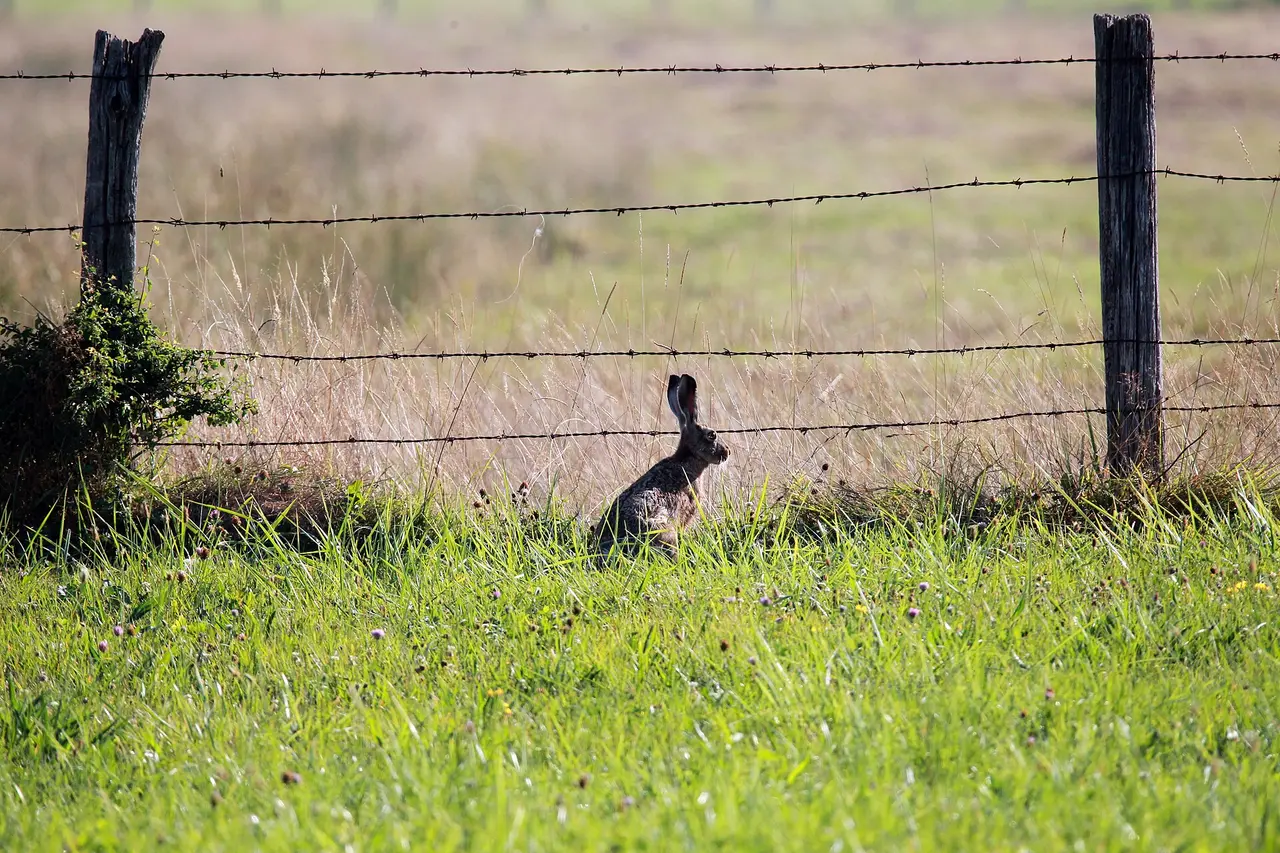
Four hares in one country
According to ISPRA, Italy has the brown hare (Lepus europaeus), found almost everywhere on the peninsula; the mountain hare (Lepus timidus), in the Alps, with viable and well-preserved populations; the Sardinian hare, introduced to Sardinia in the 16th century and assigned to Lepus capensis; and the Italian or Apennine hare (Lepus corsicanus).[1] The latter, described in 1898, was long downgraded to a subspecies, then considered extinct in the mid-20th century, before morphology and genetics confirmed its species status and the existence of remnant populations in central and southern Italy and in Sicily.[1]
For the biology of the brown hare, see our brown hare profile.
The Italian hare, a vulnerable species
Endemic to central and southern Italy and Sicily, the Italian hare is listed as "Vulnerable" by the IUCN.[3] It suffers from habitat fragmentation, low densities and small isolated populations, as well as from competition with the brown hare, heavily restocked as game; in some areas, the two species live side by side.[3] ISPRA also highlights the risk of misidentification when hunting, as the species is protected.[2] A programme backed by the Ministry of the Environment reintroduced it to the island of Elba, together with the Tuscan Archipelago National Park, ISPRA and the State Forestry Corps.[2]
In Sicily, the Region added the Italian hare to its hunting calendar from the 2004/05 season, following a favourable but conditional opinion from the national wildlife institute; for lack of sufficient technical measures, that opinion was no longer given from the 2006/07 season onwards.[1]
A brown hare shaped by restocking
ISPRA describes restocking documented since the 1920s and widespread after the Second World War, mostly with animals imported from abroad, more rarely bred in Italy. Populations of the original subspecies, Lepus europaeus meridiei, are thought to have been replaced by non-native hares, including far beyond their natural range, in the centre and south of the country.[1] Together with hunting pressure, this massive restocking explains why the Italian hare was believed extinct.[1] More broadly, ISPRA notes that game introductions may have wiped out entire gene pools and spread diseases in wild populations.[1]
The legal framework: Law 157/1992 and the Regions
Hunting is governed by national Law 157/1992, which lists the brown hare, the Sardinian hare and the mountain hare among huntable species, and restricts the Italian hare to the Sicilian population alone.[4] The legal periods may be adjusted by the Regions, which publish their hunting calendar and regulations each year after consulting the national wildlife institute, now ISPRA.[4][5] Dates therefore vary from one Region to another: consult your Region's calendar.
The same law provides for "restocking and capture areas", intended for the natural reproduction of game and its capture for relocation within the country.[4] The introduction of live wildlife from abroad is regulated: restricted to native species, for restocking or genetic improvement purposes, with ministerial authorisation after consulting the national institute.[4] For any project, check with your Region, ISPRA and the competent ministry.
GIBIS and the hare
GIBIS, a game breeder based in Chatte, in the Isère department of France, raises young hares there and also offers wild-caught hares from Central Europe: see our hares. The principles we advocate for a successful return of hares to the wild (habitat, monitoring, moderate harvest) apply everywhere; in Italy, the presence of the Italian hare calls for particular care. This page is for information only and constitutes neither an offer nor legal advice.
Frequently asked questions
How many hare species live in Italy?
Four: the brown hare, the Alpine mountain hare, the Sardinian hare introduced to Sardinia and the endemic Italian hare.[1]
Can the Italian hare be hunted?
A question about the brown hare? Write to us.
Contact usSources
This page summarises public sources consulted when it was written; it does not replace the texts in force or the advice of the competent authority.
- [1]Atti del Workshop nazionale sulla conservazione della Lepre italica: azioni locali per la strategia nazionale (Riga F. e Scalisi M., a cura di) · ISPRA – Istituto Superiore per la Protezione e la Ricerca Ambientale · development.isprambiente.gov.it
- [2]The rare Italic hare back on Elba Island · ISPRA – Istituto Superiore per la Protezione e la Ricerca Ambientale · isprambiente.gov.it
- [3]Contribution to the ecology of the Italian hare (Lepus corsicanus) · Scientific Reports (Buglione et al.) · pmc.ncbi.nlm.nih.gov
- [4]Legge 11 febbraio 1992, n. 157 – Norme per la protezione della fauna selvatica omeoterma e per il prelievo venatorio (testo coordinato) · Città metropolitana di Palermo · cittametropolitana.pa.it
- [5]Legge 11 febbraio 1992, n. 157 · Normattiva · normattiva.it