
Hares in Ireland: an endemic subspecies
Ireland is a special case in Europe. The island's native hare is not the brown hare (Lepus europaeus) hunted on the Continent, but the Irish hare (Lepus timidus hibernicus), an endemic subspecies of the mountain hare[1]. It is Ireland's only native lagomorph, the rabbit having been introduced by the Normans some 800 years ago[1].
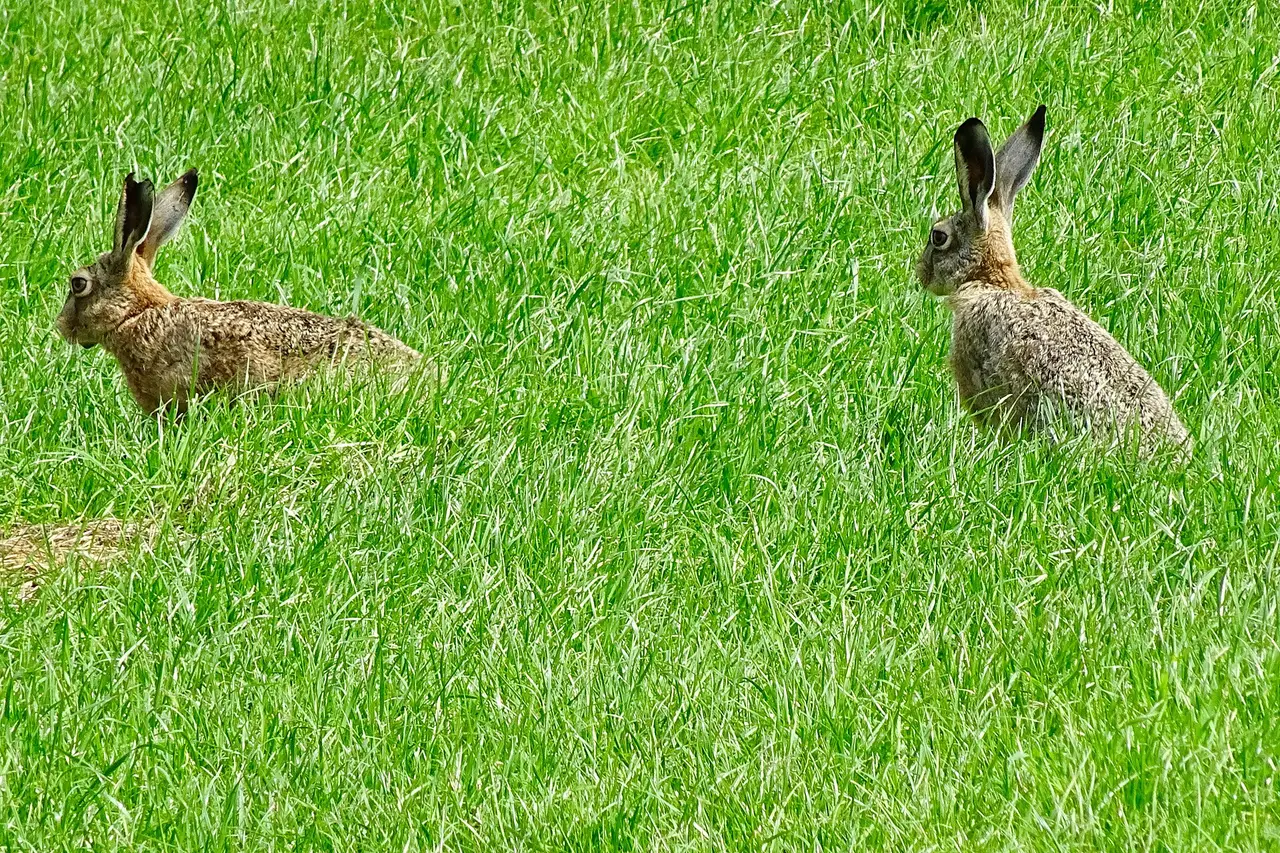
A mountain hare that does not turn white
According to the National Parks and Wildlife Service (NPWS), the Irish hare's distinctive morphology and ecology result from genetic adaptation linked to isolation of at least 35,000 to 57,000 years from other Lepus timidus populations[1]. Unlike its relatives in Scandinavia or the Alps, it does not take on an entirely white winter coat[1].
Elsewhere in Europe the mountain hare is an upland specialist; in Ireland it is common in the lowlands[2] and uses farmland grassland as well as bogs and heaths[1]. For a comparison with the continental species, see our brown hare profile.
A favourable status, but highly fluctuating numbers
The Irish Red List of terrestrial mammals, published in 2019, classifies the Irish hare as « least concern »[2]. In its assessment under the Habitats Directive, the NPWS stresses that densities vary greatly over time: national surveys gave an estimate of around 232,500 hares in 2006 and 535,600 in 2007, a difference judged significant[1]. The NPWS concludes that more data are needed before a reliable trend can be established[1]. The pressures identified include the loss of hedgerows and rushy areas, grassland intensification, urbanisation and hunting[1].
The brown hare, an introduced species
The brown hare was introduced on several occasions in the 19th century; it is known only from isolated populations in the northern half of the island and was not confirmed in the Republic of Ireland in recent surveys, whereas it is well established in Northern Ireland[1]. The Red List excludes it, like other species introduced after 1500[2].
The NPWS found no evidence of genetic introgression from the brown hare into the Irish hare, but regards hybridisation as a potential threat[1][2].
Hunting and coursing: a national framework
In Ireland, the hare season is not set by the counties: it falls under a national ministerial order on open seasons for wild mammals, made under the Wildlife Act 1976[3]. During the open season, the order permits shooting, coursing at regulated meetings and hunting with packs of beagles and harriers, throughout the country except for a few townlands in County Wexford[3]. We do not reproduce the dates: consult the order in force.
For coursing, the NPWS issues licences under the Wildlife Acts to the Irish Coursing Club to net, tag and ring hares[4]. Control of the meetings themselves falls under the Greyhound Industry Act 1958 and the Minister for Agriculture[4]. The NPWS assessment report stated that 6,000 to 7,000 hares were captured each season under licence, and that about 90% were subsequently released where they had been caught[1].
Return to the wild and GIBIS
Given the brown hare's status as an introduced species and the risk of hybridisation flagged by the NPWS[1][2], any project involving hares in Ireland must be examined in advance: check with the National Parks and Wildlife Service. Our guide to returning hares to the wild concerns the brown hare and the French context. GIBIS, a game breeder based in Chatte, in the Isère department of France, raises young hares there and also offers wild-caught hares from Central Europe: see our hares.
Frequently asked questions
Which hare lives in Ireland?
The Irish hare (Lepus timidus hibernicus), an endemic subspecies of the mountain hare and the island's only native lagomorph[1].
Is the Irish hare threatened?
Who sets the hare hunting season in Ireland?
A national ministerial order on open seasons, made under the Wildlife Act 1976[3]. Consult the order in force for the dates.
Why is the brown hare a concern in Ireland?
Because the NPWS regards hybridisation with the Irish hare as a potential threat, even though no introgression has been detected[1].
A question about the brown hare? Write to us.
Contact usSources
This page summarises public sources consulted when it was written; it does not replace the texts in force or the advice of the competent authority.
- [1]Lepus timidus (1334) Conservation Status Assessment Report — Background to the conservation assessment for the Mountain Hare Lepus timidus (hibernicus) · National Parks and Wildlife Service (NPWS) · npws.ie
- [2]Ireland Red List No. 12: Terrestrial Mammals (Marnell, Looney & Lawton, 2019) · National Parks and Wildlife Service (NPWS) · npws.ie
- [3]The Wildlife (Wild Mammals) (Open Seasons) Orders 2005 to 2024 — Unofficial Consolidation · National Parks and Wildlife Service (NPWS) · npws.ie
- [4]Coursing Reports 2024/2025 Season · National Parks and Wildlife Service (NPWS) · npws.ie