
The hare in Greece: an ancient game species under heavy hunting pressure
In Greece, the brown hare (Lepus europaeus), λαγός in Greek, is one of the most hunted game species in the country. The Balkans also hold a special place in the history of the species: according to genetic research carried out at the University of Thessaly, it was from this region that the hare recolonised Europe after the last glaciation.[2] Here is what public sources say about its status, hunting and management.
The Balkans, cradle of the brown hare
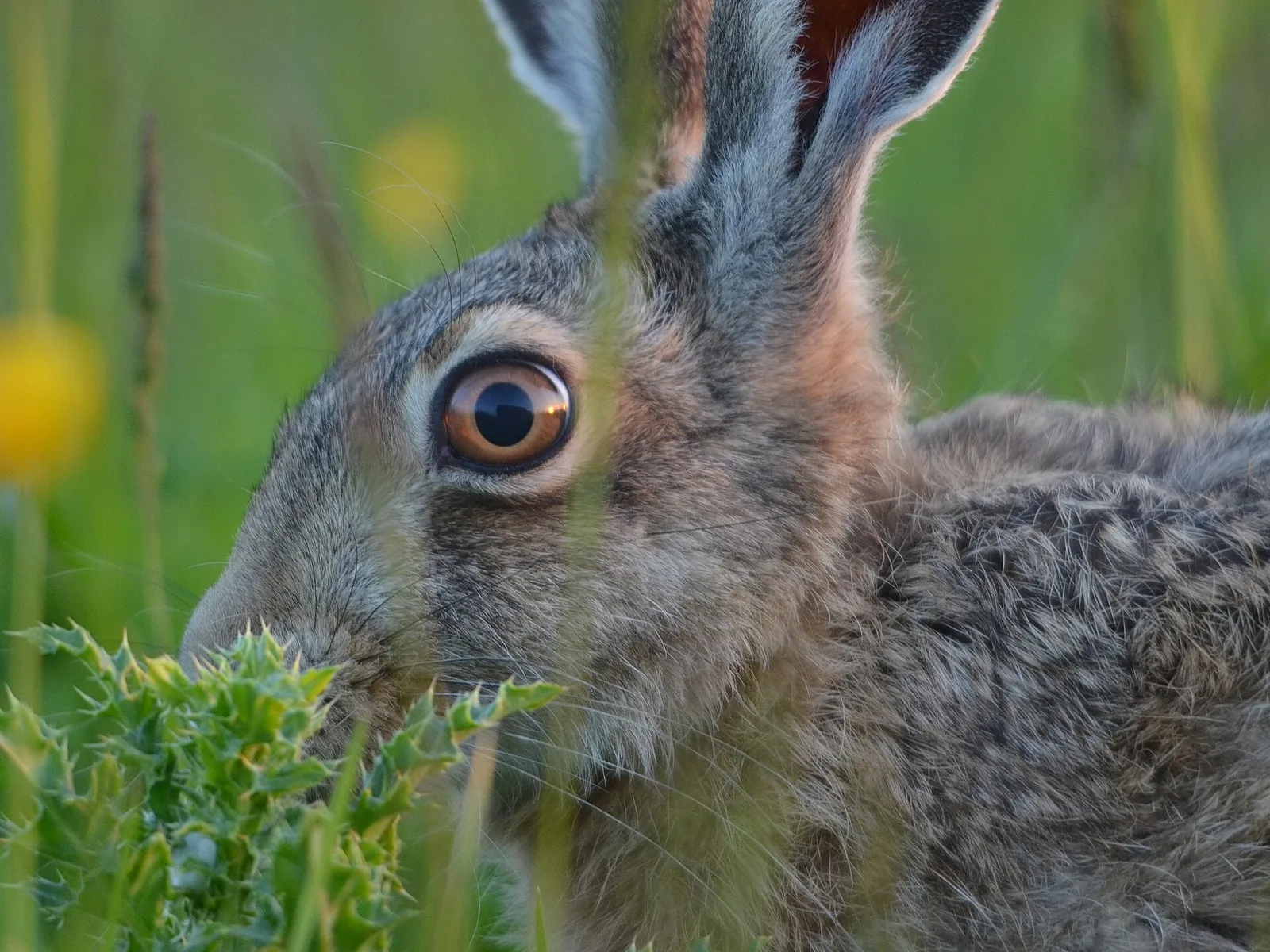
A doctoral thesis from the University of Thessaly, based on the mitochondrial DNA and Y chromosome of brown hares from Greece, Turkey and Israel, concludes that the colonisation of large parts of Europe began at the end of the last glacial period from a population in the central or south-central Balkans. Bulgaria and north-eastern Greece form a zone where all the genetic groups identified meet, and gene flow from Anatolia across the Bosphorus was detected.[2] The author points out that the hare is one of the most important game species in Europe, particularly in the Balkan Peninsula and in Greece.[2] For the biology of the species, see our Brown hare profile.
Low densities under heavy hunting pressure
A study published in 2007 in the journal Oryx describes severe hunting pressure on the hare in Greece, with densities of around 1.1 to 2.4 hares per 100 ha. It also notes that European brown hare syndrome (EBHS) caused 40 to 90% mortality between 1986 and 1990.[1] We have not found a recent published national census: these figures should be read as an order of magnitude from the scientific literature.
Rules set each year by the ministry
Hunting is governed by an annual decision of the Ministry of Environment and Energy (ΥΠΕΝ) on "hunting regulations". For the 2026-2027 season, decision ΥΠΕΝ/ΔΔΔ/88483/2815, published in the Government Gazette (ΦΕΚ Β' 4804), limits hare hunting to three days a week (Wednesday, Saturday and Sunday) and bans it for the entire season on the islands of Lemnos and Agios Efstratios.[3]
This national decision is then applied locally: each forest service (δασαρχείο) issues a forest police ordinance specifying the closed areas. In Corinth, the 2024-2025 ordinance, based on the 1969 Forest Code, bans hunting, for example, in permanent wildlife refuges and on game farms.[4] For the periods in force, refer to that year's decision and to the competent forest service.
Restocking: what genetics shows
According to the Oryx study, about 2,000 captive-bred hares were released in Greece between 1991 and 2001 under restocking programmes. They came from Greek breeding stations whose stock had been imported mainly from Italy, the former Yugoslavia and Bulgaria. Genetic markers found in nine wild hares in 2003-2004 indicate that some of these animals survived long enough to breed at least once. The authors consider that such programmes may be appropriate in certain situations.[1]
The Corinth forest ordinance only allows trade in game if it comes from public or private breeding farms, controlled hunting areas or abroad, provided legal procedures have been followed.[4] Before any introduction project, check with the competent forest service and the ministry (ΥΠΕΝ). Our guide to returning hares to the wild describes general good practice, drawn up for France.
Frequently asked questions
Who sets the hare hunting rules in Greece?
Is the hare hunted on all Greek islands?
No. For 2026-2027, the ministerial decision bans hare hunting for the whole season on Lemnos and Agios Efstratios.[3] Other local closures may apply.
Have captive-bred hares ever been used for restocking in Greece?
Yes: about 2,000 between 1991 and 2001, according to a genetic study showing that some of them bred in the wild.[1]
Which hares does GIBIS offer?
GIBIS, a game breeder based in Chatte, in the Isère department of France, raises young hares there and also offers wild-caught hares from Central Europe: see our hares. For Greek regulations, contact the competent forest service.
Μια ερώτηση για τον ευρωπαϊκό λαγό; Γράψτε μας.
Contact usSources
This page summarises public sources consulted when it was written; it does not replace the texts in force or the advice of the competent authority.
- [1]Genetic evidence for survival of released captive-bred brown hares Lepus europaeus during restocking operations in Greece · Oryx 41(4), Cambridge University Press – C. Stamatis, F. Suchentrunk, H. Sert, C. Triantaphyllidis, Z. Mamuris, 2007 · cambridge.org
- [2]Περίληψη διδακτορικής διατριβής – ευρωπαϊκός λαγός (Lepus europaeus) · Πανεπιστήμιο Θεσσαλίας (bio.uth.gr) – Κ. Σταμάτης · bio.uth.gr
- [3]Κυνηγετική περίοδος 2026-2027: Πόσα και ποια θηράματα επιτρέπονται για κάθε κυνηγό (απόφαση ΥΠΕΝ/ΔΔΔ/88483/2815, ΦΕΚ Β' 4804/03.08.2026) · Οδηγός του Πολίτη · odigostoupoliti.eu
- [4]Δασική ρυθμιστική απαγορευτική διάταξη κυνηγίου κατά την κυνηγετική περίοδο 2024-2025 (Δ.Α.Δ. 1/2024) · Δασαρχείο Κορίνθου – Υπουργείο Περιβάλλοντος και Ενέργειας · xylokastro-evrostini.gov.gr