
The hare in Belgium: three regions, three hunting regimes
In Belgium, hunting is not a federal matter but a regional one. The brown hare (Lepus europaeus), haas in Dutch, is therefore managed under three different approaches: in Flanders, where harvests are closely monitored by the INBO research institute; in Wallonia, where hare hunting is tied to hunting councils; and in Brussels, where hunting is banned. This page summarises what public sources say, region by region.
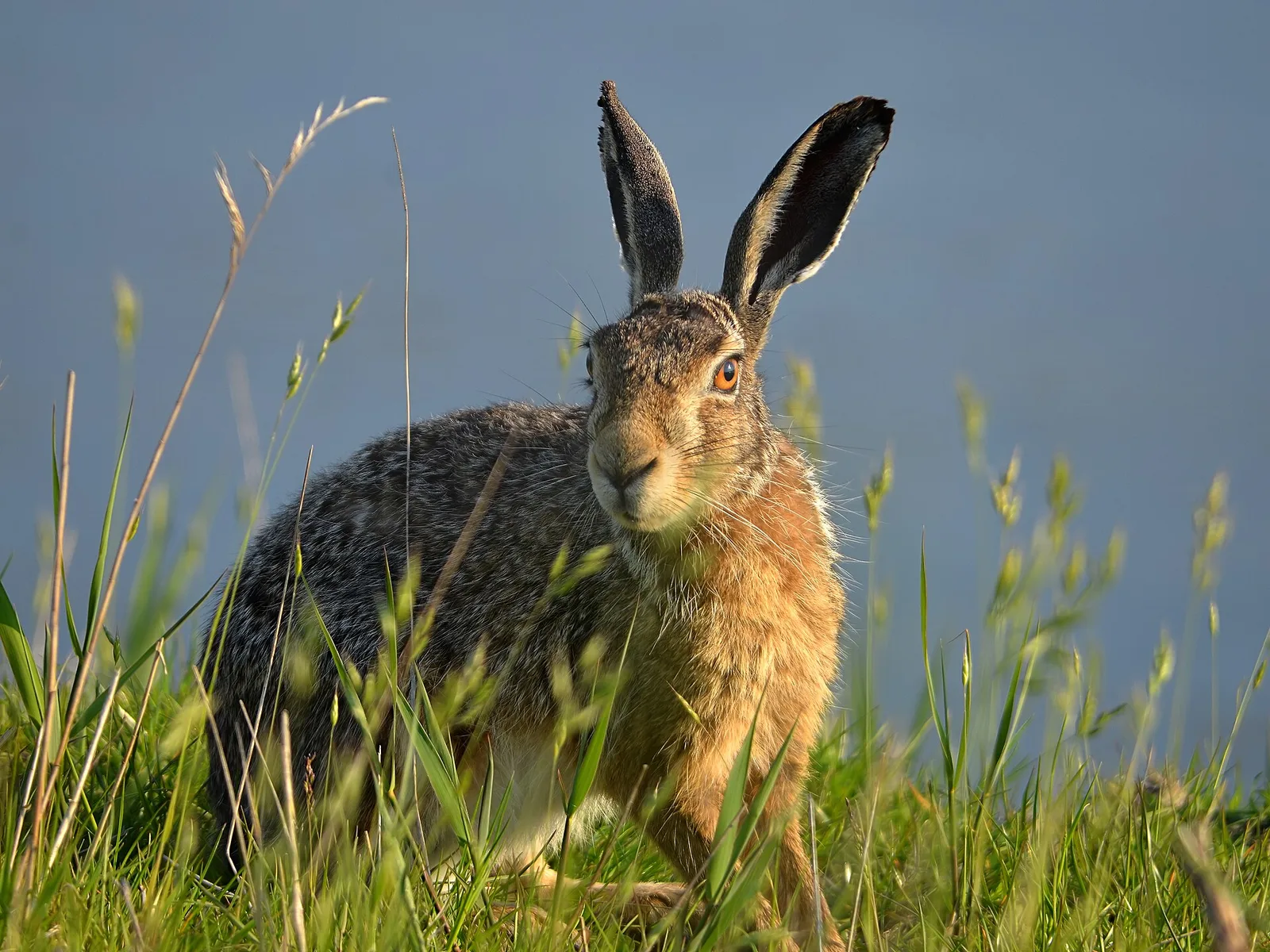
The brown hare, a game species of the Belgian lowlands
The hare found in the Belgian countryside is the brown hare, an animal of open landscapes that rests in a form on the ground rather than in a burrow. Its biology, breeding and differences from the wild rabbit are covered in our encyclopaedia entry Brown hare.
The available figures show a very unevenly distributed game species: in Flanders, it features far more prominently in the bag in the farmland plains of the west than in the more wooded or urbanised provinces of the east.[1]
Flanders: game-bag statistics published every year
Every year the INBO publishes the harvest statistics reported by the wildlife management units (wildbeheereenheden, WBE). For 2025 it records 39,291 hares taken in Flanders, or 4.75 hares per 100 ha of reported hunting ground, across 176 WBEs. The differences are marked: 8.37 per 100 ha in West Flanders against 1.63 in Limburg.[1]
The level has fallen since 2019, when the INBO counted 52,262 hares taken and 6.04 per 100 ha.[2] These figures are reported harvests, not population counts: they describe hunting, and only indirectly the state of the populations.
The Flemish framework: the opening decree and WBEs
In Flanders, hunting seasons are set by a decree of the Flemish Government, the Jachtopeningsbesluit, adopted for several seasons at a time. When reviewing the 2013-2018 draft, the Minaraad, the Flemish advisory council for the environment, recommended that hunting of all small game, hare included, be permitted only within approved WBEs.[3] For the seasons currently in force, refer to the current decree or to the Agentschap voor Natuur en Bos (ANB).
Wallonia: a game species tied to hunting councils
In Wallonia, the Walloon Government decree setting hunting dates for the period from July 2025 to June 2030 restricts the shooting of hares to grounds affiliated with an approved hunting council (conseil cynégétique). It also provides that a hunting council's internal rules may ban shooting hares and grey partridges on its members' grounds.[4] Hare management is therefore largely decided locally, among neighbouring hunters.
Brussels, and the question of restocking
In the Brussels-Capital Region, hunting is banned by law; Brussels Environment prosecutes cases of poaching there.[6]
Caution is called for on restocking. In 2020, the Flemish Minister for Nature banned the hunting of partridge, hare and pheasant across an entire WBE in West Flanders after farm-reared partridges were found to have been released to be shot, recalling that rearing them and releasing them into the wild is prohibited.[5] Before any plan to introduce hares, check with the ANB in Flanders or with the Department of Nature and Forests (SPW) in Wallonia. Our guide to returning hares to the wild describes general good practice, established for France.
Frequently asked questions
Who sets the hare hunting seasons in Belgium?
How many hares are taken in Flanders?
Can hares be hunted anywhere in Wallonia?
No: shooting hares is only allowed on grounds affiliated with an approved hunting council, whose rules may additionally ban shooting hares.[4]
What hares does GIBIS offer?
GIBIS, a game breeder based in Chatte, in the Isère department of France, raises young hares there and also offers wild-caught hares from Central Europe: see our hares. For Belgian regulations, contact the authority of your Region.
Een vraag over de haas? Schrijf ons.
Contact usSources
This page summarises public sources consulted when it was written; it does not replace the texts in force or the advice of the competent authority.
- [1]Afschotstatistieken 2025 · Instituut voor Natuur- en Bosonderzoek (INBO) – T. Scheppers, 2026 · vlaanderen.be
- [2]Afschotstatistieken 2019 · Instituut voor Natuur- en Bosonderzoek (INBO) – T. Scheppers, 2020 · vlaanderen.be
- [3]Advies – Het ontwerp Jachtopeningsbesluit 2013-2018 (2013|025) · Minaraad · minaraad.be
- [4]Arrêté du Gouvernement wallon fixant les dates de l'ouverture, de la clôture et de la suspension de la chasse, du 1er juillet 2025 au 30 juin 2030 · Wallex – Service public de Wallonie · wallex.wallonie.be
- [5]Lokaal jachtverbod nadat patrijzen werden uitgezet om te bejagen · VRT NWS · vrt.be
- [6]Deux cas de braconnage découverts en Région bruxelloise · BX1 · bx1.be