
The hare in Luxembourg: a small game species grown scarce
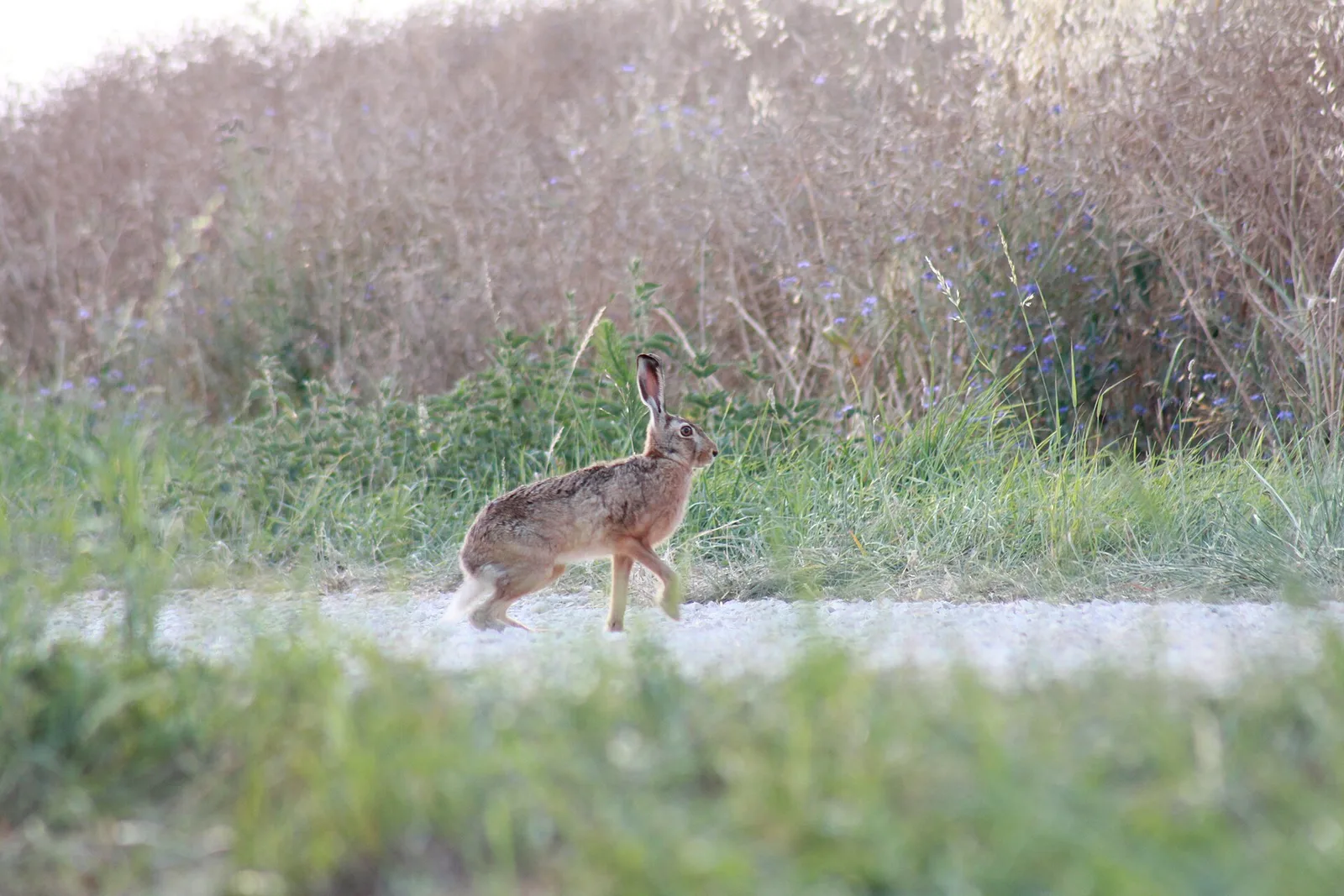
In Luxembourg, the hare found in game bags and regulations is the brown hare (Lepus europaeus), the Feldhase of the administration's bilingual texts[1]. The Grand Duchy has a remarkable statistical series: the Nature and Forest Agency (Administration de la nature et des forêts, ANF) has published the hare game bag since the 1945/46 hunting year[1]. On the scale of a small country, this curve tells the story of the hare in the countryside of Western Europe.
A game bag in sharp decline
ANF Technical Bulletin No. 10, published in 2024, traces hare harvests since the post-war period[1]. The chart shows bags exceeding 12,000 hares in some years of the late 1940s and the 1960s, then a continuous decline from the late 1970s onwards, down to 422 hares shot in the 2023/24 hunting year[1].
The ANF urges caution in reading these series: one should keep the overall picture in view rather than look at isolated years, and since data on animals found dead are incomplete, only harvest data have been used since 1989[1]. The bulletin also publishes the trend in the number of hunting licences, which helps interpret the harvest figures[1]. A game bag is not a census, but the scale of the decline speaks for itself.
Where is the hare still hunted?
The same bulletin maps, municipality by municipality, the harvests of the 2022/23 and 2023/24 hunting years for the native species roe deer, wild boar, red deer and brown hare, in number of animals and per square kilometre[1]. These maps allow each hunting ground to put its own harvest in context. For the biology of the species, see our Brown hare profile.
A national framework set by Grand-Ducal regulation
Unlike neighbouring Germany, Luxembourg does not delegate the setting of hunting seasons to regions: they are laid down for the whole country by Grand-Ducal regulation, adopted on the basis of Article 9 of the amended Hunting Act of 25 May 2011, after consulting the Higher Hunting Council (Conseil supérieur de la chasse)[2]. The hare appears under the heading "small game and waterfowl", alongside the pheasant and the mallard[2][3].
The regulation now covers three hunting years. The commentary on the draft submitted to the Council of State in 2024 states that the hunting seasons for pheasant, hare and wild rabbit remain the same as in the previous regulation, whereas those for red deer and roe deer are extended[2]. We do not reproduce the dates here: consult the regulation in force or the ANF.
Who manages hunting and wildlife?
The ANF is responsible for monitoring wildlife and hunting. Its bulletin presents a Wildlife and Hunting department, one strand of which deals with hunting and the game species covered by national legislation, including the brown hare[1]. It is the ANF that publishes the game bags and their breakdown by municipality, the basis for any thinking about local hare management[1].
Return to the wild and GIBIS
We have not found any public source setting out the Luxembourg rules applicable to releasing hares into the wild: check with the Nature and Forest Agency before any project. Our guide to returning hares to the wild stresses that such an operation only makes sense together with habitat, monitoring and moderate hunting. GIBIS, a game breeder based in Chatte, in the Isère department of France, raises young hares there and also offers wild-caught hares from Central Europe: see our hares.
Frequently asked questions
How many hares are shot in Luxembourg?
According to the ANF, 422 hares were shot during the 2023/24 hunting year, compared with over 12,000 in some post-war years[1].
Who sets the hare hunting season in Luxembourg?
A Grand-Ducal regulation sets the seasons for the whole country, on the basis of the 2011 Hunting Act and after consulting the Higher Hunting Council[2]. Consult the regulation in force or the ANF for the dates.
A question about the brown hare? Write to us.
Contact usSources
This page summarises public sources consulted when it was written; it does not replace the texts in force or the advice of the competent authority.
- [1]Bulletin technique de l'Administration de la nature et des forêts en matière de gestion de la faune sauvage et de chasse, numéro 10 (2024) · Administration de la nature et des forêts (Naturverwaltung) · environnement.public.lu
- [2]Projet de règlement grand-ducal concernant l'ouverture de la chasse pour les années cynégétiques 2024/2025, 2025/2026 et 2026/2027 (texte et commentaire des articles) · Conseil d'État du Grand-Duché de Luxembourg · conseil-etat.public.lu
- [3]Règlement grand-ducal du 14 février 2018 concernant l'ouverture de la chasse pour l'année cynégétique 2018/2019 (Mémorial A n° 159) · Journal officiel du Grand-Duché de Luxembourg, via FAOLEX (FAO) · faolex.fao.org